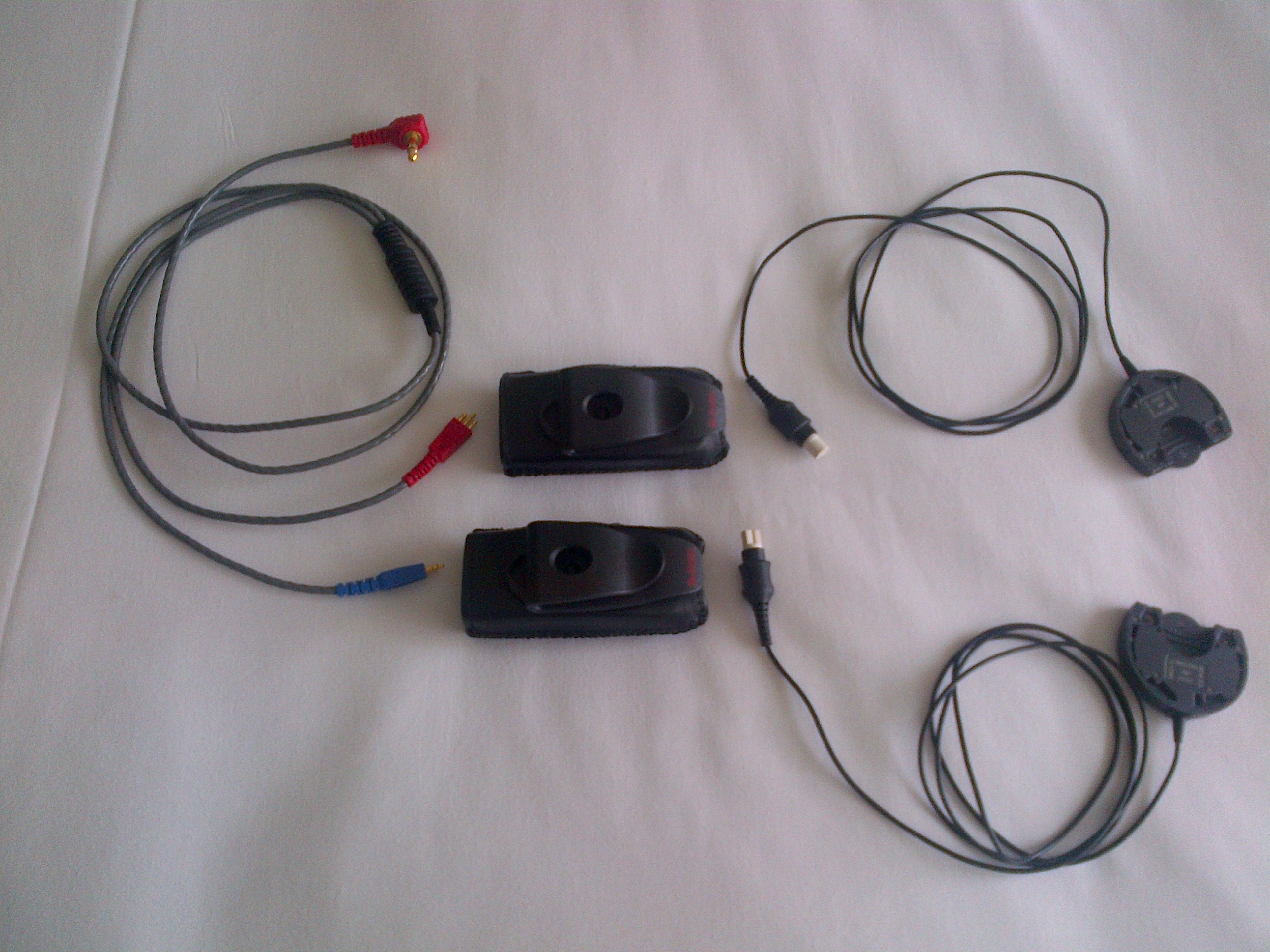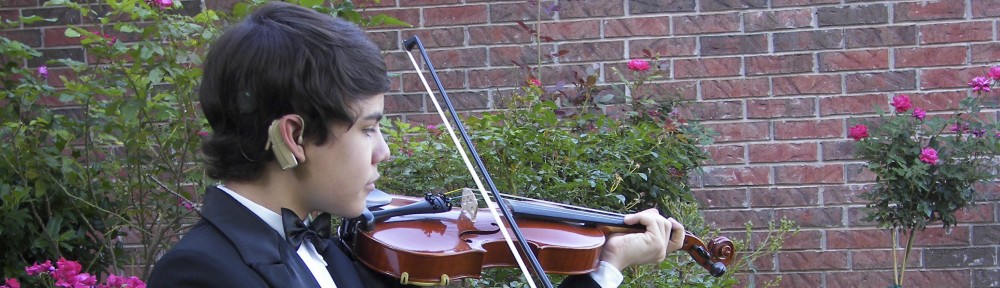
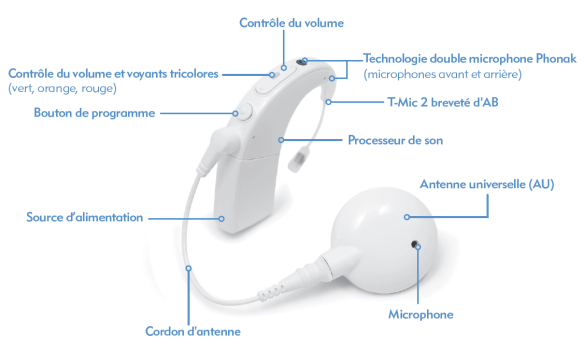
Advanced Bionics Naída CI Q70 Examen

Naída processeurEsther Fillion

Read this review in English here.

Les Premières Impressions

NaidaMon nouveau processeur, Naída Cl Q70, est plus petit et plus léger voir même plus discret que le processeur Harmony. Si on installe la pile, c’est beaucoup moins lourd pour l’oreille à vrai dire, on sent moins sa présence, on l’oublie presque…!

NaidaClQ70Je porte des lunettes et il n’ya aucun problème avec mes cadres. Toutefois, vous devriez essayer différentes lunettes pour voir comment ils s’intègrent, surtout si vous aimez les cadres épais.

Avec Harmony, avant de l’installer, il faut placer le volume (à midi, programme d’origine) mais un geste simple comme passer sa main dans les cheveux pour placer ceux-ci derrière l’oreille peut faire monter ou baisser accidentellement le volume du processeur. Cela est très désagréable quand c’est vraiment trop fort ou pas assez. Donc, on doit constamment surveiller si le volume est au programme d’origine (idéal pour bien entendre).

Pour moi, évidemment je préfère le volume digital qu’offre Naída Cl Q70. Il s’agit d’appuyer sur un bouton pour le volume donc les gestes accidentels n’y sont plus. Lorsqu’on installe notre processeur, il est toujours sur son programme d’origine donc prêt à porter. Je n’ai jamais besoin d’augmenter ou de baisser le volume.

Sur Harmony, on a le choix de trois programmes et le changement se fait avec un petit levier qu’on retrouve sur les anciens appareils auditifs conventionnels.

Évidemment, c’est un autre vote pour le Naída Cl Q70 car on a le choix de cinq programmes (c’est beaucoup!) que l’on peut sélectionner en pressant sur un petit bouton.

À chaque changement, il y un bip sonore pour nous faire savoir sur quel programme nous sommes donc on ne peut pas se tromper.

Lorsqu’on se branche, il y a également un bip sonore pour nous indiquer qu’on est sur le programme d’origine. Ce qui signifie que nous sommes sur le programme 1 et que le volume est à midi. On n’a pas besoin d’enlever l’appareil pour vérifier toute situation, il y a un signal sonore pour chaque étape…. C’est génial!  En fait, il ne lui manque que la parole.

Piles

PilesDans mon cas, je possède deux formats de pile. La grosse et la petite.

Comme avec Harmony, il est certain que je préfère la grosse pile en raison de sa durée plus longue. Avec la petite, on a l’impression de devoir changer trop souvent. Donc, lorsque je devrai en acheter de nouvelles, il est évident que j’opterai pour la grosse pile.

La vie des piles peut varier selon les programmes choisis, tout dépend. Il y a des programmes qui peuvent être plus économiques mais je choisis le programme qui me convient selon mes besoins et selon la situation. Il ne faut pas économiser pour bien entendre.

Selon mes programmes la grosse pile dure entre 20-24 heures et la petite entre  8-12 heures.

Sur Harmony, pour enlever la pile il faut la glisser vers l’avant. Je dois  donc faire attention et procéder doucement  pour ne pas endommager le T-mic.

Par conséquent, sur le Naída, on doit maintenant tourner le cordon de l’antenne vers le haut puis on fait glisser la pile vers l’arrière c’est-à-dire  vers l’extérieur du coude ou du T-Mic 2. Donc, on ne risque pas de l’endommager.

Sur le processeur Harmony, il arrivait souvent que la pile se détache facilement du processeur alors qu’avec le Naída, la pile s’emboîte et reste bien en place.

À mon avis, les chercheurs sont bien à l’écoute car ils ont ajouté aux nouvelles piles une mini tige métallique qui vient se fixer à un interrupteur situé sur le processeur lui-même et sur le chargeur. Donc, en tout temps, les piles demeurent solidement en place.

Par contre, si on veut changer la pile tout en gardant le processeur sur l’oreille, il faut beaucoup plus d’habilité manuel qu’avec Harmony.

Pour Harmony, il m’est arrivé seulement sur une pile que les languettes se soient brisées.  Sur le processeur Naída, les deux petites fiches de connexion ne sont plus visibles parce qu’elles sont recouvertes. Je trouve que les piles glissent très bien. Le mécanisme d’enclenchement est un peu différent.  Compte tenu du peu de temps d’utilisation de Naída, je ne peux confirmer le rendement des languettes ou  de leur fragilité.

Comme sur Harmony, le voyant situé sur le dessus du processeur permet de vérifier l’état de la pile.

Sur Naída, un voyant sur le processeur peut être installé par l’audiologiste pour les enfants. C’est pour avertir les parents ou l’entourage  que l’implant fonctionne.

Avec Naída, une fois que le processeur est installé sur l’oreille, nous avons un bip sonore nouveau qui nous avertit une heure avant que la pile ne soit complètement déchargée.

Le Chargeur

Chargeur BranchéLe chargeur est mignon. Il est plus petit et on peut charger quatre piles à la fois. Il possède un voyant vert qui indique qu’il y a de l’alimentation électrique et quatre voyants pour les piles. Lorsque la pile est vide, une petite lumière bleue est allumée et lorsque la pile est chargée la lumière passe au vert.

Il y a deux façons de le brancher.   À la maison, vous pouvez le brancher sur une plaque murale.  Il possède également un câble USB qui vous permet de laisser la fiche d’alimentation à la maison et vous servir de l’ordinateur ou de certains câbles d’alimentation de téléphone cellulaire.

Microphones

Avec Harmony, il arrivait souvent que le T-Mic ou coude standard pivote, alors, on entendait moins bien et le processeur pouvait se détacher facilement de l’oreille.  Avec Naída, tout cela est du passé.

Génial! Le coude standard du T-Mic 2 est fixe et maintenu par une mini tige de métal qui traverse le processeur.  Donc, il ne tourne plus d’un sens à l’autre.  Ce qui permet de maintenir le processeur bien en place. La partie du T-Mic 2 qui est un microphone intra-auriculaire prévu pour les environnements bruyants a une certaine flexibilité mais reste bien en place malgré tout. Il entre légèrement dans l’oreille. Donc, pas d’obstacle lorsqu’on répond au téléphone, on ne sent pas sa présence. C’est parfait pour le cellulaire ou autres appareils d’écoute. Il est très discret et c’est une qualité unique. Les gens ne s’en aperçoivent pas ou presque. Il est transparent.

Une chose dont je ne suis pas certaine d’aimer c’est le cache (petite partie en plastique) qui recouvre l’extrémité du T-Mic 2. Cette pièce doit être remplacée environ tous les 3-4 mois ou au besoin ou intervalles réguliers pour maintenir la qualité sonore.

Avec l’audiologiste, nous avons essayé de l’enlever et c’est difficile parce qu’il est très minuscule. Il y a probablement un truc ou solution pour l’enlever sans trop de difficulté.

mikesNaída possède quatre micros. Chaque micro fonctionne sur le programme d’origine.  Il  y en  a deux sur la partie supérieure du processeur, un sur l’antenne et le T-Mic lui-même.

Avec cet ajout de micros sur Naída, on entend plus de sons. C’est une autre adaptation mais c’est fantastique!

Lorsqu’on utilise le programme UltraZoom, les 2 micros du processeur fonctionnent pour mieux entendre les voix d’en face tandis que les deux autres de côté, le son est réduit.

Télécommande (myPilot)
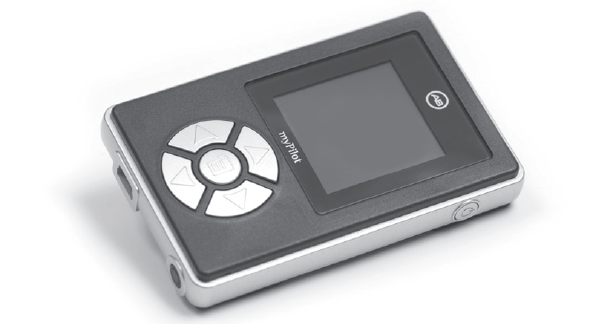
myPilotComme toute chose lorsqu’on en fait bon usage, c’est très pratique en tout cas pour moi.

Le myPilot (et le ComPilot) peuvent servir de télécommande. Une fonction qui est bien appréciée qui n’est pas sur le processeur, c’est un retour rapide au programme d’origine et j’aime bien changer les programmes avec la télécommande car on risque moins de se tromper. Je m’explique: le processeur possède un bouton pour les programmes, un pour monter le volume et un autre pour le baisser, alors il arrive qu’avec les doigts on touche au mauvais. Si vous êtes au téléphone et que vous pesez sur un changement de programme par erreur, comme pour mon programme UltraZoom (P2) on n’entend pas au téléphone. Ce qui est un peu gênant!

Il possède également les mêmes bips sonores que sur le processeur pour le volume et les programmes.

ComPilot
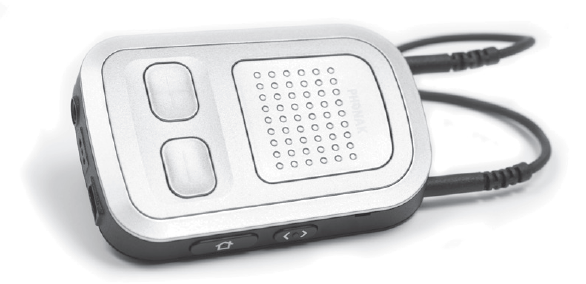
ComPilotLe ComPilot est un vrai petit bijou. Il m’est devenu indispensable.  C’est de la vraie magie.

Il est tout à fait renversant d’utiliser un téléphone muni de la fonction Bluetooth avec ComPilot! Celui-ci doit être apparié avec le ComPilot. On peut téléphoner et parler sans avoir notre téléphone en main et rien sur les oreilles. C’est super! Le son est très bon.

Lorsque vous voulez faire un appel ou répondre au téléphone, il faut simplement appuyer sur le bouton du ComPilot.

Le ComPilot dispose d’un microphone sur le côté pour que l’autre partie puisse vous entendre, même si le téléphone est dans votre poche ou votre sac. Ma sœur (qui possède aussi un Naída), a fait l’essai et même si son cellulaire est placé à une distance pouvant aller jusqu’à 10 mètres, elle peut parler sans problème avec un interlocuteur toujours sans téléphone à la main.

Le ComPilot offre une gamme d’options avec le téléphone comme, recomposition du dernier numéro, numérotation à commande vocale, mise en attente et le transfert d’appel.  Ces options peuvent être programmées par l’audioprothésiste de votre région.

On peut écouter la musique de notre  téléphone ou lecteur MP3 en haute fidélité. C’est vraiment extraordinaire!  Le son est tellement bon. J’ai d’ailleurs remarqué que la qualité d’écoute est meilleure si elle est diffusée à travers le ComPilot. J’ai expérimenté également les bruits de la nature avec l’ordinateur, c’est tellement beau et précis.

Je n’ai pas besoin de sous-titrage lorsque je me sers du récepteur de télévision avec le ComPilot. J’entends bien les voix et la musique …..C’est sensas!

La plupart des sources électroniques qui possèdent la fonctionnalité Bluetooth peuvent être appariées sinon, le ComPilot peut être branché avec fils. (télévision, ordinateur, MP3, iPod, téléphone, lecteur dvd portatif, etc…) le choix est multiple.

Le ComPilot peut contrôler le volume du processeur seulement. Pour augmenter le volume d’un lecteur de musique ou autre source, il faut augmenter le volume de l’appareil lui-même.
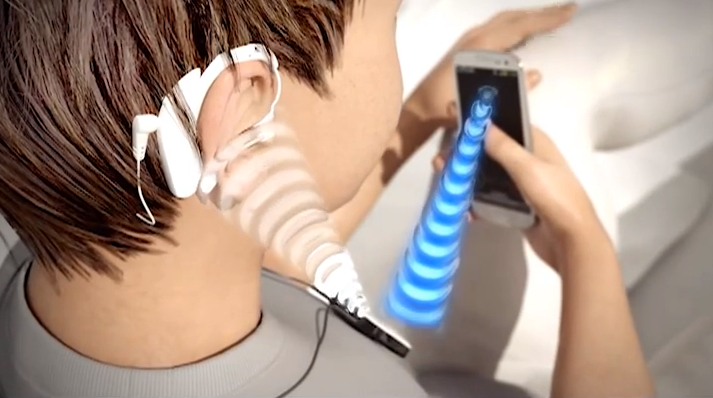
ComPilot in actionPar ailleurs, si j’écoute de la musique et que j’ai branchée ComPilot avec l’ordinateur, j’entends quand même les bruits ambiants  (50/50). Si je reçois un téléphone, comme la plupart des appareils électroniques possède le mode pause, j’arrête seulement la musique et je réponds sans toucher à rien.  Même chose pour la télévision, il faut appuyer sur muting et on répond ou on discute avec une personne.
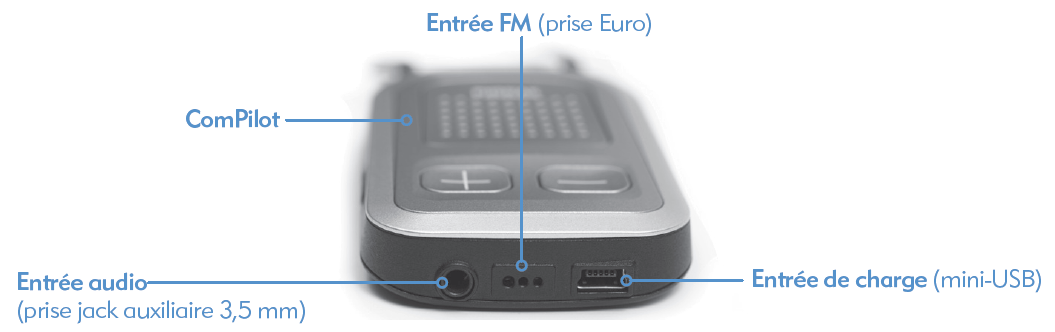
ComPilot dessusDe plus le ComPilot possède une prise jack stéréo de 3,5 mm pour entrée audio donc les choix de branchements sont multiples.

ComPilot nous permet même d’utiliser un récepteur FM.   Ma sœur elle-même utilise un récepteur FM (modèle R35 Williams Sound) avec le ComPilot 2 fois par semaine lors de réunions dans une grande salle. Elle ne peut plus se passer de ce système car la qualité de son est meilleure et plus naturelle même si le son est diffusé à travers deux accessoires.

C’est vraiment fantastique d’avoir autant d’options. Le choix nous appartient. Une chose qui nous avantage par rapport aux personnes entendantes, c’est qu’on n’a rien dans l’oreille lorsqu’on utilise le MP3 ou iPod et même Bluetooth, on pas de casque d’écoute sur les oreilles selon notre choix.

Pour l’utilisation dans l’avion, je crois qu’il est possible que certains transporteurs n’offrent pas  les entrées audio compatibles.

Pour ma part, j’ai vérifié avec des écouteurs qu’on m’avait donnés lors d’un voyage et je crois que cela devrait fonctionner en tout cas j’espère bien!

En outre, selon le petit guide qu’on m’a remis (page 33, version française), il y a une mise en garde et un avertissement de ne pas utiliser nos accessoires AB myPilot ou ComPilot lorsqu’il est interdit d’utiliser des appareils électroniques sans fil dans les avions.

Considérant toutes ces possibilités, le ComPilot nous est indispensable! Ça nous procure pleins d’options! Je me sens tellement comblée. Tout cet ensemble avec l’implant me redonne le plaisir d’entendre. C’est un cadeau du ciel.

Programmes et fonctionnalités logicielles

Le Naída possède un signal sonore pour nous avertir du numéro de programme : Programme 1 (bip) programme 2 (bip-bip) et ainsi de suite jusqu’au 5ième programme s’il y a lieu.

Pour le volume un bip aigu indique qu’on augmente le son et un bip sourd pour dire qu’on le diminue. Lorsqu’on atteint le volume d’origine deux bips se font entendre. Comme je le mentionne plus haut, c’est également la même chose qu’on perçoit  sur le ComPilot.

Lorsqu’il reste une heure de fonction pour la pile, à toutes les quinze (15) minutes, un bip sonore vous rappelle qu’il faut changer celle-ci avant qu’elle ne soit déchargée complètement.  C’est super! Grâce à ce nouveau concept, il nous est plus facile de garder l’esprit tranquille et on ne craint plus que le processeur s’arrête de façon inattendue.

Selon moi, le temps de latente entre les programmes est semblable à Harmony. C’est une chose qu’on pourrait essayer d’améliorer car dans certaines situations, je trouve que le changement de programme est long, surtout si on doit agir vite.

Programme UltraZoom

UltraZoomCe nouveau programme est vraiment pratique lors des conversations dans un groupe de personnes. Les sons ambiants sont réduits ce qui nous permet de mieux entendre la personne d’en face. On n’a pas à se forcer pour entendre à travers ces bruits. C’est moins fatiguant, plus relaxant. Je trouve que dans certaines situations, nous sommes plus confortables par rapport aux personnes entendantes.  Il y en a même qui en ont fait la remarque….C’est agréable de savoir qu’on nous envie dans certaines situations.

J’aime également me servir de ce programme avec la télévision lorsque je ne fais aucun branchement. Dans une automobile, UltraZoom est également pratique pour mieux comprendre les passagers avant si on est assis sur la banquette arrière.  C’est un programme qui sera très utilisé.

Le mode veille

Le mode veille est encore une idée de génie. Cette fonction est bien utile lorsque voulez vous couper du bruit sans enlever votre implant. Elle permet de garder l’esprit plus tranquille si on veut dormir ou se reposer. Elle procure une meilleure concentration pour la lecture ou un travail intellectuel. Il suffit d’appuyer quelques secondes (environ quatre secondes) sur le bouton des programmes situé sur le processeur et voilà. Pour revenir à l’écoute normale, il suffit d’appuyer brièvement à nouveau sur la touche.

Si vous enlevez votre processeur pendant plus de 5 minutes et que la pile est restée en place, il tombe automatiquement en mode veille. Ceci permet d’ économiser la pile. Avant de replacer le processeur sur l’oreille, on enlève la pile, on la replace et tout revient à la normale.

Caractéristiques bilatérales (Stefan Fredelake)

L’audiologiste peut stocker jusqu’à cinq programmes différents sur le processeur, qui peut être modifié en utilisant le contrôle à distance AB myPilot ou pousser un bouton sur le processeur CI Naída. Une simple pression sur le bouton et le processeur passe à la prochaine émission. Si le processeur est au programme 5 lorsque vous appuyez sur le bouton, il retourne au programme 1.

Fentes de programme

Le processeur détient cinq programmes par oreille. Pour un utilisateur bilatérale, les programmes et l’ordre des programmes devraient être les mêmes dans les deux processeurs. Si les deux processeurs sont initialisés par l’audiologiste comme un processeur bilatérale, puis des cartes pour les deux oreilles sont stockées sur les processeurs. Le processeur identifie l’oreille lorsque le casque est mis sur la carte et charge correcte. Personnellement, je ne change pas les processeurs entre les oreilles, parce que les coiffes sont attachés à des câbles d’une manière qui est optimale pour moi, mais s’ils ont été déconnectés, ils devraient encore bien fonctionner.

QuickSync
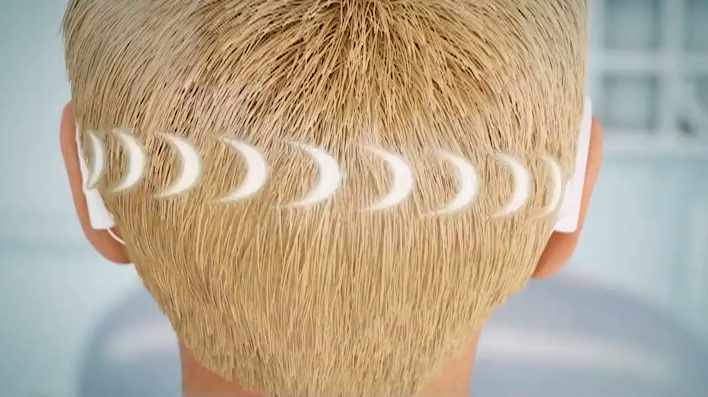
QuickSyncLe volume peut être modifié de deux manières. D’abord, vous pouvez augmenter ou diminuer le volume avec le bouton à bascule-poussoir sur le Naída CI. Avec QuickSync, changer le volume sur une oreille va aussi changer sur l’autre oreille en même temps. La deuxième façon de modifier le volume  c’est en se servant de l’AB myPilot télécommande qui possède des boutons et un affichage graphique.

QuickSync est un élément important pour moi, car elle rend la vie plus facile. Vous n’avez pas besoin de changer et de vérifier les programmes ou les volumes sur les deux oreilles. Au contraire, vous appuyez sur le bouton d’un processeur pour modifier le programme ou le volume, et l’autre oreille est automatiquement réglée en même temps.

DuoPhone

DuoPhoneJ’utilise le téléphone soit avec le ComPilot ou avec la fonction de DuoPhone. Si vous êtes un destinataire à l’aide bilatérale DuoPhone, vous mettez le téléphone à l’oreille et le signal est non seulement présenté à cette oreille, mais il est également en streaming sur l’autre oreille, de sorte que vous entendez dans les deux oreilles en même temps. Avec ComPilot et DuoPhone, l’utilisation téléphonique est meilleure que jamais.

DuoPhone diminue la sensibilité du microphone (oreille opposée). J’entends toujours mieux quand j’entends des signaux dans les deux oreilles. DuoPhone fournit des signaux aux deux oreilles, ce qui rend le téléphone plus facile à utiliser.

ZoomControl

ZoomControlPoints sensibilité du microphone soit à gauche ou à droite. Cela peut être utile dans une voiture, par exemple.

ComPilot

Avec ComPilot le son est diffusé à deux processeurs. Vous pouvez connecter le téléphone à la ComPilot soit avec Bluetooth ou avec un jack audio standard. Ensuite, les signaux audio sont diffusés sur les deux oreilles. Cette diffusion peut également être utilisé pour écouter de la musique. Si vous avez de la musique stéréo, le canal gauche est transmis en continu sur le processeur gauche et la droite vers le  processeur de droite, ce qui semble fantastique!

UltraZoom (unilatéral et bilatéral)

UltraZoom est un programme de la parole dans le bruit, ce qui améliore grandement l’intelligibilité de la parole dans les environnements bruyants. UltraZoom utilise deux microphones BTE et calcule un formateur de faisceau avec deux signaux de microphone, qui “zooms” à un causeur en face de vous, alors que le bruit de l’arrière et les côtés sont atténués. Ce programme fonctionne très bien, si la personne à qui vous parlez est en face de vous. J’aime particulièrement UltraZoom quand je vais pour le déjeuner à la cantine bruyante, ou quand je vais dans un pub avec des amis. Je passe toujours au programme de UltraZoom et je comprends beaucoup mieux la parole dans les environnements bruyants. Ce programme fonctionne de la même façon pour les utilisateurs unilatérals ainsi que les utilisateurs bilatérals.

Conclusion (Esther Fillion)

J’aime particulièrement le programme UltraZoom pour son efficacité;

J’aime également les petits bips sonores pour signifier le numéro de programmes et surtout l’épuisement de la pile.  Ce qui empêche les situations embarrassantes;

En conclusion, dans son ensemble le processeur est complet, que peut-on demander de plus?… Je crois qu’on en est presqu’à la perfection.

C’est un grand pas pour l’avenir des personnes ayant une perte auditive.  Ils pourront retrouver la confiance en soi, avoir de nouveaux projets et de nouveaux rêves.

Voici le guide complet du nouveau processeur Naída Cl Q70 ainsi que ses accessoires:

À Propos des Auteurs

Esther Fillion

Esther FillionJe suis âgée de 58 ans.  Je suis mariée depuis vingt-cinq ans et mère de trois magnifiques garçons que j’adore.  Ils m’ont beaucoup aidée à passer à travers toutes ces épreuves.  Ils ont été ma raison d’agir et d’accepter de recevoir l’implant car j’avais peur!

L’Histoire de mon audition

En 1973, j’ai terminé mes études avec peine.  Je commençais à sentir que je perdais de l’audition.  Puis j’ai trouvé un emploi en 1974.

Comme j’étais secrétaire-réceptionniste, ce fut très difficile pour moi alors je me suis procurer un appareil auditif.  Ça m’a aidé pendant seize (16) ans à remplir ma tâche mais non sans peine. Par la suite, mon poste a été aboli alors, je suis retournée chez-moi.

De plus en plus, mon audition baissait.  Donc, je ne me sentais plus apte pour ma carrière.  J’ai commencé à m’isoler car j’ai fini par tomber de surdité profonde à sévère.  C’était la désolation!

Puis une personne qui travaillait pour le centre de réadaptation m’a parlé de l’implant cochléaire et m’informat que je pouvais être une bonne candidate.

J’ai donc fait les démarches et voilà, j’ai reçu mon cadeau du ciel en 2006 à l’Hôtel-Dieu de Québec, Canada.  J’ai eu de très bons résultats. J’étais tellement contente ! Ce fut pour moi le début d’une nouvelle vie et bien sûr l’implant a amélioré ma qualité de vie familiale et sociale.

Je suis plus calme et je suis plus à l’écoute des autres.  Je ne fais plus semblant d’avoir entendu.  J’ai entendu!  Si je n’ai pas entendu, ça ne me gêne plus de faire répéter car c’est moins fréquent.

J’ai recommencé à écouter la musique, à apprendre des paroles de chansons, écouter les bruits de la nature et surtout entendre le gazouillement des oiseaux et le cri du huard.  C’est magnifique!

Dans un mois, je serai grand-mère et je vais  pouvoir entendre pleurer et entendre mon petit-fils.

Que de barrières sont tombées depuis, je suis maintenant une femme comblée.  Quel bonheur!

Stefan Fredelake

Stefan Fredelake a étudié en  audiologie et technologies auditives. Il a travaillé comme ingénieur de recherche pour Advanced Bionics GmbH à Hanovre, en Allemagne depuis Avril 2011. Son domaine de recherche est son codant pour des implants cochléaires.


FDA Approval – Now What?

product-launchMED-EL recently rolled out the RONDO processor.  Cochlear has just received FDA approval for the Nucleus 6.  And AB is awaiting FDA approval for the Naída CI.  Why isn’t the new hardware available as soon as it has been approved?

Two executives from Advanced Bionics offer some insight into the process of launching a new product, including the risks and challenges of getting the product to market as soon as possible.

Read more here.

How to swim with YOUR CI processor

Recent advances in cochlear implants have enabled some of us to go swimming with our ears on.  Advanced Bionics’ Neptune is the only waterproof processor. But not everybody has one, or is in a position to get one.

Cochlear’s Aqua Accessory is a single-use plastic bag designed for the Nucleus 5 processor.  Usable for up to one or two hours, depending on your location, “Your Nucleus Global Limited Warranty will not be void in circumstances where the Aqua Accessory is used in water with a CP800 series sound processor only, in accordance with the Aqua Accessory instructions.”

The Aqua Accessory’s position on the ear makes sense for a BTE processor, but may not be the best location for water activities.  Because it is a big flap extending behind your ear, it can come off when you jump in the water.  It’s certainly a good idea to use a tether at a minimum, and a swim cap and goggles are even better.

The aLOKSAK bag from LOKSAK is hermetic and certified waterproof up to 200 feet (60 meters) depth.  You can put your processor in a reusable aLOKSAK bag, and tuck the bag under a Nammu swim hat.  Dive, jump, surf, and splash all day long!

Because this solution doesn’t come from the cochlear implant manufacturers, use it at your own risk.  However, we have tested this in lots of situations, including on the incredible FlowRider.

20090824_Flowrider1

Surf until you wipe out, then 35,000 gallons of water per minute carries you to the top of the ramp and over the lip, where you hit the padded wall.  And the Nammu swim hat never comes off!

The aLOKSAK/Nammu combination works with any BTE processor, and also MED-EL’s one-piece RONDO.  The smallest bag, aLOK3-3X6, is large enough to hold any recent BTE processor and headpiece.

MED-EL RONDO Review

by Joe Duarte

bdd64f663bb83c553c492259b901e6cb

RONDO is the world’s first single-unit processor for cochlear implants.

Initial impressions

RONDO is a single-unit “button processor” compared to a BTE that has a separate coil. Because my hair is short, the RONDO is more noticeable than the OPUS 2. People have asked me more questions about the RONDO in just a few weeks compared to the OPUS 2 in a year. For some reason, people are more fascinated with the RONDO and seem more comfortable asking about it.  I’m social by nature and have had great conversations with people who have approached me to ask about the “thing on my head.” This could be a minus for some people who don’t like to be noticed or are more introverted.  I believe that it appeals to some people with longer hair because it’s more discreet.  I personally never cared if people looked or not. I just love the convenience of the RONDO on my head instead of behind the ear like a BTE.  And, it’s much easier for me to wear glasses, especially thick sunglasses!

The device is so easy to use… just turn it on and plop it on your head. The only “hassle” is having to change the batteries once every 4 or 5 days depending on how long your day is. For me, this is an advantage compared to having to replace rechargeable batteries daily for the OPUS 2.  I put the CI on first thing in the morning and it only leaves my head before I hit the pillow at night. Everything about the device is neat. It is just a small “puck” on your head. The only negative that I have noticed so far is that when I have to replace the batteries I have to stop whatever I am doing and find a table to replace them.

Tour of the RONDO

RONDO tour guide

The microphone is at one end of the processor and has a protective cover over it. To each side of the microphone are LED’s that will flash to indicate different things about the CI. It will flash continuously, for example, if the battery dies. When it is powered on it will flash a number of times to indicate which program it is using. It will also flash anytime some action is taken with the remote.  It is important to note that this light activity can be “turned off” if the user does not want them to flash.

The RONDO has very small holes for a tether to clip the device to your hair or clothing, which I don’t use. It has a switch to turn the unit “on” and “off” which is also used to unlock the case to replace the batteries. Very easy and convenient switch the way it was designed.

Size of the RONDO

RONDO dimensionsIt is hard to compare RONDO with OPUS 2 as far as sizes are concerned because of their different form factors. I can’t hide it with my thin hair.  I think people with longer hair are able to cover it.  The color options are close to typical hair colors.  But, this doesn’t really make a difference if you are bald or wear your hair very short.

The processor is somewhat thick, but it is not that bad in my opinion. The D-coil is surely much thinner!  I use hard hats from time to time at work and even though I have worn the hard hat with the RONDO, I prefer not to. I plan to switch to the OPUS 2 when I am on the field all day working with a hard hat. If I am going to use the hard hat just for a quick site inspection then I don’t bother switching processors.

Batteries

The RONDO uses disposable batteries only — three 675 size and I get more than 60 hours on them.  The OPUS 2 has both disposable or rechargeable options available.  I use the rechargeable battery pack with the OPUS 2.

I have only used rechargeable batteries with the OPUS 2 and I get 12 hours on the dot with each processor. I have not used disposables for a long time but I remember they lasted 3 days with the same 3 batteries as the RONDO. But that was before the D coil was available for the OPUS 2, and the D coil improves battery life by up to 50%. So the same batteries last longer with the RONDO than they did for me with in the OPUS 2, as expected.

The batteries are easy to replace by using the magnet to take them out of the sockets. After replacing them a few times, I’ve gotten better at it over time and now after several weeks with practice I can replace them rather swiftly.

When you change the batteries, RONDO retains the program and settings. This is a tremendous advantage! I typically don’t change programs very often.  However if I had the unit on Telecoil, switching the unit off and on brings it back to microphone mode (turns off T-coil function).

Mini Battery Pack with AAA Battery

Mini Battery Pack with AAA Battery

The Mini Battery Pack, which I use for Direct Audio Input, takes a single AAA battery.  It can also use a rechargeable battery (AAA or DaCapo Power Pak). The Mini Battery Pack for RONDO is slightly different than the Mini Battery Pack for OPUS 2, as a different connection is needed on the processor side.

Sound Quality

The mic is obviously in a different location than the OPUS 2 mic. Sound quality is almost the same for me. The differences are slight as far as I can tell. The RONDO appears to provide a somewhat more “normalized” sound. I prefer the RONDO sound a little better in quiet environments due to the way the microphone is positioned. I do a bit better in restaurants and at parties with the OPUS 2 compared to the RONDO. This minor decrease is somewhat compensated by the tremendous convenience and dramatic improvement in comfort that the RONDO provides. I’ve also noticed that for me, the RONDO seems to pick up a little more wind noise than the OPUS 2.

Remote

RONDO, FineTuner, and OPUS 2XS

RONDO, FineTuner, and OPUS 2XS

The FineTuner remote control has the same functionality as with the OPUS 2 – you can use the same remote with either processor. I use the remote mostly for T-Coil activation or to evaluate new programs or strategies. 

One remote controls both RONDOs for bilateral users. That is a terrific thing for me. I love the convenience. I also like the way the remote is designed with its buttons because I can switch just about anything in the dark and inside my pockets without looking at it. Very intuitive!

Keeping the processor on

I use the same magnet (standard) that I used for the OPUS 2. And I can run with it without a problem.  There are four strengths – soft, standard, strong and super-strong.  The processor stays on very well. It only comes off when I swipe it accidentally.

It comes with a retaining tether, but I don’t use it.

Comparison with OPUS 2

RONDO and OPUS 2 are identical in the functional sense, with the exception of one significant difference… the Telecoil orientation is critical for good reception, so if the RONDO is not in its proper orientation adjustments may be needed. I often have to tweak the orientation of the OPUS 2 to make sure it is perpendicular to the loop plane to get the maximum sensitivity possible. The RONDO can shift a little on your head and may not be in the optimal Telecoil angle. The same programs that were on the OPUS are used on the RONDO. There is no difference and maps work equally well for both the OPUS 2 and the RONDO. Like the OPUS 2, the RONDO has four program slots.

Also, I prefer to wear my RONDOs with the microphones pointed slightly differently than the normal operation, so when I use a hearing loop or neckloop, I have to make a quick adjustment. I have gotten used to do that so much that is now becoming an automatic thing for me.

With the telephone, I have developed a technique where I use two of my fingers to position the RONDO in an ideal position relative to the phone for maximum pick-up.  In the beginning, this was hard because the processor is on your head and not behind your ear. It took some getting used to. This is now automatic for me as well. I don’t use the Telecoil with the phone, just the microphone. It does look a little odd holding the phone to your head instead of your ears, but I do it all the time and I haven’t noticed any strange looks – yet!

People can still hear me well when I use the cellphone even with the phone’s microphone further away from my mouth.

Telecoil

To use the telecoil, activation is via remote only. To deactivate it you can either press a button on the remote control or if the remote is not handy, you can just switch the RONDO “off” and “on” and the Telecoil will go off automatically.

Direct Audio Input

Head - DAI Rondo

I use this all the time when I am travelling, in the airport lounges and on the plane. The RONDO has a special accessory that replaces the battery platform. This Direct Audio Input accessory has a cable attached to it. Then this cable connects to another small accessory called a Mini Battery Pack. This “pack” unit has a jack that allows me to plug another cable that then connects to just about any audio jack out there;  iPad, iPhone, laptop, plane audio jack, etc.

My bilateral DAI travel kit

My bilateral DAI travel kit

You can also connect an FM receiver via the mini battery pack. I just carry this same kit with me if I go to a theater or a movie and want to capture the best sound possible.  Loops don’t come anywhere close in terms of Hi-Fi listening.  However, if a facility has a hearing loop then I don’t bother with the kit.

Everything ready for bilateral DAI.  The audio cable has Euro connectors - the same ones that FM receivers use.

Everything ready for bilateral DAI. The audio cable has Euro connectors – the same ones that FM receivers use.

On the plane with my gear!

On the plane with my gear!

Warnings and indicators

There is a warning beep when the batteries are running low that lasts a minute or two to warn the person to replace them. This can be deactivated in your program, for instance if the listener is a child.

The lights flash for different programs and also for low battery, dead battery, etc.  I had my “lights” turned off to avoid distracting people when the battery is about to die.  When I turn on the processor the lights flash to tell me it is operational and which program it is in.

Unless you ask the audiologist to turn the lights off, they will show parents different statuses… when changing programs, changing volume or sensitivity, etc… basically, each time a remote key is pressed the light flashes to confirm the change. Also, when the battery dies, the light flashes continuously.

Conclusion

I was in the field all day using a hard hat with the OPUS 2 and I noticed that I had gotten so used to the RONDO sound quality that I instantly noticed that do have a preference to the RONDO quality.  Music does sound a little better with the RONDOs for me personally. It only confirmed my earlier assessment that the RONDO provides a more “normalized” sound quality. Switching back to the ROINDO came as a mild relief. Nothing dramatic but it is “somewhat different” as far as my personal experience is concerned.

I will use the RONDO probably 99% of the time. Comfort is the primary reason. I will use OPUS 2 with hard hats and for very active sports like soccer. When I go to my fitness club, I use the RONDO because I can jog and run and do all of my workouts without a problem. In fact, I find that I don’t have any sweat issues with the RONDO. I think the reason is because my hair is very short and the sweat never reaches the top surface of the processor. It seems to slide around the base. I used to have more problems with the OPUS 2 because the microphone would get wet and the sweat could easily find a way into the processor. That has not been the case with the RONDO so far. I am not sure if I will have issues when my hair gets longer and it starts covering the RONDO.

As an adult, I love the comfort and convenience of the RONDO!

Where the RONDOs came from

Joe and other members of MED-EL’s Patient Support Team (PST) received RONDOs from MED-EL to try out.  Joe decided to keep his, and worked through MED-EL’s exchange program to keep them.  If you have OPUS 2 processors, you may be eligible for an exchange, but the details depend on the age of your OPUS 2, if it has been opened, etc.  In some cases, it’s a simple exchange, in others there is a cost involved. If you are interested in an exchange, please contact MED-EL.

About the author 

Joe DuarteJoe Duarte has had hearing loss for most of his life of unknown causes.  He began wearing hearing aids when he was four years old, and now has bilateral cochlear implants from MED-EL.  Joe engineers and sells hearing accessibility solutions through his company, Duartek.

Joe is a member of MED-EL’s Patient Support Team (PST).  PST members include people who wear MED-EL hearing implants, their spouses, and parents of children with MED-EL implants.  They are a volunteer resource for people considering an implant and who are interested in learning more from actual users with real-life experiences.

App Review: Rehabilitation Game

Tina Childress, Audiologist

Tina Childress

Rehabilitation Game, Neurelec

For iPad, iPhone

Rehabilitation Game by Neurelec is a great FREE app and was developed to work on auditory skills in either French or English, in either Adult mode or Child mode (they use the same stimuli but the interface is a little different) and at different levels that get progressively more difficult.

You will be working on the following skills:
1.   Detection  – tap on the screen when you hear the stimulus
2.   Discrimination – tap on the screen when you hear the stimulus that is different…this one was HARD and towards the end, even if you are in English mode, I noticed some stimuli with funny looking accents. 🙂  Methinks there is a bug.
3.   Identification – tap on the item that you hear…this is across a variety of environments like a bathroom, kitchen, backyard, on a street

One feature that I always appreciate is that it will keep track of your progress over time.

Happy Hearing!
Tina Childress, M.A., CCC-A
Educational Audiologist, late-deafened adult, bilateral cochlear implant recipient, techno-geek

Screenshots

iPhone Screenshot 1
iPhone Screenshot 2
iPhone Screenshot 3
iPhone Screenshot 4

Birding Through Vision and Hearing Challenges

Martha Steele

This article appeared in Bird Observer Vol.39, No.5, October 2011. Reproduced with kind permission.

This is a personal story about my journey through stages of birding defined by progressive vision loss and hearing challenges. I have Usher syndrome, an inherited disease that combines retinitis pigmentosa (RP) and hearing loss. RP is characterized by a progression of night blindness, increasing peripheral field loss (tunnel vision), and finally central vision loss, all the result of the retina’s rods and cones dying off. The rate of vision loss varies from person to person, with some individuals nearly completely blind by early adulthood while others have some functional central vision for life. Hearing loss seems to be relatively stable in Usher, although some progressive loss occurs.

I was diagnosed with severe hearing loss as a young child and have worn hearing aids since I was about four or five years old. But through my early adult years, I did not realize that I had any significant vision issue. I could not see well at night, but it seemed normal to me until a day in Colombia, South America, where I was teaching at a junior high school. Two friends noticed how often I bumped into things and wondered why.  One friend spread her arms wide apart and gradually brought them closer together, asking me to stare at her face and tell her when I saw her hands out of the corners of my eyes. Her hands were practically touching before I saw them. At that point, we knew something was wrong.

When I returned to the US, I saw an ophthalmologist in my home state of Vermont. He came into the examination room after a series of tests, looked at my retina, sat back, and said, “I think you have retinitis pigmentosa. You will be blind in ten years, so I would advise that you not try to be a truck driver.” Ok, bad news, really bad news (about going blind, not the truck driver part), stunning and devastating actually. That was back in 1977. I learned shortly after his blunt diagnosis that the vision loss would be much more gradual and that I could expect reasonably good central vision for many years.

Fast forward to May 1989. My friend, Martha Vaughan, was leading early morning bird walks in Mount Auburn Cemetery for anyone at our work place in Cambridge who cared to join her. I showed up for one of her walks without binoculars, of course. She had an extra pair. I have a distinct memory of Martha walking through the front gates, and immediately raising her arm to the sky and exclaiming, “A parula!” I didn’t hear the parula nor any other bird, only her and other birders’ excitement at all of the songs filling the early morning air.  However, I saw warblers, lots of warblers, and I was hooked. I asked Martha where I could get binoculars, and I opted for 10 power Zeiss binoculars because I wanted to see as well as possible, given my vision issues.

Early in my birding avocation, I had good central vision, so I could see birds well if I managed to get binoculars on them. But I could not hear most birds due to their high-pitched vocalizations because my hearing loss was particularly acute. A few species, such as Mourning Dove, have lower-pitched vocalizations that I could hear. I always marveled at the ability of birders to identify birds by sound, a totally unimaginable and unreachable experience to me.

Images depicting visual impairments
My birding strategy was to walk behind other birders, waiting until they stopped and raised their binoculars in a certain direction to find what they heard or saw. I stood behind them, looked in the general direction they were looking, and tried to see some movement before bringing the binoculars up to my eyes.

As the years went by, this strategy worked less and less as my vision continued to decline. My peripheral field became more and more narrow, making it increasingly difficult to detect movement of small, distant birds. I tried to contain my frustration at not being able to locate a bird despite everyone’s best attempts to describe where the flitting bird was. I relied more and more on someone, most recently my husband, Bob Stymeist, getting the bird in a scope.

Today, I can’t recognize faces five feet away, never mind a dark bird on a dark branch in a dark understory 25 feet away. Going blind may be one thing for a birder, but it is even more challenging for me because I never could hear the birds either. So why do I bird? The simple answer is that the birds are extraordinarily beautiful and I am constantly profoundly moved by their ability to survive, whether during migrations over thousands of miles or finding habitats sufficient for their needs. I cannot look at a Blackburnian Warbler and not say, “good luck, little fellow” or a Black-throated Blue Warbler and not marvel at its beauty. But one thing I never could enjoy was bird song. Until now.

I would walk behind Bob, who barely looked up from the ground, and wonder why isn’t he looking around to find birds? Suddenly, he would stop and locate what he had just heard. Or sometimes he would simply pull his notebook out, write down “CAWR,” and move on, never missing a beat. I always thought that strange, though I was well aware that birding is largely by ear.

With the continuing decline in my vision, I decided to explore whether I should get a cochlear implant, not for bird songs, but to better understand speech. Hard-of-hearing people use lipreading extensively to help them understand what is being said. I can no longer see well enough to lipread, so I knew I would lose more ability to understand speech, a sort of double whammy. After a lot of research, encouragement from other cochlear implant recipients, and evaluations at the Massachusetts Eye and Ear Infirmary, which found me to be eligible to receive an implant, I took the plunge.

The surgery involves drilling a small hole in the mastoid bone of the skull directly behind the ear and inserting an electrode into the cochlea, or inner ear. Then, an indentation is made in the mastoid bone to set the main receiver of the implant on the skull before the incision is closed up. The external component, the processor, is like a minicomputer that can be programmed and updated with new software as technology improves. A wire extends from the behind-the-ear processor to a magnet that attaches to the internal receiver. Sound is received by the microphone in the processor, digitized, transmitted via the wire/magnet to the internal receiver, converted to electrical impulses, sent to the electrode, and the electrical impulses are then sent to the auditory nerve, which goes to the brain.

The surgery usually destroys all residual natural hearing in the implanted ear, leaving one completely deaf in that ear. So, the decision to do the implant cannot be taken lightly. There is no guarantee that one’s hearing will be better after the surgery than it was before, and indeed, it may be worse. But I knew my hearing was getting worse anyway, and I knew with the declining vision, this would become more problematic with time, so the choice in the end was clear.

On April 9, 2010, I had surgery for a cochlear implant in my right ear (the left ear continues to have a hearing aid). The surgery was a day surgery. Forty-eight hours later, the bandage came off, and I was back at work in a week. On April 29, the implant was activated.

When the implant was first activated, everything sounded the same and very tinny or high-pitched. I couldn’t decipher distinguishable words. It takes time and practice for the brain to learn the new sounds and for the tinny sounds to eventually become words and then sentences. Within a couple of weeks, I could understand speech vastly better than before the implant, and time would only show continuing improvement. The implant enabled me to hear, for the first time, many consonants that are high-pitched and beyond many hearing-impaired people. I could actually hear the difference between Chicago and change; tap and map; go and toe.

What I did not bargain for was BIRD SONG. I was stunned, absolutely stunned, by the fact that I was hearing birds everywhere. Not just a little, but a din of bird song. How have you all put up with House Sparrows all your birding lives? They are so annoying! I had never heard them. How were you able to tell the difference between a Red-eyed Vireo and a Blue-headed Vireo, a Scarlet Tanager and an American Robin? To my computerized sense of hearing, these are still challenging, but I think I am getting a little better at it.

Just imagine if you could not hear bird songs, how much more difficult and perhaps less enjoyable birding would be for you. I now know how you might feel. Not long after my implant was activated, a Kentucky Warbler showed up at a small park near Boston College in Chestnut Hill. Bob and I went over to try to see it in the early evening hours on a weeknight. We were alone in a small oasis of dense vegetation, tall trees, small ponds, and thick underbrush looking for the bird. Then it started singing. The song echoed in the forest, sublime, melodic, and all encompassing. I couldn’t move. I didn’t care to see the bird. I only wanted to stand there, close my eyes, and listen. For those of you who know me, you can probably guess what happened next. Yes, I cried. Birds, especially the little songbirds, have a tendency to move me to my core, but the added dimension of hearing them left me feeling overwhelmed with joy.

Since then, Bob and I have gone on many walks as I try to learn the songs with this bionic ear. I am hearing songs while the car is moving at 40 miles per hour; I am hearing them from some distances; I am hearing them when songs are on top of each other; and I am hearing songs that some of you, because of age, perhaps can no longer hear, such as the Brown Creeper, Blackpoll Warbler, Blue-gray Gnatcatcher, or Golden-crowned Kinglet. Every time I hear a Northern Parula, I am reminded of that first image of Martha raising her arm to the sky, as I, too, raise my arm and, for good measure, do a little hop, to give body language to the song’s rising zeeeee-up

In June 2010, Bob and I visited Ed Neumuth in Washington, Massachusetts, for a wonderful visit and day of birding at October Mountain. We got up at 5:00 a.m. and Ed was the expert guide for a tally of 76 species, including Mourning Warbler, which I caught a brief glimpse of. But what I most remember about that day, and probably always will, was a moment when a Winter Wren was singing its heart out very close to the road. As we stood there marveling at its song, Ed related the story of a birding friend who was dying of brain cancer. His friend wanted to go birding one last time. Ed took him to October Mountain. They were stopped at one place when suddenly a Winter Wren perched on a bare branch just yards directly in front of them and started singing. The bird sang for several minutes, and the men were mesmerized. When it flew away, Ed’s friend turned to him and said, “Let’s go home now; nothing can top that.”

Nothing can top what the cochlear implant has given me. I can walk in the woods looking down at the ground—like Bob and all of you—and know that it is quiet or know that a Black-throated Green just sang. I am satisfied, deeply satisfied, to just hear the bird. I feel no urgency now to see the bird, and perhaps strangely, no particular loss at not being able to see most birds any more. It is the song that now gives me immense joy, it is song that now enables me to more deeply share my passion for birds with Bob and my birding friends, and it is song that now connects me to the birds that I love. Yes I, too, was mesmerized by the beautiful song of a Winter Wren on October Mountain. Good luck, little fellow.

Hudsonian Godwit by David Larson

Martha Steele is a past editor of Bird Observer and lives in Arlington with her husband, Bob Stymeist. She is a native Vermonter, and she and Bob frequently bird the Northeast Kingdom of Vermont, including competing in the 2011 Vermont County Quest (sponsored by Birds&Beans) for most bird species seen in specific counties (in their case, Essex, Orleans, and Caledonia counties). Martha has spent most of her professional career at the Massachusetts Department of Public Health. In addition to birding, she volunteers in the Boston chapter of the Foundation Fighting Blindness and serves as the chair of the October 29, 2011, Boston VisionWalk. Martha and Bob’s team, Strides for Eagle Eyes, has raised nearly $60,000 for research on blinding diseases since 2009.

Interview with an audiologist

We interviewed audiologist Sara Morton M.S. about her work.

Why did you go into working with cochlear implants?   It must be very gratifying.

I started in cochlear implants by accident.  When I graduated, there were very few clinical fellow positions.  I think I sent my resume to every speech and hearing center from Albany to Manhattan and got one call for an interview at the Manhattan Eye, Ear and Throat Hospital Cochlear Implant Center.  I went to the interview and had an offer by the time I got home.  I spent 1 ½ years there seeing only cochlear implant patients.

It is a very gratifying job.  I tell people that it is a very emotional job.  When you help someone hear for the first time in years, or for the first time ever, it is a high that cannot be matched by much.  When an implant fails, that is one of the hardest conversations to have.  The upside is that there is almost always a solution to get that patient hearing again.

If there is one thing you want your patients to know about activation, what would that be? 

There is one thing.  I tell my patients this one thing every time I see them up until the activation day.  The sound will not be what you expect.  It will likely be bad.  It may be bad enough that you have second thoughts about why you had this surgery.  HOWEVER, after a week, you’ll see noticeable improvement, and after a month, you won’t be able to live without it.

The CI patient gets excited and nervous at activation.  Do you get nervous and excited also?

Yes!  Dr. Kemper and I are always excited about initial activation.  Dr. Kemper almost always comes in to the activation visit to see patients in their first minutes of hearing.  It is an overwhelmingly positive experience and it can get emotional…  I always have a box of tissues close by!

Do you have a most memorable activation you think about? 

You know, there are always moments that stand out.  Particularly emotional activations, kids’ reactions, those where you know that the restoration of hearing will give person’s life back to them…  it’s all good.

Is your job stressful? 

I suppose it could be described as stressful, but I don’t know that I see it that way…  I feel a great responsibility to my patients.  I don’t want their quality of life to suffer because they can’t hear due to equipment problems or a poor program.  It makes going on vacation more difficult for my family because I check my email so often 😉

Do you get a many referrals from hearing aid clinics to do CI evaluations, or is it mostly from MD’s? 

I think the majority of our referrals come from MD’s and currently implanted patients telling their friends with hearing impairment to come to us.   We also get a fair number of people in from groups like HLAA and various CI support groups.  We also get some kiddos from early childhood intervention programs.

What sort of relationship do you have with the various CI companies? Are you satisfied with the customer service on your end? 

In general, I feel that I have good relationships with all the CI companies.  The clinical specialists are all knowledgeable and available to help over the phone or in the clinic.  The customer service representatives are very helpful and are usually quick to provide me with equipment, resources, and answers.

Are the surgeons as interested in the CI results as you are?  Do you fill them in on how the patient is doing from time to time? 

Dr. Kemper is very interested in how the CI patients are doing.  He loves to hear about progress and milestones, though I probably don’t give him enough of that type of news.  He always says that if he could see one or two implant patients a day, and witness their successes, he’d never have a bad day.  We communicate about any issues that patients may be having, as well.  He is very involved.

What kind of ongoing training do you have to do in order to keep your license? 

Audiologists are required to complete 10 continuing education hours per year, and complete an ethics exam every 2 years.

What advice would you give to a new audiologist considering going into the field of cochlear implants? 

Do it!  Take as many training courses as you can.  Observe in as many clinics as you can.  A strong knowledge base on normal speech/language development is great.  Strength in aural (re)habilitation is important.  Skills in counseling and an abundance of patience are absolutely required. J  This is probably the most rewarding and the most heartbreaking work you’ll ever do.  Be prepared to become emotionally involved in your patient’s progress.  I don’t know any other audiologists who are hugged as much!  It’s really wonderful.

A Musical Odyssey

One woman’s CI adventures with Music!

Going from normal hearing to zero hearing while I slept was quite the reality to wake up to!    My days of singing, playing guitar and clarinet came to an abrupt halt.  Just like that.   I was only 17 and it was the most unexpected thing you can imagine!

I had already spent fourteen years in silence (no hearing aids) when my sister read an article in the newspaper about a man in a neighboring town that got a cochlear implant.  This was 1985.  We immediately contacted the surgeon and make arrangements for an assessment for me.

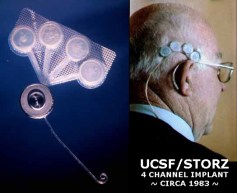
I passed all the tests with flying colors and before I could blink, I received a “Storz-4 Channel” device in the 5 hour surgery.   I spent 5 days in the hospital (really!!) and waited 6 weeks for activation.    I had no expectations at all.  All I wanted was to hear sound again.  I didn’t know a soul with a CI and was not allowed to meet the fellow in the next town that had one. I think we would have both benefited if we had been allowed to meet.

Turn on day was interesting!   I had two audiologists, one in Connecticut and one in California.  The California audiologist had to fly across the country to map me and any time I had a problem, she had to hop on a plane!  (Thank you, Dorcas!)

I could immediately hear environmental sounds.  I could hear the phone ring, could hear the dishwasher change cycles, toilet flush, doorbell, car horns honking, helicopters etc.

I could hear speech, tell the difference between male and female voices, but couldn’t understand what they were saying.

Music:   Oh how I missed it!!    I tried in vain to listen and understand music with my device.  My mother would put on something and I would try to guess what it was.  I was never able to guess, it was seriously nothing but electronic mush.  Never sounded like music, just noise, and unpleasant noise at that!

My device was starting to fail, only 16 ever implanted in the world, and my electrodes failed one by one until I was left with just one.  The phone ringing went away, it was a slow failure.    Finally the day came when I had to take the headpiece off and go back into the silent world. There was no replacement available.

Fast Forward to 2001.  A friend sent me an email saying I should check out cochlear implants again.  She read an article and thought maybe it was time for me to look at them again.  I delved into the CI world via the internet.   I was surprised I actually had choices in the matter and took this very seriously indeed!

June 18th 2002, I was in for my second cochlear implant surgery. I was implanted with an Advanced Bionics (AB) CII device.  I wanted to have the right ear done again and “save” the left ear for the future. My surgeon convinced me to start fresh and go with the other ear.

Activation day was a month later.   It was loud, overwhelming and crazy!  I had ducks quacking for speech, not “Donald Duck”, but actual ducks quacking.  I had female and male quacks!   I was activated with an older traditional program called CIS.  This program is universal to all the CI companies and dates back to the early 90’s.

My daughter decided to give me a “hook up gift” and we went to the CD store on activation day.  I was gifted a Walkman CD player and 17 music CD’s!

I got home with all my music purchases and literally had to figure out how to work the Walkman and how to open the CD cases!   I lost my hearing in 1971, I had never used a CD, did not even know how to work the car radio, or listen to music with anything other than a record player!

I had to listen to music.  I just had to.  I had CD’s that spanned decades. My daughter had to choose most of them for me.   I started with Elvis.  Nope, couldn’t really tell what I was listening to.  I tried several other CD’s and still no great luck.   I had a vague impression of recognition on a couple of songs, but that was about it.

The next morning I immediately got the music out again.  This time I chose Creedence Clearwater Revival, and I recognized “Suzy Q”!! I was stoked! I actually recognized the song and beat!   I could not understand the lyrics, but the beat had me dancing around the house!    It really did sound lousy as all get out, but it was something…when before I had nothing!

For my birthday that year, my daughter Tara surprised me with tickets to the Paul McCartney concert at the Anaheim Pond stadium in Los Angeles.   I had a good 4 months of hearing under my belt by then and was excited to get to go to a concert!   We had 10th row center seats, drove in from Newport Beach in a limo, it was quite the experience!

The concert was different than I was expecting.  I was expecting them to announce the name of the song so I could see if I could remember it.  Didn’t work that way, they just started playing song after song and expected everyone to know them.   Tara had to tell me what was playing.  Once she did that I either remembered it or I didn’t.  I recognized about 25% of the Beatles songs, but not until I was told the name of the song.  Didn’t get any lyrics, and it really didn’t sound that good.  I was just happy to experience a concert and feel the excitement again!

At the end of 2002 my audiologist asked if I would like to be involved in some clinical trials that AB was doing.  I had to pass an assessment test.  Both my friend Judy and I passed this test and we both were selected to be in the “Auria” trials.

 The Auria was a new behind the ear processor (BTE) that AB was coming out with.  I had no idea I was also going to be upgraded to the next generation software technology as well!  Both Judy and I were fitted with an Auria and AB’s new software technology called High Resolution or HiRes. We were stunned!

The upgrade from CIS to HiRes was an immediate success with improvements across the board with both speech and music.

The lyrics in music became much more noticeable compared to CIS.   At one point after we got back to the hotel, both Judy and I had our Walkman’s out and we were testing our music.   We were sharing a room and I glanced over at Judy to see tears running down her face.   I went over to her and asked her “what was wrong”?    She said “nothing, I can finally clearly hear Johnny Mathis’s voice”! Judy had been deaf for 50 years and it was the first time she could hear the lyrics.

Music for me took on better quality, deeper tones, and like Judy, I could now hear much more of the lyrics.   It was not 100% of the lyrics, but I guess I got about 30% more than I did with the traditional CIS program.

During all the testing with HiRes, I had developed a list of certain songs I used to compare things with.  I had Elvis, CCR, the Temptations and Patsy Cline.  I chose them all because I grew up with this music and knew it well.

Patsy Cline’s song “Crazy” was the one I used the most.   With the CIS program I could get the gist of the song, knew it was “Crazy” and it sounded country (ish).   I did not recognize Patsy’s voice.  It was just a voice with vague slurry lyrics.

Upgrading to HiRes with the same song was quite the eye opener.  I recognized the song immediately and the lyrics came through very well.  Partly because I was getting more lyrics now, and partly because I had listened to it enough to know it well.   Still, even with HiRes, the voice could have been anyone singing the song…I knew it was a female country singer and knew it was Patsy because I put on the music.

A few years after HiRes and the Auria were released, I was again invited to be in trials at AB.    This time for the Harmony BTE trial.   This particular trial was for the Harmony itself using the same programs I had already been using.  I was asked to try music with the Harmony and compare it to the Auria.

Yes, there was another improvement in the quality of the sound.   It turned out that the new technology in the BTE itself offered even better sound quality.  This was with my normal HiRes programming.   I was tested and had better test results with the Harmony as opposed to the Auria with the same programs.

Not long after the Harmony testing I was called to come to AB to try a new program.   It didn’t have a name yet (that I knew of) but I was asked to bring my music.

I listened in wonder as my world of music went from 16 pitches with HiRes to 120 pitches with Fidelity 120!    It was like someone tossed me pieces of a puzzle.  I heard things in the music I had yet to hear with any CI program.   Soft intros, warbles in voices, complex instrument interplay.   Oh yes, oh yes!!!!!

Patsy Cline finally sounded like Patsy Cline.  The voice I grew up with.  It gave me a warm feeling.   When I hear her voice I think of my mom.  Patsy was my mom’s favorite singer and her voice filled our house all the time.   I miss my mom, but listening to Patsy brings a lot of good memories, and I know my mom would approve of how Patsy Cline’s voice sounds to me now.

This is where I am now with music with our current BTE and our current programs.  I have beautiful music, not perfect music, I never expected the same music I had with perfect hearing…but it’s so close in many ways.

But hold on!

I was asked to try something new at AB again and to bring my music. No, it wasn’t the new ClearVoice program.  It was something else.

The first time I tried it my jaw about fell in my lap.   I can only say so much about this because AB has it in “in-house” trials.   It’s the next big thing for music, and it’s going to rock the cochlear implant world!

My researcher set me up with the programs and said he had to go do something for a few minutes, leaving me with my music.   I had the iPod loaded and Bose headphones on.  I immediately went for the old standards and sat shell shocked.   In all the years of silence, all the years of CI research, I had barely cried.   I didn’t cry when I was activated, didn’t cry when I finally got Patsy Cline’s voice back.

I sat there with tears rolling down my face.  I was stunned.   The researcher came back and just looked at me and said “you’re crying”, I sniffed back at him, “no”, he said “yes you are” and I just laughed and said “I know”!    He was so excited!   I had been working with him for years and it was my first over the top reaction.  The new program had the same results with everyone who had tried it.   Everyone was in shock and super excited!    Hopefully it won’t take long to get this program approved.  We all deserve the best hearing we can have, and this next generation program is going to give a lot back.

We obviously have more to look forward to with CI hearing.  Advanced Bionics takes music very seriously. Many of the researchers are musicians themselves.  They have the technology that gives us what’s called “current steering”… and boy have they started to learn exciting things they can do with that technology!

Stay tuned!

Debra McClendon

A close shave

I’ve been shaving with a double-edged safety razor for a few months now. While I generally focus on technique, a BBS (baby’s-bottom smooth) shave is always a goal. And I frequently get large BBS areas, but even after some touch-up, there is always a spot or two that interrupts the otherwise pristine landscape. But I know that a true BBS shave is possible, at least.

My usual experience is rather Zen-like. With no hearing, I thought that I was focused on the tactile feedback of the razor, while enjoying the scent of the soap or cream of the day. I watch the brush whip up a lather in the ceramic bowl, and enjoy the silky smoothness of silvertip badger as it glides across my face while applying the lather.

I took a deep breath this morning, and put on my processors before my shave.

The first thing I noticed was all the noise that the sink makes – water shooting out of the faucet, and gurgling down the drain. With a dollop of Musgo Real shaving cream in a ceramic bowl, I started whipping up the lather. The hardwood handle of my brush makes a pretty loud clink when it hits the ceramic! And my wedding ring makes a smaller clink when I adjust my grip on the bowl.

The brush is surprisingly silent as I apply the lather. Maybe a coarser brush would make a little bit of sound. And I notice the scent of the cream more than usual. It feels like the whole experience is in color rather than in black and white. I can hear tiny bubbles pop on the left side, but not on the right. It’s time for a tune-up visit to the audiologist.

Now down to business, starting with a WTG (with-the-grain) pass. My 1947 Gillette Aristocrat razor has a 4-day-old blade in it (this wasn’t planned ahead). The first thing I notice is that it is easier to get the handle angle correct for this pass. The razor is mild enough that I never feel a single hair get cut WTG. But with the sound turned on, I can adjust the angle until I hear the whiskers getting cut.

Normally I skimp on the XTG (across-the-grain) pass, but gave it a shot today. The cutting sounds are like a credit card sliding across some cardboard. But what is this? I can focus more closely, and hear bunches of hairs getting cut. Even more closely, and I can hear the individual hairs contributing to the chorus!

The big test is the ATG (against-the-grain) pass. I don’t think of the sounds as the razor singing or scraping. At this point, each whisker (OK, small area of beard) has its own voice. Thicker parts of the beard have a coarser sound, while thinner parts, such as near the base of my neck, sound smoother, quieter, and more gentle. I’m not exactly blade buffing, but the sound of the whiskers is an immediate feedback signal telling me whether to take another swipe or move on to the next area.

As I type this, my hands keep wandering up to feel the silky smoothness of my face. This is truly the first completely BBS shave I’ve ever had. And it would not have been possible without the auditory feedback. Being able to hear truly enriches my life in ways that continue to surprise me.

– Howard Samuels