ACIA Resources for Cochlear Implants

May is Better Hearing and Speech Month!  The American Cochlear Implant Alliance has put together some resources for people considering a cochlear implant.  Read more here.

The American Cochlear Implant Alliance is a not-for-profit membership organization created with the purpose of eliminating barriers to cochlear implantation by sponsoring research, driving heightened awareness and advocating for improved access to cochlear implants for patients of all ages across the US. ACI Alliance members are clinicians, scientists, educators, and others on cochlear implant teams as well as parent and consumer advocates.

Children’s Invention Competition for People with Hearing Loss

Kid inventors

MED-EL announces a global competition for kids age 6-11. Aspiring inventors and artists are invited to create a piece of artwork showcasing their invention to improve the quality of life of people living with hearing loss.

One U.S. winner will be awarded $1000 deposit into a college savings plan of their choice, and an entry into an international competition for a grand prize of a trip for the winner and an adult chaperone to MED-EL’s global headquarters in Innsbruck, Austria.

Get Ready for Summer with Ci Wear and Nammu

Cochlear implant HELP, Ci Wear, and Nammu Hats have gotten together to offer you discounts until May 31st.  Just use discount code cochlearimplantHELP to redeem this special offer.

While all cochlear implant companies have waterproof solutions, Ci Wear and Nammu Hats complete the package with innovative methods of securing your processor.

Ci Wear surf

Ci Wear is the “perfect accessory,” proclaims audiologist Joan Hewitt. The patented shirt is designed with sleeve pockets to secure and help protect your cochlear implant processor(s). Use as a rash guard/ swim t-shirt in the water or as sports apparel on land, Ci Wear keeps you connected while offering sun protection, comfort, flexibility, style and confidence during all kinds of sports and recreational activities. Available in youth and adult sizes.

With discount code cochlearimplantHELP, you can get free shipping until May 31st, 2017, to the United States.

Nammu on Aqua Accessory

Nammu Hats are a great solution for kids and adults to keep cochlear implant processors securely in place, comfortably and fashionably, while swimming.

Wear a Nammu Hat with any of the solutions where you put the processor in a waterproof bag.  The bag by itself may keep the processor dry, but it doesn’t secure the processor.  With a Nammu Hat, you can swim, play, and even dive into the water! It works great for swimming lessons, playing with friends, or even just swimming laps.

Stock up now on extra shirts and hats so you can spend less time worrying about your processor, and more time swimming!

Use discount code cochlearimplantHELP to get 20% off Nammu products until May 31st, 2017.

Communicate Using Only Thought

cyberdyne_logo

Boston, MA, USA (April 1st, 2017) Cyberdyne Systems, manufacturer of the OneWorld™ headpiece has developed technology that will enable cochlear implant recipients to communicate wordlessly.

Recent advances in neural interfaces have enabled paraplegics to control motorized wheelchairs and computer keyboards using only thoughts.  With training, some test subjects have developed a ‘vocabulary’ of over 100 actions.  An action may be a control input such as ‘move forward’ or ‘turn right’ or it may be a key or combination of keys on a virtual keyboard.

The neural interface between a cochlear implant’s electrodes and the recipients nerve cells works both ways.  Current cochlear implants use only a fraction of the brain to electrode (reverse) data path, largely focusing on assessing proper functionality of the implant.

Bradley Thinkmore, Chief Technology Officer of Cyberdyne Systems, explains:

‘Cochlear implant recipients have been training to amplify the vocabulary and reliability of the reverse data path by practicing on a computer. Initial tasks include selecting the correct response to multiple-choice questions.  As the subject becomes proficient, the number of possible responses is increased, eventually reaching into the hundreds.

Once the subject has acquired the ability to transmit a vocabulary of several hundred distinct ‘neuronemes,’ or distinct commands, the neuronemes may be remapped to any set the subject desires.  Think of it as being able to choose from a long list of likely texts or email fragments.’

After the cochlear implant processor has received one of the enumerated inputs, it may transmit the information to one or more cochlear implant processors via Bluetooth or some other wireless protocol.  The receiving processor would then convert the neuroneme to its corresponding vocalization using a speech synthesis algorithm.

Cyberdyne Systems plans to license the technology to cochlear implant manufacturers – with a condition.  The manufacturers would like to use the system as an advantage over their competitors, and would like to make the transmission compatible only with other devices from the same manufacturer.  Cyberdyne is requiring all licensees to use a standard communications protocol, so that any cochlear implant recipient may communicate wordlessly with any other cochlear implant recipient.

For more information, contact Cyberdyne Systems.

This is a joke! Repeat, this is only a joke! Do not interpret any of this post as being based in fact.  Names have been changed to protect the innocent. Happy April Fool’s Day 2017!

Robotic-Assisted Cochlear Implant Surgery

Roboter ausgerichtet auf die geplante Trajektorie auf dem Phantommodell.

A team at the University of Bern in Switzerland has developed a robot which performs many of the tasks in cochlear implant surgery.

MED-EL Moment of Hearing Movie

MED-EL has released a short video Moment of Hearing, which highlights some of the most important times when hearing is important.  The link includes a self-assessment hearing test, as well as links to connect with MED-EL.

Cochlear to Obsolete Nucleus 5 Sound Processor

Cochlear has started the obsolescence process for the Nucleus® 5 processor.  This email was sent to current N5 users by Cochlear Americas.  Currently, this applies only to recipients in the United States.

“Our promise of “Hear now. And always” means we strive to bring you improved sound processor technologies and services designed to help you hear moments that matter most to you.

The Nucleus® 5 Sound Processor has been in the market for nearly eight years. This means that the sound processor is reaching its end of life; hence, we begin the obsolescence process. Our records indicate that you may currently use a Nucleus® 5 Sound Processor as either your primary or back-up sound processor. Please make note of the following milestones:

End of Sale – Effective immediately, the sound processor is no longer available for purchase. Aftermarket components and accessories such as coils and cables will remain available for purchase contingent upon supply levels until June 30, 2018.

Repair Services – Cochlear will continue to repair the sound processor through June 30, 2018. All repair warranties will end on June 30, 2018.

End of Life – The sound processor is no longer supported after June 30, 2018. This means that if your Nucleus® 5 Sound Processor stops working, Cochlear cannot repair it. Or if you lose a part or accessory, Cochlear cannot replace it.”

MED-EL Receives FDA Approval for Synchrony EAS

med-el-eas

MED-EL announces that it has received FDA approval for the SYNCHRONY EAS (Electric Acoustic Stimulation).  EAS uses both cochlear implant technology, and hearing aid technology, to provide a solution for those with stable low-frequency hearing loss.

Kanso Receives FDA Approval

Kanso

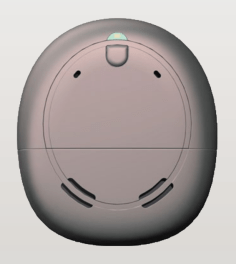
Cochlear’s newest processor, the single-unit Kanso, has received FDA approval in the United States.  The features are largely the same as the Nucleus 6, but packaged in a convenient single-unit form factor.

Read the Kanso user guide here.