New Electrode Array for Cochlear

Cochler array portfolio

Cochlear has received FDA approval for the CI532, a member of the CI500 series cochlear implant.  A new pre-curved, perimodiolar array, the EA32, is introduced into the cochlea through a straightening sheath. The array is shown at the bottom of the image.

No information is available as of yet on market availability.

New Cochlear Wireless Accessories in US, Canada

Cochlear’s Mini Microphone 2 and Mini Microphone 2+ from ReSound are now available in the US and Canada.

wireless-mini-mic2new-single-1

Key Features of the Mini Microphone 2:

  • Smallest True Wireless Microphone option available on the market
  • Range of over 80 feet with clear line of sight
  • 10 hours of talk time on a single battery charge
  • Directional microphone for improved one-to-one communications
  • Recharges in 3 hours with included charger
  • Private and secure connection
  • Reconnects automatically when signal is broken
  • Easy to use

Key Features of the Mini Microphone 2+ include:
All the features of the Mini Microphone 2 PLUS:

  • Omni-directional microphone for use in large groups
  • 11 hours of talk time on a single battery charge
  • FM connectivity
  • Built-in telecoil
  • Ability to connect with other personal electronics via plug-in
  • Pairing button status indicators
  • Low battery light indicator

For more information, see Cochlear’s marketing brochure.

Ears of a Child (video)

World Hearing Day video highlights benefits of early treatment for childhood hearing loss

Global campaign to support World Hearing Day raises awareness of early intervention

Innsbruck, Austria – (March 3, 2016) – Today is World Hearing Day – an initiative led by the World Health Organisation (WHO) to raise awareness about the impact of hearing loss. The WHO estimates that around 360 million people (or approximately 5% of the world’s population) live with disabling hearing loss; of these, nearly 32 million are children. This year’s theme ‘Childhood hearing loss: act now, here is how!’ will raise awareness about public health strategies that help to reduce the prevalence and impact of hearing loss in children.

MED-EL, a leading provider of hearing implant systems, is supporting World Hearing Day with the launch of a new video, Through the ears of a child. The video highlights the potential advantages of treating childhood deafness or hearing loss at an early age, when children are first exploring the world around them and learning to engage with their peers.

The video is also being backed by HEARRING, the global network of hearing implant experts: “This year’s World Hearing Day focus on children strongly supports our HEARRING vision that early identification and intervention through implantation can help children with severe hearing loss,” said Paul Van de Heyning, Chair of the Scientific Committee at HEARRING. “Treating children with hearing loss early gives them a better chance of reaching their full developmental potential. Together as health professionals, we must work globally to reach as many children as possible and restore the gift of hearing to them.”

The ‘Through the ears of a child’ video brings to life the different ways that young children experience the world when they are struggling with hearing loss, and how their life can be transformed when their hearing becomes restored.

Research shows that children, whose hearing is profoundly impaired before they learn to speak, are more likely to benefit from treatment with a hearing implant if it is given at a young age. These children start to receive auditory information at a time when their brain is especially ready to learn language. Therefore, their hearing and speech has an opportunity to develop in a manner similar to that of their normal hearing peers.

Visit www.earsofachild.com to view the video from MED-EL’s international headquarters and learn more about the ways in which childhood hearing loss may be prevented and treated.

Cochlear Introducing New Wireless Accessories

Cochlear Mini Microphone 2+

Mini Microphone 2+

The new Cochlear Mini Microphone 2 and Mini Microphone 2+, by Resound, will be available for Cochlear Nucleus 6 users soon.

Starting March 8th all system and upgrade orders will automatically default to the Mini Microphone 2+ when the Mini Microphone is selected. Patients who ordered the first generation Mini Microphone between March 1 – March 8, 2016 as part of an upgrade or system order will be able to exchange it for a Mini Microphone 2+ at no additional cost if desired. For all other orders, Cochlear’s standard Return and Exchange policy applies. We anticipate shipping the Mini Microphone 2+ beginning March 21, 2016 and the Mini Microphone 2 will be available later in the spring.

Information on the Mini Microphone 2+ is available in the ReSound Multi Mic datasheet.

Cochlear Tests Single-Unit Processor

Kanso

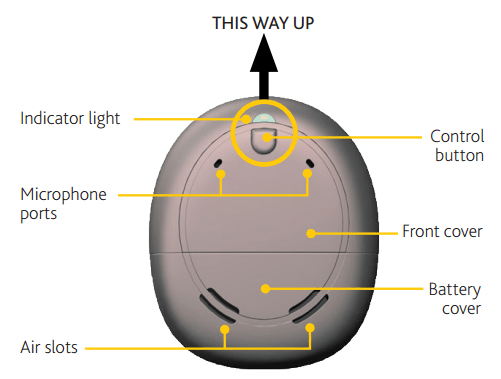
Cochlear is testing a single-unit external processor similar in form factor to the MED-EL RONDO.  With a code name, or perhaps eventual market name of Kanso, the processor operates on 2 675P high-power zinc-air batteries.  And like the RONDO, a tether is available to help retain the processor if it falls off.

Kanso safety line.PNG

Unlike the RONDO, the Kanso has a multi-function button which enables a small set of adjustments.   In child mode, the button is used to change programs.  To change volume or sensitivity, the audiologist must enable the features to be adjusted by the CR210 Remote Control or the CR230 Remote Assistant.

Combinations of long and short presses on the button allow the user to select external inputs, including a built-in telecoil and a sequence of any paired wireless accessories. The wireless capability is a substantial difference between the Kanso and the RONDO.

Kanso parts

The two microphone ports allude to some implementation of a zoom feature, which is helpful in noisy situations.  Like the RONDO, the processor sits directly over the implant magnet, which may not be the ideal location.  A zoom program is likely to be very useful.

The Kanso is programmed to work with only one implant, so it won’t work if you are bilateral and put it on the wrong side.  It does not seem to have the capability of recognizing which ear it is on and loading the appropriate programs.

To learn more about the Cochlear Kanso, read the draft User Guide.

Text-to-911 Calls (USA)

Call if you can

In areas where text-to-911 is available, you may see a graphic such as this.

How to contact 911

If you are deaf, hard of hearing or speech disabled and using a wireless phone or other type of mobile device, make sure to do the following in an emergency::

  • Always contact 911 by making a voice call, if you can.
  • If you are deaf, hard of hearing or speech disabled, and text-to-911 is not available, use a TTY or a telecommunications relay service, if possible.
  • Remember – in most cases now, you cannot reach 911 by sending a text message.

In some circumstances, you may be able to reach emergency services in the United States by sending a text from your cell phone.  This capability is only available in some areas.  If at all possible, you should make a voice call.  If you cannot make a voice call, a relay service or tty is the next choice.

Note that text-to-911 isn’t just for people who have difficulty using the telephone.  Texting may be quieter than a voice call, which may help in some unsafe situations.

Here are some quick facts and FAQs.

More information, including a signed and captioned video, is available here.

The FCC maintains an Excel spreadsheet of locations where text-to-911 is available, updated monthly.

The FCC has adopted an order requiring wireless carriers and other text services to provide text-to-911 service within 6 months of receiving a request.  The request must come from the emergency call center.

Applying for Social Security Benefits

Deanna Power

Deanna Power, Community Outreach Manager for Social Security Disability Help , has contributed a page to help you learn about Social Security Disability Insurance (SSDI) and Supplemental Security Income (SSI) in the United States.  Find out if you qualify at Applying for Social Security Benefits.

Naída CI Q90 Additional Information

Naida CI Q90The Naída CI Q90 is shipping in North America now!  Newly implanted recipients and paid upgrades will receive them first.  Recipients who are participating in the free upgrade program, implanted after February 9th, 2015, will receive the Q90 between 4/1/2016-11/15/2016.

If you have a Q70, you can trade it in for $2500. If you have a Harmony or a Neptune, you may participate in the buy-back program, which will give you $1900 towards a complete Naída CI Q90 kit.

The Q90 is EAS (Electro-Acoustic Stimulation) ready.  When available, you may be able to use the built-in hearing aid component to augment the sound you get from the cochlear implant. EAS is approved in Europe, and is under development in the United States.

Power Cell MiniThe new PowerCel 110 Mini and the PowerCell 170 Mini can be used in the AquaCase. These batteries are also compatible with the Naída CI Q70 processor.

SoundRelax and WindBlock can be used on your primary program.  EchoBlock should be installed on a separate program.

The Phonak EasyCall can be used if you have 2 Naída CI Q90 or Q70 processors, one processor and one compatible Phonak hearing aid, or two compatible Phonak hearing aids.

The continuously-growing constellation of accessories includes, but may not be limited to:

  • EasyCall
  • DECT Phone
  • Roger Pen
  • Roger 17
  • Roger Clip-on mic
  • ComPilot
  • RemoteMic
  • TVLink

For Q70 users, the software to enable WindBlock, EchoBlock, and SoundRelax, as well as using the EasyCall, is already shipping to your audiologist.  Check with your center to see if they are using it yet.

In addition to being EAS-ready, the Q90 offers StereoZoom for bilateral recipients.  StereoZoom uses two microphones on each processor, a total of four microphones, to focus the sound more tightly than microphones on only one processor can accomplish.  The two processors communicate with each other wirelessly.

Pro tip for TVLink users – it’s for more than watching TV!  If you stream music through the TV, you can hear the music wirelessly with the TVLink.

Advanced Bionics Naída CI Q90 Availability

Naida CI Q90

The Naida CI Q90 Pre-sale starts on November 16th for US and Canada residents!  The newest processor from Advanced Bionics offers these exciting features: Contact Customer Service to place your order today.

  • With AutoSound™ OS technology, your Naída CI Q90 intelligently analyzes and automatically adapts to the sound around you, so you hear your best wherever you go without having to change programs or adjust any settings.
  • The StereoZoom feature uses the front and back microphones on both processors to zoom in on a single voice in a noisy environment, so you can chat one-on-one with less effort in extreme noise.
  • The WindBlock feature automatically reduces wind noise for greater comfort in windy environments like a golf course or the beach.
  • The SoundRelax feature automatically dampens unexpected loud sounds, such as door slamming or clanging dishes, for a more pleasant listening experience.
  • The EchoBlock feature improves the sound quality in reverberant environments you encounter, like museums, galleries, and places of worship.

Some of these features will be available for the Naída CI Q70. An appointment with your audiologist will be necessary to activate them.

Initial Naída CI Q90 upgrades will be reserved for recipients who are paying for the upgrade, including a trade-in program for current Naída CI Q70 recipients.  Information for Naída CI Q70 recipients who were implanted on or after February 9th, 2015 will be provided shortly.

Power Cell Mini

In addition, two smaller, lighter batteries with improved battery life will also be available. The PowerCel 110 Mini and PowerCell 170 Mini offer extra comfort and up to 36 hours of battery life. These exciting new batteries will also work with the Naída CI Q70.

Free Shipping on CiWear Shirts

37ba4bb6d5-Ci-Wear-TM-logoCiWear and Cochlear Implant HELP are proud to offer free shipping on CiWear merchandise to the Continental US until 12/31/2015.  Use voucher code ‘cochlearimplanthelp’ at checkout.

The folks at CiWear who make the shirts that hold off-ear cochlear implant processors securely and manage cables now offer shirts in two different materials – one for swimming, and another for sports.

Ci Wear Swim

Ci WearTM teamed up with Victory KoreDryTM, a manufacturer with 30 years of experience in water sports gear, to manufacture our shirts in the USA. CiWear Swim

Key Features:

  • KoreDryTM fabric that is 80% nylon and 20% lycra
  • water-repellent
  • Breathable
  • Dries quickly so you stay warmer
  • Raglan sleeves and flatlock stitching for added comfort and flexibility
  • U.V. tested at UPF 50+ (equal to SPF 150+) factor both wet and dry giving it a rating you can depend on to protect your skin against the damaging rays of the sun when in or out of the water

Ci Wear Sport

Made with high performance premium quality Wicko active mesh for moisture management to keep skin cool and dry. Ideal for all your indoor and outdoor activities, including swimming. The lightweight, stretchable fabric combined with raglan sleeves, and flatlock stitching make for easy movement, flexibility and added comfort.

Key Features

  • Made of 100% Polyester
  • Quick drying
  • Breathable
  • Moisture management (wicking)
  • lightweight
  • Comfortable
  • Ideal for putting under uniform or wearing as a exercise shirt
  • Pockets fit the Neptune, AquaCase and smartphones and digital music players upto the size of an IPhone 6