
Confessions of an Ineraid User

By Carolyn Tata

Carolyn Tata

I was born with a moderate to severe hearing loss in both ears, cause unknown, and was fitted with my first body hearing aid at 11 months.  About a year later, the opposite ear was also aided, I believe using a “Y” cord with the one single aid.  After some time, I got a second body aid and wore the two simultaneously. I was mainstreamed from the start with the help of outside visits with a hearing/speech teacher.

In sixth grade, I upgraded to two BTE’s after my teacher noticed I was not hearing as well. In my mid to late twenties, my hearing began declining rapidly.

In 1988, I suffered a bout of Tullio Syndrome in my left ear, rendering it unaidable.  The amplified sound coming out the hearing aid was distorted and would cause intense dizziness and loudness recruitment.

About a year after the Tullio incident, I met my ex-fiancé, who was a hearing aid dispenser.  At his suggestion, I  became curious about a new technology called a cochlear implant. Together we discussed and researched the idea.

I went to Lahey Clinic for a CI evaluation.  I was rejected because I did not meet the FDA guidelines for a clinical cochlear implant device. At that time, a prospect had to score 6% or less on the single word tests, and I kept scoring 7%, outclassing myself.

Not wanting to give up,  I went through 2 more cochlear implant  evaluations, one at Yale University Hospital, and the other at Massachusetts Eye and Ear Infirmary (MEEI).  Yale also rejected me for a clinical device, but recommended that I wait for a new emerging cochlear implant system called the MiniMed, being developed in California.  This was the precursor to today’s Advanced Bionics implants.  I suspect they suggested waiting because it would buy me more time for either my hearing to deteriorate further, or for the clinical guidelines to relax.

I did not want to wait, as I was fearful of losing the opposite ear any day.  I live independently and needed to keep working.  At MEEI, I also did not qualify for a clinical program, but their cochlear implant research program gave me a two-pronged option: enroll in their program with the Nucleus device in a research capacity, or  take on a more experimental device, the Ineraid.  They had high hopes to obtain FDA approval for the Ineraid at the time.

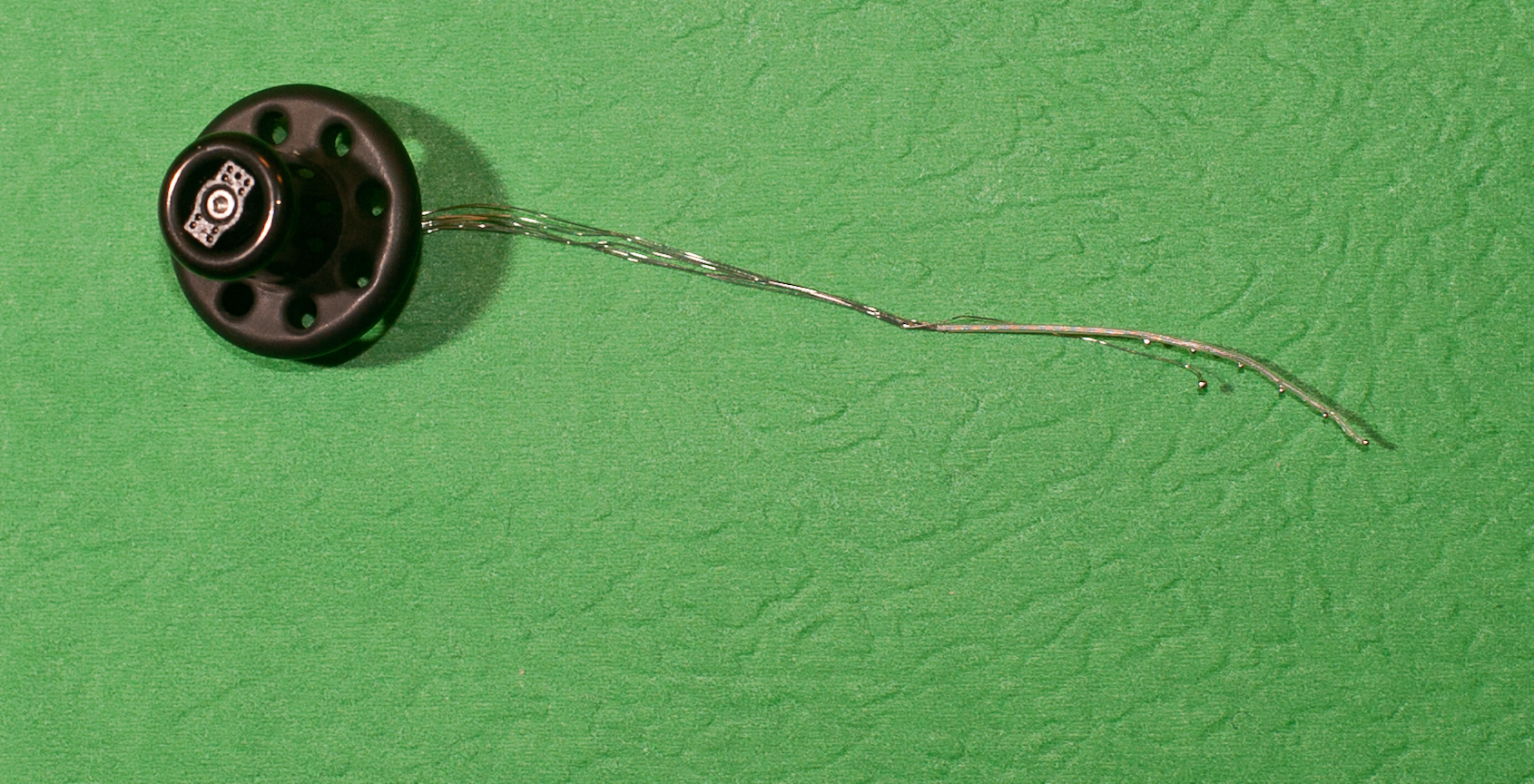
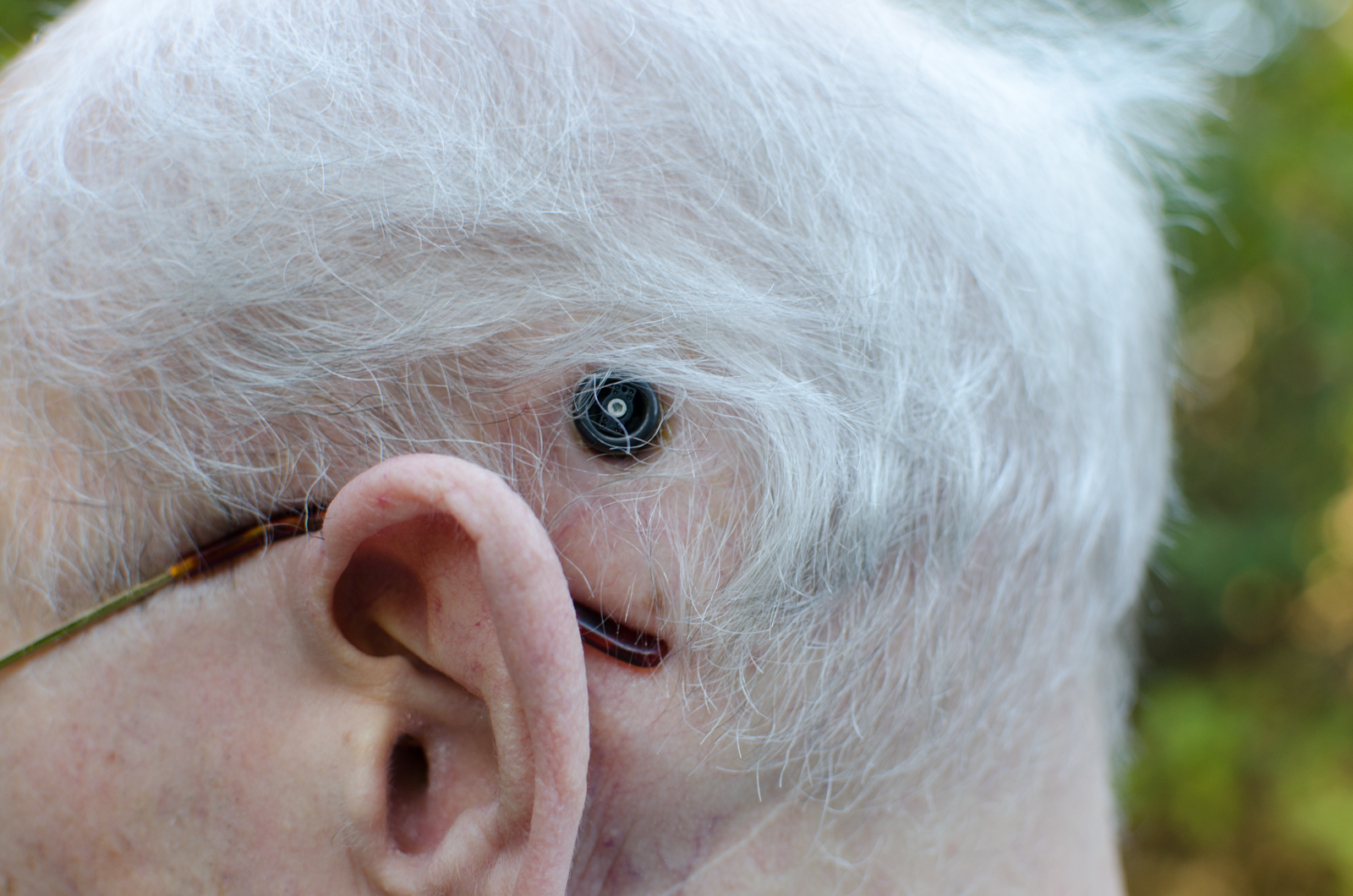
It took me some time, research into the marketing materials, rudimentary observation of others with the two systems, and finally serious thought to make this decision.  I concluded that  it made sense to opt for a “generic “ device such as the Ineraid.  There were no implanted electronics that could break or hinder upgrades.  All of the electronics existed *outside* of the body. The external hardware is connected to the implanted electrode array via an outlet that protrudes through the scalp.  This outlet, working like a wall socket, is called the percutaneous pedestal. This meant that the hardware *and* software was outside the body, in the hands of developers. I decided simple  “plug and play” was the way to go.  I would have easy opportunity to try any of the latest technologies.  Little did I know that the world was going to move to implanted electronics so quickly.  And little did any of us know that that Ineraid, with the same low infection rate as other implants, would not gain FDA approval for the reason of infection risk.

Best this selfie!  My earhook connected to the percutaneous pedestal.

Beat this selfie! My earhook connected to the percutaneous pedestal.

Ineraid processor, cable, and BTE

Ineraid processor, cable, and BTE

I underwent surgery for the Ineraid array on October 26, 1990. The operation was 5 to 6 hours long, with no immediate complications.  Recovery was about 2 weeks.  During this time, I was struggling with intense dizziness.  It may have had something to do with the Tullio issue, or possibly just postoperative fluid loss in the semicircular canals which comprise the ear’s balance mechanism.  The dizziness was steady, but did eventually subside to an  episodic pattern over the following year.  At about 6 months, the episodes grew shorter and less severe until they were finally gone completely a year later.

Hookup was in December.  When I was initially switched on, I listened and immediately declared it was not working.  All I heard was clicks and pings. It was pretty bad!  Then Dr.  Eddington, inventor of the Ineraid device, said “Wait” with a capital W.  He then brandished a screwdriver.  With that screwdriver, he bent over the opened processor and began to twist 4 screws while literally voicing 4 vowel sounds: A, E, O and U.  At each of those screwheads began the lead to the 4 active electrodes in the implanted Ineraid array.  I had to tell him when they sounded of equal loudness.  That was the  “mapping” in its earliest form. I was then instructed to take out my hearing aid in my opposite ear and go home.  I recall pronounced lightheadedness from switching the usual ear off and the opposite one on.  I felt very unbalanced.  This was  a feeling that was so pronounced, it was almost unbearable.  I truly believe the experts did not realize the gravity of the stunt they expected me to perform here.

Dr. Don Eddington

Dr. Don Eddington

I was still hearing mostly clicks and bells. I stuck with it and recognized just one sound by the end of that first day; a dog barking in the distance. However, I believe it was just the cadence of the bark and the fact that we were standing outside in a quiet suburban yard that helped me identify the sound.  It was another 2 weeks before I could get a toehold on the new stimuli.  That handle was the sound of folding vertical louver blinds. Once that sounded like blinds closing, other familiar sounds began to fill in for me.   It was a domino effect, with many pieces falling into place. Once that got underway, my journey of  discovering new sounds began. I would say this was a 5-year ongoing  process.

It was a very mentally intense time as there were so many new sounds I had never heard before (food sizzling in a pan, the hiss of a lit match, the cat scraping in the  litter box, the time clock beep, perfume spray, etc). As for communication functionality, it made lipreading immensely easier, but  I still needed to lipread in most situations.  I could use the phone only with the most familiar people.  But I did enjoy music!  Immensely, as I heard so many new high notes.  My old favorites became new ones.

The first processor I used operated on a primitive Simultaneous Analog Stimulation (SAS) strategy.   SAS is basically an all-on firing strategy.  What they discovered over time was distorted hearing from these 8 electrodes firing simultaneously.  The electrodes’ signals were fighting against each other.  From the feedback of us subjects, they developed the idea of making these electrodes take turns and fire off alternately so each one could have the “dance floor”. This was the birth of CIS, or Continuous Interleaved Sampling.  I spent much of 10 years as a research subject participating in the development of this strategy.  CIS served as a foundation of many of today’s implant processes.

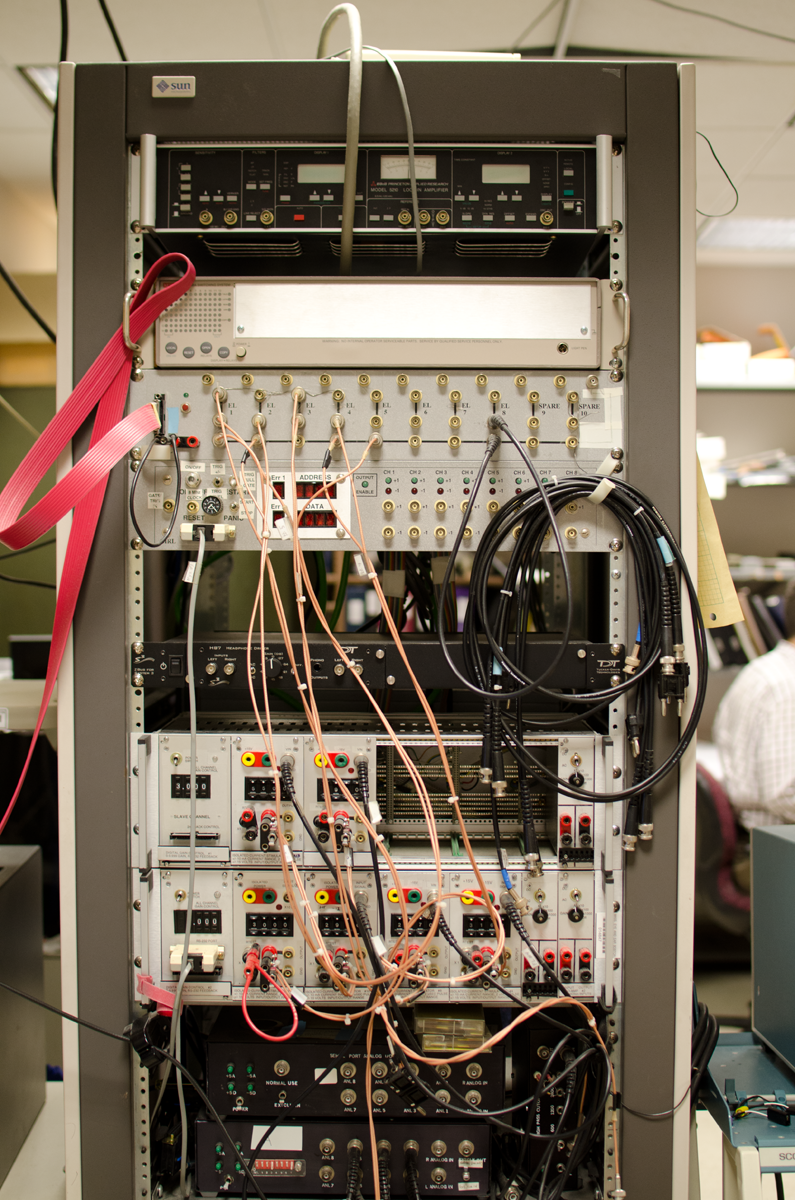
Because this was a new concept, there was not yet a wearable processor that ran CIS.  I had to give feedback via tests in the laboratory, and we delivered our responses via a very simple computerized user interface.  In order to be tested through this CIS strategy, I was seated in an open sound booth with wires running through the wall.  One of these wires plugged directly into the pedestal in my scalp. I was plugged directly into  a myriad of boxes that looked like our old stereo receivers, but even older than that.  These had old fashioned toggle switches and a green oscilloscope to illustrate pulse (or current?) strengths.  Old stuff, but it still did what it needed to do!  The tests would be set up in many different ways in the “back room” and the feedback from me (us subjects)  was mostly via a  Pong-like  computer screen with three boxes that would light up with each signal.  We would have to pick the one that was different.  There was just not hours, but days and years of this seemingly same tests.
I went to the MIT campus to perform speech production exercises. I did get the explanation that they were studying how speech changes when hearing is improved. They had me repeat over and over the same sentences with just one word slightly different.  Ingrained in my mind is saying: << It’s a pod again.  It’s a rod again.  It’s a mod again. >>  etc etc.

To record my speech actions, I had to wear a chest strap, electrodes on my throat and cheeks, some kind of air mask, and speak into a microphone.  There were many different kinds of exercises where I had to put up with discomfort and “perform” for 2 solid hours.

For a while I was living in Salt Lake City, and working at the University of Utah Medical Center.  One day I was walking down the corridor, and a man spotted me as an Ineraid patient. Of all people, it was the famous cochlear implant researcher, Dr. Michael Dorman! He asked me to volunteer as a test subject to try a new device. That was the start to a tight and personal research endeavor.

Just before that time, Smith+Nephew and Richards as the parent company overseeing the Ineraid product, decided to across the board, change some component on the processor board (resistor, transistor?).  Whatever, it totally wreaked havoc on my hearing with the Symbion processor.  At the time I approached by Dr. Dorman, I was struggling with pretty lousy hearing that should not have happened as such.  Thankfully Michael Dorman could clearly see through his testing how badly the revised Ineraid was serving me. I don’t think it was his plan but he decided to let me try a MED-EL processor modified to run CIS.  OMG!!!!  First I saw daylight with the Symbion, then I was awash in sunshine with this MED-EL treasure. I was so fortunate to be able to change processors, even to one from a different company.

MED-EL CIS PRO+ used with my Ineraid array!

MED-EL CIS PRO+ used with my Ineraid array!

Special MED-EL CIS LINK earhook

Special MED-EL CIS LINK earhook

I was astounded when I returned to my office that same day he gave me this processor to try.  People, like my boss, saw the wonder and joy in my face.  This was *connection*! However, I’m guessing it might have been too much connection as I think the processor was set too sensitively.  I think I heard things I was not supposed to hear  (and why not, is always my question!)  I was hearing stuff in my home out there that my companion could not, like the rushing of air through the ducts.

Dr. Dorman was provided more explanations about his testing than the folks back in Boston.  In both Boston and Salt Lake City, there were many, many threshold and pitch discrimination tests. Dr. Dorman did many pitch discrimination tests with me, which showed how scrambled my hearing was with the “newly improved” processor.

Dr. Dorman explained how CIS worked and it became clear to me the reasons for the pitch tests. They were varying the electric outputs of the individual electrodes to create virtual electrodes at the points where the electrical fields of the electrodes intersected. I thought this was the coolest concept!

I wore the MED-EL processor when I moved back to the East Coast. Unfortunately it began to produce static, which grew louder over time.  No one could resolve the issue, so Dr. Don Eddington retrieved that beloved MED-EL processor, returning it to Dr. Dorman.  Dr. Eddington then put a Geneva processor on me, which he had developed with some people in Switzerland to make a body-worn processor that can run CIS. I never liked it as well as I did that MED-EL.  But it could all be in the settings, programming.  Who knows.  Can I get that back, I dunno.  If I could, the other major question would be: who would service it?

Speed dial to 2003, when the opposite ear was implanted, with a clinical device this time.   It was a pleasantly easier experience as it was much simpler prep, shorter surgery and much shorter recovery time.   We can thank better surgical methods after initial trials on people like me the first time around.  This surgery was much easier and rehabilitation was much easier and faster with this CI because I now had a good basis established for the sounds that I was about to hear.

Now that is already 2014 with two CIs, I have been elated to enjoy the advantages that come with binaural hearing.  It took 24 years to get to this point, but I still appreciate my chances to scrabble along this path which has helped countless others following me.  It was hard work, but also very rewarding.  I have many cherished memories from the “old” days that others today would never get to appreciate.  I feel gratification from watching the recipients following our research efforts and findings.  I am thankful to have input a little bit to bettering some lives. Thank you for listening!
Michael Chorost reviews the Naída CI Q70 Processor

Author and cochlear implant user Michael Chorost has published a detailed review of the Naída CI Q70 processor, filled with user experiences and pros and cons of the processor.  Read the full review here.

Ci Wear Shirt Review

Terrie Kellmeyer

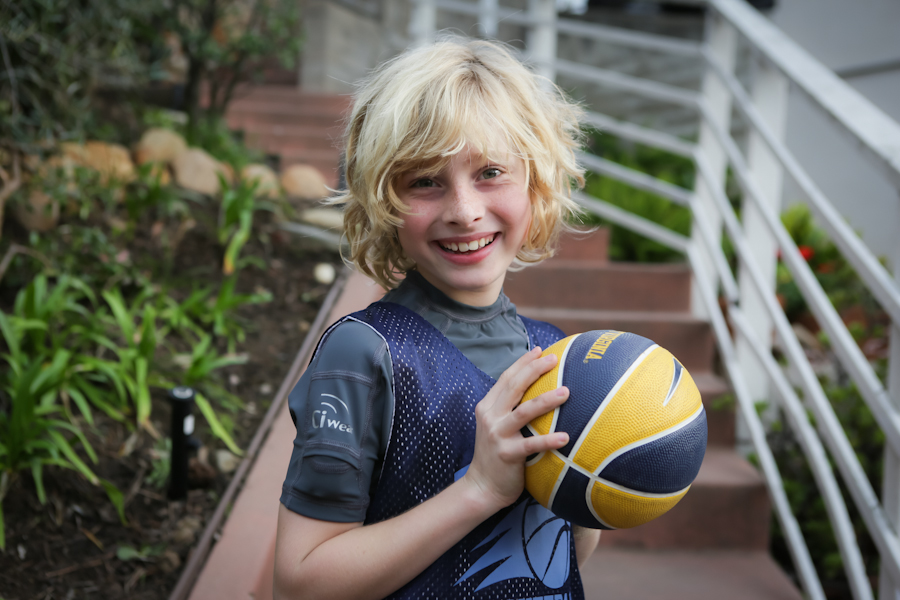
The recently released Ci Wear shirt is a welcome addition to our cochlear implant repertoire.  We are a family of five, and two of our three children wear Advanced Bionics cochlear implants.  Our nine year old son wears the Naída CI Q70 processors and our three year old daughter wears the Neptune processors as their go-to processors.  However, whenever my son participates in sports, he always wears his Neptune processors.

Our family is very active and involved in many sports and outdoor activities.  We live near the ocean, so beach time and swimming are a big part of our daily lives.  We’ve struggled for many years to come up with a good way to wear the cochlear implant processors at the beach.  Prior to the release of the waterproof Neptune processors, we tried Ziploc bags and fanny packs, modified Otter box containers, and many different homemade pocket shirts to hold the CI processors.  We were ecstatic when the waterproof Neptune processor was released, but still struggled to find the right wearing option that worked for our family during water activities.  I again tried sewing my own pocket shirts for the beach to hold the Neptune processors, but wasn’t able to make a shirt where it wasn’t obvious there was a CI processor attached, and couldn’t find a way to keep the cords from becoming tangled.  At a routine visit to our audiologist I was shown a prototype of the new Ci Wear shirt. At first glance it seemed like the perfect solution for wearing the CI processors at the beach.  I was excited to try it out and see if it really worked as well as I thought it would.

We were sent home with a prototype shirt to try out.  The shirt looks and feels like a high-quality rash guard shirt and is well-made.  The shirt is very well designed with pockets on each sleeve where the processor can be inserted.  There is an elastic band in the pocket where the processor can be clipped for added security.  Inside the back of the pocket there is a small hole to thread the cord through, and another loop inside the neckline to thread the cord through which helps keep the cords nicely in place and prevents tangling.  The loop in the neckline also helps keep the cord and headpiece in place when the headpiece falls off, making it much easier to find the dislodged headpiece and put it back on.  Another nice feature of the shirt is that it isn’t obvious that my kids are even wearing CI processors at all.  The CI processors are barely visible when inside the pocket (it just looks like a bump in the shirt), and the cords are nicely concealed inside the shirt and only appear where they come out of the collar.

ciwear_pic1Our first sporting activity after receiving our prototype shirt was a soccer match.  Although the shirt was designed for the water, I decided to give it a try for my son’s soccer game to see if it helped hold his processors in place.  His normal way to wear his Neptune processors was to clip them to the collar of his shirt, but they would bounce around when he ran, and the cords were always an issue.  I inserted both processors in his shirt before he put it on, then he put the shirt on with the processors already in place and off he went.  I was concerned he might get too hot in the rash guard because it is a thicker material than a regular Under Armour shirt, but it was not a particularly hot day and he didn’t complain.  The shirt worked amazingly well and kept both his processors and cords tucked away while he ran up and down the field.  It also hid his processors nicely.  The shirt was an improvement over the way he used to wear his processors.

We didn’t get a chance to go to the beach before I had to send the shirt back so I didn’t try the prototype shirt at the beach.  I received an email a few weeks ago that the shirts were available for sale and immediately purchased two:  a gray one for my nine-year old boy, and a blue one for my 3-year old girl.  I couldn’t be happier!  We’ve now worn our shirts at the beach in the water and they work extremely well.  The processors are very secure in the pockets and I don’t have any worries about the kids losing their processors in the waves while boogie boarding or surfing.  The cords do not tangle nearly as much as they used to due to the loop in the collar that keeps each cord on the correct side.  It’s also nice that the shirts have built-in UV protection – an added bonus.

My son also routinely wears his Ci Wear shirt under his basketball jersey and it works equally well for basketball.  I’m sure that his CI Wear shirt will become a standard part of his uniform he wears for any sport.

ciwear_pic2The shirt should also work well for other CI processors (not just the Advanced Bionics Neptune processor) – particularly any processor with an off-the-ear wearing option.  In fact, I put my iPhone in the pocket and it fits nicely due to the stretch in the material. I’m thinking of ordering one for myself to hold my iPod or iPhone while running.  My son that does not wear CI’s also wore a CI Wear shirt at the beach and filled the pockets in the arm with his beach “treasures”.  I plan to buy one for him as well!

My wish-list for the CI shirt would be to have the shirt also available in a thinner material for everyday use as a pocket shirt under regular clothes for my daughter that wears her Neptune processors on a daily basis, and for sporting events other than the beach.  Of course pink would be a nice color for all the girly girls out there.

Overall this is an excellent product and I am happy to have a well-designed, good-looking shirt that not only conceals my kids CI processors, but keeps them safely tucked away for sporting and outdoor activities.  Thank you Ci Wear!

About the Author

Terrie Kellmeyer is a mother of three active children, two of which wear cochlear implants. Although she has never let her kids cochlear implants limit their sporting and beach activities, she is appreciative of having a new wearing option to hold their cochlear implants which allows her kids to focus on the important things- getting the basket or catching the wave, not worrying about losing a processor! For additional information she may be contacted at terrie.kellmeyer@cox.net.

myNaída app for iOS and Android Review

Deb Deitz

As the proud new owner of a Naída CI Q70 cochlear implant processor, I was delighted to see that Advanced Bionics had come out with a free App that I could use on my iPhone and Android Tablet that gives me the same user information that came with my kit.   Now we can basically have all the information at our fingertips without having to drag out the user manuals!

There are two versions of the myNaída App and each has its own separate link.  The first one is for iPhone users and Apple products and the second is for Android phones and tablets.

myNaida_AndroidI turned on my Samsung Galaxy 10.1 Tablet, an Android tablet, and wasn’t 100% sure how to install the App. I went to the “Play Store” and typed in the word “Naída”.  Sure enough a website came up asking me which version I wanted to download.   I chose “for Android devices” and within a minute I had the full myNaída app installed on my tablet!  Just search the iTunes store or Google Play for myNaída.

In the upper right corner of any screen, you will see a little blue and white settings icon.  This allows you to download all the videos.  It’s nice that the videos don’t come with the app, or you could get hit with some serious data charges!  Make sure to be connected by wifi when you download the videos.

The words “Instructional Toolkit” sum up this App perfectly.   There are nine different sections within the App for various areas of instruction and information.   Click and learn.

My Naída CI:  Everything about your Naída CI, from parts, assembling the processor, operation manual, listening check, using the phone, wearing off the ear, and caring for your device.  The videos come in really handy for sections such as assembling the processor.  And naturally, they are all captioned!  Be sure to scroll down – there are lots of sections.

assembling

AB myPilot:  Parts manual, charging instructions, pairing instructions and operating manual.

ComPilot:   Parts manual, charging and operating your ComPilot.

Troubleshooting:   Common issues with the Naída CI, AB myPilot and ComPilot are all covered.  Full step by step directions on self troubleshooting.   This is a wonderful resource! If you have any problem with your gear, make sure to check out this section.  It may save you a trip to the audiologist!

troubleshootingSound Processing Features:   Excellent explanations of what we have and what it does.  Clearly describes what each feature does.  I am happy to say I am using AutoSound, with ClearVoice and Optima sound processing!  If you sometimes forget what features such as DuoPhone, UltraZoom, or Optima do, this section contains clear and simple explanations.

Phonak Binaural VoiceStream Technology:   This describes our new Phonak features in full.  I am using Ultrazoom and am totally in love with it.   I use it in loud situations, like restaurants, paired with ClearVoice, I hear much better in noise than I could dream possible. DuoPhone, QuickSync, and ZoomControl are features for bilateral users.   If you are in doubt which programs you might want on your processor, this section can help you select your user settings.  Helpful when talking with your audiologist!

Connectivity:   This section explains all the ways to connect to your Naída processor. Learn about the T-Mic 2,  Naída CI listening check, using the telephone, using T-coil, using Bluetooth with ComPilot, AB myPilot, Phonak TVLink, Phonak RemoteMic, FM access.

Hearing in Noise:  T-mic 2, ClearVoice, HiRes Fidelity 120, HiRes Optima Sound Processing, AutoSound, UltraZoom.

Enjoying Music:  This section goes further into Advanced Bionics innovations and talks about getting the best music you can have with a CI. There’s even a link to AB’s music training program, Musical Atmospheres.

Using the Phone:  AB covers some programs that are helpful with using phones.  This feels a bit like marketing material on what the capabilities are, rather than simple instructions on the different ways to use the phone.

There is a tool bar at the bottom of the Home page that takes you to various places.  My favorite is the 2nd one with the logo of three people.  Click on that and you will find links to take you to the various online sites that have AB features and resources.  It’s a great way to contact AB when traveling or not at home and you need something.  Make sure to scroll down to see the whole list!  There’s everything from Facebook to Pinterest to Instagram, instant email to AB, and more.

Conclusion

If you are thinking about getting a cochlear implant, download this free app to see what features will be available to you!  And if you already have a Naída (or two) this is a valuable resource for everything from usage tips to debugging tools.

Everyone will find a use for this App.  No need to drag out your backpack with all the manuals, it’s all here, including easy to find and use contact information for Advanced Bionics.

Happy Hearing!

All new, all over again!

A review of the Cochlear Nucleus 6, including a sneak preview of the automatic program selection feature SCAN!

At 69 years, I can look back on a lifetime of hearing loss, probably caused by the measles. My moderate-to-severe hearing loss was not diagnosed until I was in second grade. My audiogram showed the typical “ski slope” curve, but as time passed, my hearing loss progressed until it was classified as profound. I wore hearing aids all my life, and used ALDs, such as FM systems, Bluetooth for my phone and the television sound, and a whole array of signalling and alerting systems. Communication with those around me was frustrating, to say the least, at least that’s what my family and friends told me!

This hearing loss, confirmed by an extensive battery of tests in the sound booth, gave me the license I needed to “drive” a cochlear implant, the only successful medical prosthesis which can restore a human sense.

In March, 2013, I underwent surgery, and in April, my new Cochlear Nucleus 5 was activated, and in the space of less than 24 hours, it literally changed my life. Obviously, I had a particularly successful activation, and I could actually use the phone normally, just like a person without hearing loss, the same day that I was activated.

After seven months with my implant, my audiologist advised me that Cochlear Corporation, the makers of my Nucleus 5 implant, were giving me a complimentary update to the latest processor, the Nucleus 6. The new processor, with a much more capable chip, offers wireless connectivity, and an intriguing “hybrid” mode, which provides stimulation both electrically, via the implant, and acoustically, with an integrated hearing aid component.

Exciting? For sure! On Thursday, the big moment came. The audiologist had already installed my maps on the new processor, and we spent some time going over the new program options, and how to use the new Remote Assistant, which is a total re-design from the old Remote Assistant. I said goodbye to my old Nucleus 5, the processor which had opened up the world of sound for me, and we took the new one for its first drive.

What did I get?

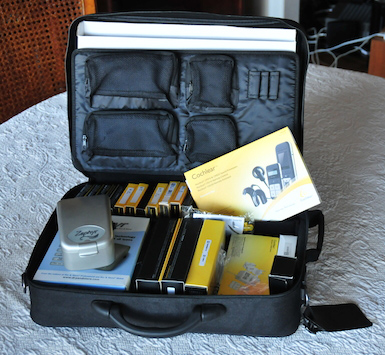
Everything comes in a nice carrying case!

The Case

Inside the case

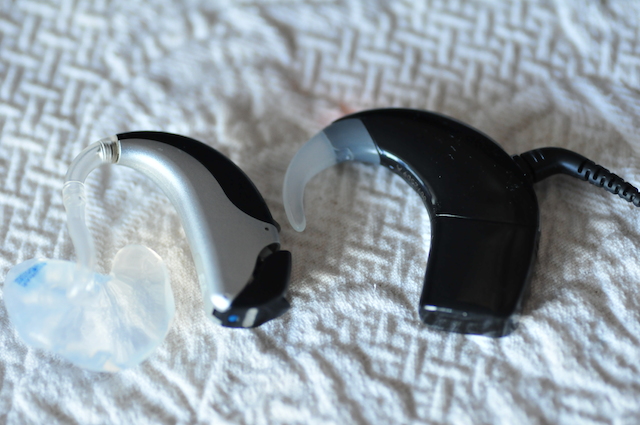
First of all: What was in the box? The new processor, model CP 910 (the larger one with the audio port), was there, of course.  It’s shown here with my Naida IS X UP hearing aid for comparison.

N6 and Naida HA

… as well as one each of the standard and compact rechargeable batteries, which I had ordered.

N6 standard and compact batteries

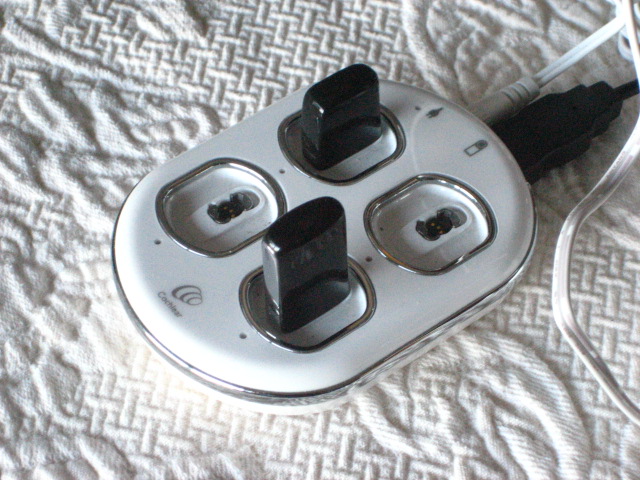
The batteries for the Nucleus 5 and Nucleus 6 seem to fit on both processors.  Here are the Nucleus 6 batteries shown on the Nucleus 5 charger.  The Nucleus 6 charger is charcoal, rather than white.

N6 batteries on N5 charger

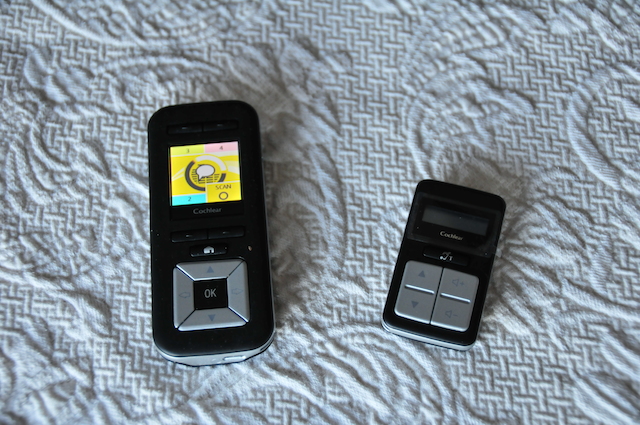
Cochlear included the two new remotes that were introduced with the processor, the CR 230, the advanced Remote Assistant, and the CR 210, the key-ring sized basic remote unit.

Two RemotesAlso in the box, the charger for the remote control, a complete documentation package, the headpiece (coil), the headpiece cable, a USB cable for the remote assistant, the magnet, and a set of replacement microphone protectors. I was able to keep the old headpiece, and all the other accessories which came with my N5 processor, as they are all compatible with the new unit, a wonderful bonus.

The CP 900 series, the official name for the Nucleus N6, comes in two versions: The CP910 offers a direct audio input (DAI) port, while the smaller, but otherwise identical CP920 does not. For those who want the smallest possible device, the CP920 is the way to go, while for those who may need to use FM systems, or perhaps a direct connect cord to an audio device, the CP 910 is the way to go.

Here is a closeup of the mics and controls.

Mics and controls

… and one of the new N6 coil made of a different material.

N6 Coil, New Material

What’s new?

So, what’s new with the new CP 900 series processors? The principal point of change is a new custom microchip, which gives the new processors some advanced capabilities. Other changes are a small reduction in the size of the processor, a new ear hook system, and some minor cosmetic changes. The Nucleus 6 retains the same titanium bayonet mount for the batteries as was found on the Nucleus 5, and the overall quality of the processor and coil appears outstanding, with the same quality materials and finishing as the older unit.

Looking under the hood, Cochlear have developed a new “SCAN” program, which is essentially an “automatic transmission” for the processor. SCAN is available here in Canada and some other markets now, and will come to most other locations soon. Just as an automobile transmission has a number of gears which are each suitable for different driving situations, so the processor has a number of different programs, each of which is suitable for different listening situations. There are programs for QUIET SITUATIONS, SPEECH, SPEECH IN NOISE, WIND, MUSIC, and one called FOCUS, which utilizes zoom microphone technology to help with hearing a particular speaker in a noisy environment. SCAN constantly analyzes the sound environment, and chooses which program is most suitable for the situation. Think of it as putting your car in “Drive”! The Remote Assistant, which communicates bi-directionally using 2.4 GHz radio technology, has an informative screen which tells which of the programs the processor has selected.

In addition to this new processing strategy, the processors in the CP 900 series have wireless connectivity built in to the chip, using 2.4 GHz technology. Cochlear have teamed up with GN Resound, a Danish maker of hearing aids, to use the same technology and series of connectivity devices, and this will be available by way of a software upgrade, as soon as approval for release is obtained. As well, these processors can operate in a hybrid mode, which offers simultaneous electrical stimulation and acoustic stimulation with a plug-in hearing aid component that replaces the standard ear-hook. Again, release is waiting on regulatory approval.

How does it sound?

Because I am the first person that my audiologist has upgraded to the N6, she has requested that I use the SCAN program, and that I provide some feedback. The remote assistant displays which program the processor has selected. Upon wearing the new processor, my initial impression of the sound quality was that it’s quite significantly improved over the older model. Voices have a “fuller” sound, and the sound quality in the high frequencies is still crisp, and precise. Background noise, which the N5 presented as a sort of “grainy” stream, is now much more natural. SCAN chooses between EVERYDAY (Speech); NOISE (Speech in noise), FOCUS (Microphone zoom), WIND, and MUSIC.

As I left the clinic, I walked out into a busy downtown urban street. The NOISE program came on almost instantly, and the traffic roar was reduced substantially. However, at the same time, the unit reduced the apparent volume of my own voice, and presumably would have reduced the volume of the voice of any person with whom I had been conversing. I got on my bicycle, and rode home, and noted that the WIND program was invoked, and that it did reduce the volume of the wind noise frequency bands significantly. At home, the unit sometimes had trouble deciding whether it was a quiet situation, or whether, when my wife and I were talking, it was a speech situation. As it turns out, it didn’t matter, as I was able to follow the conversation without any difficulties.

On day two, I went to the local community centre for my weekly dose of Tai Chi. The room we use has a noisy ventilation fan, and I noticed that when the unit switched into the noise program, the voice of the instructor was attenuated a bit more than I’d have liked. I used the remote to switch to the EVERYDAY program, designed for speech, which was my go-to program on the old unit. That restored the instructor’s voice to the normal level. And finally, last evening, I chose to watch the evening news on the television. In our open-plan house, my wife was watching something else on the kitchen television, and the unit decided that I was in a SPEECH IN NOISE situation. Again, the television voice sounds were attenuated, so I once again switched to the EVERYDAY program, as I had done at Tai Chi. I suppose I could have just turned up either the sensitivity or the volume, but changing programs was a one click operation, one which did not require the use of the remote.

On day 3, I took some time to listen to music with the new unit. I did so using the SCAN program, and noted that for most types of music, the unit switches to the music program quite quickly. The exception seems to be some forms of choral music, which can sometimes confuse the unit, as it reports out on the remote assistant that it is in a noisy environment, or a speech in noise environment. The new processor does a better job than the older one at pulling individual voices and instruments out of the total sound environment, and reproduces the sound so that familiar melodies are rendered accurately. As with the older unit, and indeed with most CIs that I’ve read about, the sound is weak in the bass registers, resulting in an overall “thin” quality. Despite this, my music listening experience was enjoyable.

Monday, day 4 with the new processor, a day spent mostly working outdoors, with the EVERYDAY program, I was unaware that I had switched to this program. Conversing with my wife and some neighbours in the yard, I did not have any trouble hearing any of the conversations, as far as I could discern, and I did not find any of the background noise annoying. At one point, I heard what I thought was some sort of strange bird call, but it was apparently a car alarm off in the distance.

Back in the house, I was about to lie down for a brief nap when the antique clock decided to chime the hour. And that’s when I noticed that the character of the chime sound has changed from what it used to be. I have to be honest here–it must be 50 years since I last heard it without the aid of some sort of hearing instrument, but it certainly sounds more like I think I remember it. The sound with the Nucleus 6 is again, fuller than it was with the Nucleus 5.

During the evening, I enjoyed an hour-long conversation with an old friend using Skype as the medium. Despite the fact that my MacBook Air has what I consider to be very “tinny” speakers, we both agreed that I did not have trouble with the conversation, but then again, the lip sync was excellent on this call, so I guess I was doing some some lipreading! It seems only fair to point out that the voices of all my friends are different, and yet with the CI, I can easily distinguish all of them.

Day 5 was a repeat of day 4, but day 6 saw me head out on a four-hour cycle and lunch trip with two buddies. While cycling, I had to remember to ride with the other guys off to my right, so as to avoid the “head-shadow”, and if I did this, I could stay in the conversation. The processor switched into the WIND program, which, although it does not completely eliminate the “roar” of the wind, does reduce it to a very manageable level. At the cafe, typically noisy with a lunch crowd, conversation was relatively easy, although I did have some problem following the server, perhaps because of the head shadow again.

I went for lunch with my daughter on day 7, and we chose to go to a busy Chinese noodle house, a very noisy restaurant. Before leaving the house, my wife and I conducted a very simple test. We turned on a vacuum cleaner, and while she talked to me, I tried each of the four programs on my processor. With SCAN, the processor went immediately to the SPEECH in NOISE program. after listening to each of the programs, I chose to “shift gears” for myself, and chose the one that gave me the best speech comprehension, which was my old EVERYDAY program. At the restaurant, I was able to hear my daughter very easily, as we talked over the upcoming Christmas season events.

And, on the same day, I attended an evening meeting of 14 people. Because we were all seated around a large boardroom table, it was not possible for me to use speechreading. Again using the EVERYDAY program, I found that not only could I easily hear each speaker, and I was able to identify the speakers by the sound of their voices.

The remote assistant displays the program that SCAN selects. Program change time varies, apparently depending on how “defined” the sound environment is. After spending a reasonable time using SCAN, I intend to “shift gears manually.”

Music

Listening to music with a cochlear implant, while once a challenge, is now something that can be quite enjoyable. With my N5 processor, I did enjoy music, although my perception was that there was too much treble, and not enough bass tones. With the N6, this has improved, but not so much that I would say the tonal imbalance has been erased. Violins sound smoother and more full, and vocals have a more natural sound, but the lower registers of the piano, and string bass notes are still quite weak.

Battery Life

One last performance item I’d like to note is battery usage. The N5 would run for about 32  hours using the standard (larger) rechargeable battery. With the N6, I ordered the smaller rechargeables. These give about 17 hours of continuous use. I tried the larger rechargeable battery with the N6, and found it returned about 30 hours of continuous use. Whether this represents a drop, or just changed circumstances is not clear, but the battery life of the two units is comparable, and the lighter weight of the unit with the smaller battery definitely adds to the wearing comfort.

Accessories

The N6 comes with a totally-redesigned “Advanced Remote Assistant” which communicates bi-directionally with the processor. In addition to changing programs, you can adjust volume, microphone sensitivity, and such variables as the telecoil-to-microphone input ratio, and the accessory socket-to-microphone ratio. Finally, you can check the battery status of the processor, and run a simple diagnostic routine to help troubleshoot. Besides this remote, the N6 comes with a new “Pocket-Size Remote Control” which allows for program changes, and adjustment of volume. Both remotes allow for selection of telecoil, or auto-telecoil. It should be noted that the audiologist can choose to enable or disable some of the capabilities of the Advanced Remote Assistant, depending on the technical sophistication of the user.

Summary

After a little more than a week “test driving” the Nucleus 6, I’m generally well-pleased with the improvements in the quality of sound when compared to the N5. The SCAN program generally works as intended, but I am left wondering whether I might not be better off to let my own brain, which has proven quite plastic, to adapt to different sound environments by itself. As my first week with the new processor progressed, I found myself “shifting gears” myself more and more frequently, choosing the program which sounded best to me, usually either EVERYDAY, or NOISE. Perhaps the SCAN program feature is intended for those who have more difficulty hearing with a CI than I do.

Would I recommend this upgrade to others? For anyone using the older Freedom processor, for sure! For those with a Nucleus 5, the improvement in sound quality is closer to evolutionary, rather than revolutionary. For some users, the upcoming wireless connectivity will provide a reason to upgrade. Others may wish to take advantage of the hybrid feature when it becomes available, and after discussing this with their audiologist. All in all, I think Cochlear have done a great job of advancing the technology and feature set in their processor, and for those who are upgrading from the N5, the compatibility with the older batteries, coils, cables, etc., is most welcome.

About the Author

Rick WatersRick Waters lives in Vancouver, Canada. After spending over 20 years working as a communications consultant with the Canadian Government, he retired, only to take a job working as the head of the Communication Aids department at the Western Institute for the Deaf and Hard of Hearing, where he worked to help those for whom a hearing aid was not enough. He has found that his life-long interest in audio has enabled him to understand the design and operation of hearing instruments, and this in turn helps him to get the most out of those devices.

In his spare time, he loves to shift the gears manually in his 1949 MG TC Roadster, which he’s driven from Vancouver to San Francisco, as well as all over the Pacific Northwest.

Rick’s wife, Lynn, and his two grown children have always been supportive of his struggle to hear, and are delighted with the success of his recent cochlear implant.

From N5 to N6: Initial Impressions

From N5 to N6: Initial Impressions

A review of the Cochlear Nucleus 6

CP910 inside

Model reviewed: CP910

To go from significant hearing loss to being able to hear significantly within the space of four weeks – the usual period between a cochlear implant operation and activation with the processor – is a life-changing experience for many. To then go from activation with one device to an upgrade to the latest processor for that device within three weeks was an equally life-changing moment for one London recipient.

TB is an adult cochlear implant user who received her first processor, a Cochlear Nucleus 5 (N5) in summer 2013. Three weeks after activation, she was upgraded to the Cochlear Nucleus 6 (N6) and the article below brings together her experiences since activation with those of a long-term user of the N5 who has not yet upgraded to the N6, to allow comparison of the models for the purposes of this review.

Both users are broadly similar in background and experience, being profoundly deaf from birth or infancy, and having grown up in mainstream education with good speech and lipreading skills. Both were motivated to obtain their cochlear implants through finding it increasingly difficult and demanding to keep up lipreading skills in their day-to-day lives. TB recalls “falling asleep through exhaustion” at the end of the day, while SC, a lifelong lipreader, found that she was forced to put in more and more effort to achieve the same results as she had had in her teens.

Distilling experiences between users of the N5 and the N6 with similar backgrounds provides a comparable benchmark between users, their expectations, and their experiences between two different models of the same brand of cochlear implant speech processor.

User experiences compared:

Both users found activation with the N5 an overwhelming experience, one that is common to many cochlear implant activations, regardless of brand or hearing history: it is in part attributable to the sudden access to a wider range of sounds than hitherto, rather than to the specific implant itself. Their reactions were surprisingly similar: “I hated it and thought to myself, what had I done?” (TB) and “So this is how hearing people hear, my goodness, I don’t know if I want to be part of this world!” (SC) Both adapted remarkably quickly to being able to hear again, and it appears that for TB access to the N6 has accelerated this process of adaptation.

TB exchanged her N5 for an N6 three weeks after activation, and reported an immediate positive response to the change in processor that seems to go beyond the changes expected at the key stage of mapping 1 month post-activation. (For comparison, at 1 month SC was given the basic map that she still uses for everyday purposes.) In particular TB reported that the automatic scanning of environmental sound as part of the N6’s new processing strategy (which is described in more detail below) significantly reduced the noise levels of a busy London street. Prior to this point she felt that she had been struggling with ‘loud noise syndrome’ in which she felt that her voice rose above the surrounding noise level, and the impact of the new strategy returned her voice to normal levels, much to her relief, as she was no longer straining to hear herself.

Description and technical features of N5 CP810 for comparison:

CP810The N5 CP810 sound processor has dual microphones alternating with dual control buttons across the top of the processor, with an accessory port hidden under a flap. The size of the processor can be modified to suit the user through battery choice, with three interchangeable battery options: a standard sized battery cage holding two cochlear-implant specific disposable batteries, and rechargeable lithium-ion batteries offered in two sizes: standard and compact.

CR110It is accompanied by the CR110 remote assistant in white with a large user-friendly central button, allowing the user to cycle between programmes remotely rather than through the buttons on the processor itself. SC found this useful in toggling between programmes in the early days of activation, rather than using the buttons on the processor. It also permits individual settings of volume and sensitivity across all four available programmes: Everyday, Noise, Focus, and Music, which in the CP810 can be loaded individually or collectively with the proprietary SmartSound strategy. Everyday and Music are self-explanatory; Noise is intended to reduce the discomfort of surrounding noise, while Focus is intended to enhance speech discernment in noise.

The remote assistant also allows a certain amount of troubleshooting via simple yes/no choice options to identify typical issues, reassuring for users (and which SC has only ever used twice in 3.5 years to solve simple issues).

Programming is flexible, with the capacity to have four programmes based on the same map or to tailor the programmes according to user preference.  For example, the Noise and Focus programmes can be discarded if preferred and replaced with Everyday and Music programmes based on a second map, thus having a choice of two Everyday and two Music programmes for different listening situations.

Description and technical features of the new N6 CP910 and CP920 models:

Physical features:

Cochlear CP910 CP920In appearance, the N6 is very similar to its predecessor, with some minor modifications that result in increased comfort. The controls and microphone covers are also similarly disposed alternately across the top of the processor, with greater ease of use in the control buttons. There are two models, the CP910 and CP920: the difference between the two models is that the CP910 offers an accessory hatch similar to the N5 for direct input of cables from audio accessories such as mp3 players, etc., while the CP920 does not, leading to a size reduction in the CP920.

Like the previous generation N5 processor, the N6 CP910 and 920 are both powered by a rechargeable lithium-ion battery or disposable battery unit taking 2 cochlear implant-specific batteries. Both compact and standard size rechargeable batteries are available in the UK.[1] The compact batteries of the N6 and N5 differ very slightly in profile, the N6 having straight edges rather than being slightly rounded, shaving off a fraction of the size, up to 2mm in height.[2] However, the batteries of the two are interchangeable using the same snap-on/off mechanism, which is good news for those wanting to upgrade and having significant life remaining in their existing N5 batteries. It is also good news from an ecological standpoint.

The choice of a CP920 without an accessory hatch and powered by fractionally more compact batteries therefore reduces model size compared with the N5 CP810 in two dimensions, which is immediately apparent to the wearer. Most implant recipients will previously have worn hearing aids, which are nowadays extremely small: while cochlear implants do not currently match the small size of the latest hearing aids, the market as a whole is tending towards miniaturization of the external package. These changes, though cosmetic, represent a positive step forward in that direction for Cochlear and would be an attractive option for adults with small ears and for children. User comfort is an important consideration in encouraging implantees to wear their processors during waking hours to obtain maximum benefit.

Processing strategies and remote assistant:

The processing strategies have been refined with a wider suite of programmes for different hearing and listening situations to suit the user, although the processor still has a capacity of four programme slots.[3] The proprietary SmartSound iQ can be used as a programme in its own right, automatically scanning the ambient noise environment and responding with an appropriate selection out of six rather than four possibilities. This takes it beyond the previous generation SmartSound strategy on the N5, which could be layered across one or more programme slots to enhance that particular programme, but could not change the programme itself to suit the environment.

The original four programmes appear to have been retained as part of the choice for the user, two of which have been renamed to reflect the role they play more accurately: they are: Speech (Everyday); Noise; Speech in Noise (Focus); and Music. They are joined by Quiet, in which soft sounds are highlighted, and Wind, suppressing ambient wind noise, and the Smartsound iQ programme will select from all of these within its own programme slot. Each of these choices is available as a programme in its own right on the other slots.

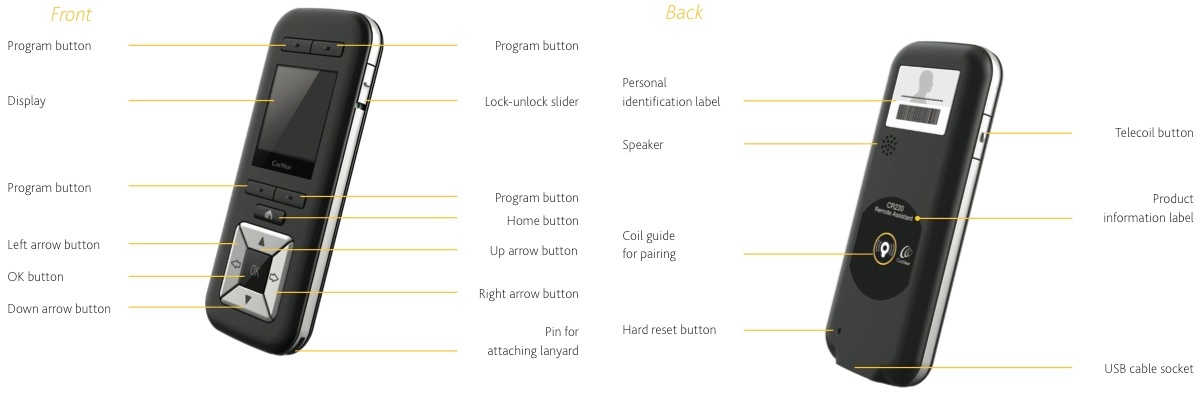
Remote+Assistant+Front+Back+LargeThe CR230 remote assistant delivers the same programme selection and troubleshooting options as the former N5 model with a similar user-friendly large button, although it has been restyled and is much more mobile-phone like in appearance than the white N5 remote, and has a USB port for future data exchange capabilities.[4] The smaller CR210 remote control allows simpler adjustments to be made and could be useful for children or the elderly.

Data Logging:  

In tandem with the upgrade to automatic scanning, the N6 processor also differs from the N5 in that it also offers a data logging capability.[5] This can: show how long the processor is in use on a daily basis; identify to the audiologist which programmes the user prefers; and demonstrate noise levels of exposure, permitting the programmes to be tailored more specifically to user needs, again a refinement which reflects a wider trend in the cochlear implant world.[6]  These are lifestyle options and it is easy to envisage that someone who lives an outdoor lifestyle will, for example, appreciate the benefits of enhancing their maps to minimise wind noise.

For example, the Quiet programme was a good choice for TB in her earlier maps as she adjusted to learning to hear again, but this has now been discarded in favour of enhanced remaps on the ‘scan’, speech and music slots, with the standard industry ‘good practice’ of saving a previous favourite, in this case an earlier map on her previous ‘scan’ programme, as a fall-back. The ‘scan’ programme is currently the programme which TB uses 90% of the time and she reports that her most recent map has “given me a boost to the noise levels, rather than set the electrodes individually.”

The ability to respond to the ambient sound environment in several different ways has enhanced the ‘new user’ experience for TB, who has only been activated for a few months. Her sound environment has altered radically from that initially rather unpromising start, so much so that she “finds the sound of light wind really rather relaxing.” That, in the end, is what it is all about: discovering the world of sound, all the myriad little things that hearing people ignore or take for granted.

*One final aspect of the N6 cannot yet be reviewed – the advertised wireless capability which remains in development and is not yet available. It is understood that it will become available to current and new users via a software upgrade. Hence the title of this review: From N5 to N6, Initial Impressions to allow for a follow-up review.

With many thanks to TB for her willingness to share her new user experiences and compare and contrast the N5 with the N6, and to Howard Samuels for his support and suggestions.

Tamara Bunting is a researcher with a leading medical charity in London, UK.

SerenaSerena Cant is a researcher in one of the main UK heritage organisations, and blogs regularly on her experiences of her cochlear implant, together with arts reviews and musings on being deaf, at deaflinguist.wordpress.com.


[1] Not yet approved by the FDA in the US at the time of writing. Cochlear: Options to suit your lifestyle

[2] Measurements in two dimensions taken and cross-checked by TB and SC, October 2013.

[3] Cochlear: SmartSound iQ and as reported by TB, October 2013.

[5] Cochlear: Nucleus 6 Canadian Announcement with mention of datalogging capability and audiological session, TB, October 2013

[6] Personalizing maps even for long-term implant patients, has been a focus of recent research: for example, the recent Vanderbilt study.

New! CochlearimplantHELP Comics!

Welcome to our new feature – CochlearimplantHELP Comics!  If you’d like to submit comics or even suggestions, feel free to contact us!

SP_COMICS

(click on comic to enlarge)

Thanks to Stephan Pretorius for today’s submission!

Blake Wilson and CIS


Blake Wilson, 12/2000

Blake WIlson

Three giants in the field of cochlear implant research have received the prestigious 2013 Lasker~DeBakey Clinical Medical Research award for the development of the modern cochlear implant.

Graeme Clark, whose efforts led to the commercially available implants at Cochlear Ltd, and Ingeborg Hochmair, whose parallel efforts led to the MED-EL Corporation’s cochlear implants, have relentlessly pursued the monumental engineering and biological challenges of creating the most successful neural prosthesis by far.

While the original multi-channel cochlear implants afforded most recipients access to sound, many still needed to rely on contextual or visual cues to understand speech. These early implants were marvels of engineering, science, and biotechnology.  However, without advanced stimulation protocols, they were like powerful computers without software that fully exploited their capabilities.

Blake Wilson and colleagues developed a new stimulation protocol comprising a number of key elements.  This method, known as CIS (Continuous Interleaved Sampling) provided an immediate and dramatic improvement in cochlear implant performance, and is the basis for stimulation in all modern cochlear implants.

Early in the process of exploring different protocols (funded primarily by the National Institutes of Health), Blake Wilson’s team at Research Triangle Institute in North Carolina recommended that the results from the research be donated to the public domain, forgoing potentially enormous personal and organizational royalties and other income. This supremely altruistic choice enabled as many people as possible to achieve maximum benefit from cochlear implants. Given that the cumulative global sales of cochlear implants is on the order of ten billion dollars, Wilson’s own estimate of the cost of that decision in the tens of millions appears to be quite conservative.

Indeed, without this one selfless act, cochlear implants would not have become nearly as effective or widespread, and outcomes would not even come close to what we can expect from a modern cochlear implant.

Without volunteer test subjects, none of the research would have been possible.  Many cochlear implant users have donated countless hours to research.  These efforts continue today, and are always rewarded with gratitude from the researchers.

To explore different stimulation protocols, the researcher would prefer to have direct access to the individual electrodes.  Today’s cochlear implants are quite sophisticated, and interpose a significant amount of electronics between the external interface and the actual electrodes.

Much of the testing during the development of CIS was conducted with subjects implanted with the Ineraid device.  This implant had a percutaneous connector, ideal for applying experimental stimulation strategies. The Ineraid device is no longer manufactured.

Compressed Analog, one of the more straightforward early strategies available prior to CIS, compresses the wide dynamic range of sound into the more limited electrical dynamic range needed for electrical stimulation. The signal is then split it into frequency bands to be presented to the individual electrodes.

This method mimics the natural hearing process, although the number of electrodes is minuscule compared to the number of hair cells in the cochlea.  The thought behind the CA strategy is to present the brain with as much information as possible, and to rely on the brain to process this rich information set.

Because all electrodes are stimulated continuously and simultaneously, uncontrolled interactions between channels degrade performance.

In order to reduce interaction between channels, the electrodes may be stimulated at different times.  Each electrode presents a pulse proportional to the signal strength in that channel.  Because only one electrode is stimulated at any given time, channel interactions are greatly decreased.

Applying this Interleaved Protocol at a much higher rate for the whole array of electrodes is a key feature of CIS.

Other early strategies included feature extraction, which attempted to present primarily the important parts of sound for speech comprehension.  Eventually it was determined that presenting as much information as possible, and letting the brain sort out the speech, proved to engender the best performance of the different approaches.

CIS is a combination of new and existing elements, which when used together, dramatically improve the performance of subjects using cochlear implants.  Rather than a pre-packaged library of software, CIS is implemented in a custom manner for each cochlear implant system.  All modern protocols are based on CIS, with various enhancements and refinements.  The elements of CIS include:

  1. Full representation of the frequency range corresponding to speech and other sound
  2. No feature extraction to figure out what may represent important sounds for speech comprehension
  3. Non-simultaneous biphasic stimulation reduces interaction between electrodes
  4. Envelope detector filter cutoff frequencies in the 200-400 Hz range to include voice fundamental frequencies
  5. High stimulation rate relative to the envelope bandwidth more accurately represents channel envelopes
  6. Use of current sources rather than voltage sources for more accurate stimulation
  7. At least four electrodes to enable stimulation at different parts of the cochlea sensitive to different frequencies

According to the Lasker~DeBakey Clinical Medical Research Award Description, ‘…Wilson’s “continuous interleaved sampling” (CIS) system has allowed the majority of cochlear implant recipients—for the first time—to understand words and sentences with no visual cues. CIS supplies the basis for the sound-processing strategies that are now widespread and fueled an exponential growth in implant use that began in the early 1990s. Its rapid introduction, utilization, and dissemination stemmed in large part from a policy that donates to the public domain all intellectual property produced by Wilson and his colleagues from their NIH-funded cochlear-implant research.’

The global cochlear implant community, and indeed society as a whole, owe Blake Wilson a tremendous debt of gratitude for his seminal contributions to the field.

The Ineraid Cochlear Implant

Symbion, the company that made Jarvik 7 artificial hearts, also made a brief foray into cochlear implants.  The company was subsequently purchased by Richards Medical Company, a member of the Smith+Nephew group. The processors may be branded either Symbion or Smith+Nephew.  The Ineraid implant is quite simple – several electrodes attach to a percutaneous connector – one that goes through the skin.

The implant received an FDA investigational device designation, and a hundred or so patients were implanted beginning in 1985.  The volunteers who considered participating in the clinical trial received this information guide.  The device never received FDA approval, as transcutaneous devices with magnetic headpieces became the preferred choice in the marketplace.

The Owner’s Handbook includes tips for self-guided rehabilitation therapy, how to carry a spare battery, and how to care for the pedestal to prevent infections.

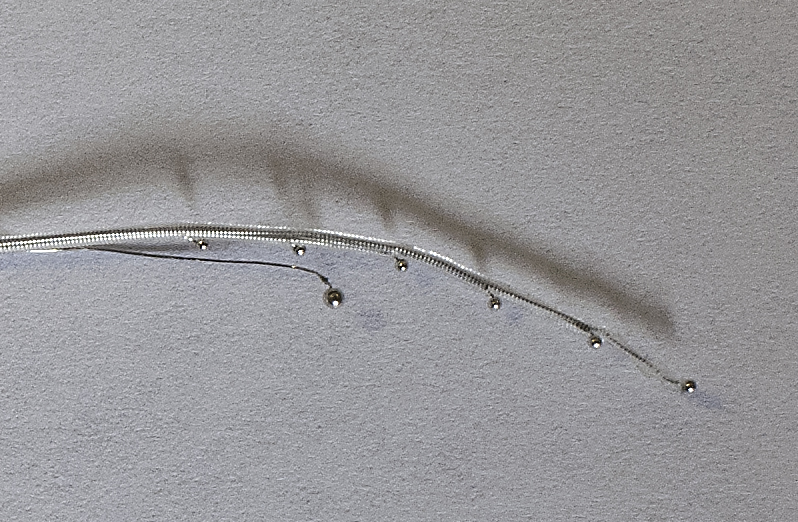
Ineraid_electrodeContacts

Ineraid implant

The six balls along the main part of the array are the active electrodes.  The ground, or reference electrode, is the larger ball on a separate wire. The outer ring of the black pedestal is affixed to the skull, and the inner portion comes through the skin where the external processor makes its connections to the electrodes.

Ineraid connector

The processor is housed in an aluminum case, and has only two controls – power/volume, and sensitivity.  A panel slides off to reveal a compartment for a standard 9V battery.

Ineraid processor front

Symbion processor

The ear hook assembly connects to the body-worn processor with a cable.  The cable has one wire for each electrode, plus the ground wire.  The black wire coming out of the earhook goes to a connector that plugs onto the pedestal.  This performs the same function as the headpiece in modern cochlear implant systems.

Ineraid processor, cable, and BTE

This simple arrangement was specifically chosen to be upgradeable using only external components.  Any advances in electronic hardware and software can be implemented with external components alone, requiring no further surgery.

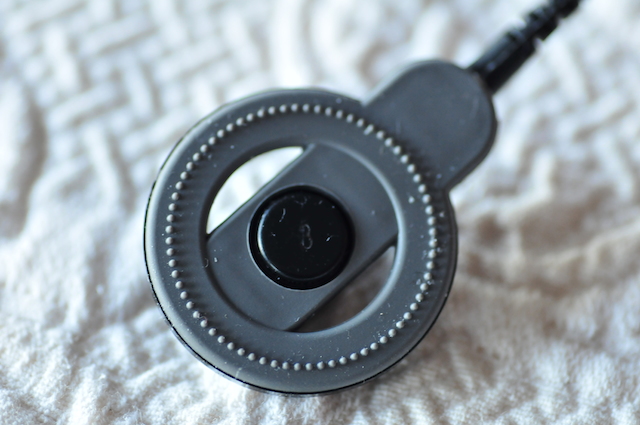
The microphone port is visible in this view of the ear hook. It appears to be a precursor to today’s T-mic from Advanced Bionics.

Ineraid BTE microphone

Direct access to the electrodes of the Ineraid device makes it an ideal vehicle for testing new stimulation strategies. The original processor does not have the desired flexibility for research purposes. While the electrodes can be stimulated in the laboratory environment, a wearable processor would enable volunteers to try different strategies for longer periods of time.

To that end, researchers at the Massachusetts Eye and Ear Infirmary Cochlear Implant Research Lab and at the University of Geneva arranged for the production of the Geneva processor. The National Institutes of Health (NIH) funded the project in the United States. Hardware design and fabrication were done by engineers at the Geneva School of Engineering.

The purpose of the Geneva processor was to provide a wearable platform on which new speech processing strategies could be evaluated with long term use, as opposed to testing during brief visits to the research labs. One of the first and most important strategies tested was the CIS strategy, which had already demonstrated superior results in the lab.

There were about 20 Geneva subjects in the US and a similar number in Europe. About half of them are still using the devices on each continent.

Geneva processor

The MED-EL CIS LINK

In 1995, MED-EL developed the CIS LINK, an ear hook to interface between the MED-EL processor of the time, and the Ineraid implant.  Because the processors expected to interface to the internal electronics of the MED-EL implant, this earhook incorporated the electronics of the MED-EL implant, providing the critical piece of interface electronics.

1995_2

This system gave Ineraid users access to CIS. Their involvement as test subjects proved instrumental in the development of the algorithm.  MED-EL says:

‘Out of humanitarian reasons an addition to the CIS PRO+, the CIS LINK system, is developed to provide the CIS strategy to Ineraid recipients who had received percutaneous plug CI systems by another company which discontinued further development.’