Fully Implantable CI Patent Application from Cochlear

This is an April Fool’s post.  Cochlear Implant HELP strives to provide timely and accurate information.  So as not to mislead our readers, we now identify April Fool’s posts that mention specific cochlear implant manufacturers with this header.  Our posts often hint at features that would exceed the hopes of many of our readers by far.  While the posts are intended in jest, they do reflect some of the wishes of the community, and manufacturers might benefit from accepting these as inputs for longer-range product possibilities.

Cochlear leaps ahead in the fully-implantable technology race.

Cochlear has submitted a patent application to the US Patent and Trademark Office for a fully-implantable cochlear implant.  While there are already many patents by all manufacturers for these devices, this one seems to go way beyond the state of the art.

The biggest advance seems to be in the surgical technique.  Because the electronics are on a flexible ‘board’ they can be rolled into a cylindrical shape.  Starting with the electrode array, the entire assembly is inserted through the nostril.  Conventional arthroscopic instruments are inserted through the opposite nostril, and also through a small incision in the ear drum.  There is no shaving of hair, no incisions other than the ear drum, and no waiting period before activation.

While the surgical technique is not claimed in the patent, it seems the surgery may be performed with a mild sedative and a local anesthetic.  Because there is no need for swelling to dissipate or incisions to heal, the implant may be activated on the day of the surgery.

To charge the battery (or super capacitor) just keep a charging box next to your bed, and the power is transmitted wirelessly while you sleep.

Key points in the claims:

  1. The electronics are on a flexible substrate, which may be rolled up for nasal insertion.
  2. Use of a supercapacitor instead of a battery.
  3. Insertion of the electrode array through the Eustachian Tube.
  4. Unrolling the substrate so it lies flat in a sinus cavity.
  5. Wireless radio-frequency charging.

Read the full patent application here.
Advanced Bionics announces T-Mic Saver

T-mic Saver

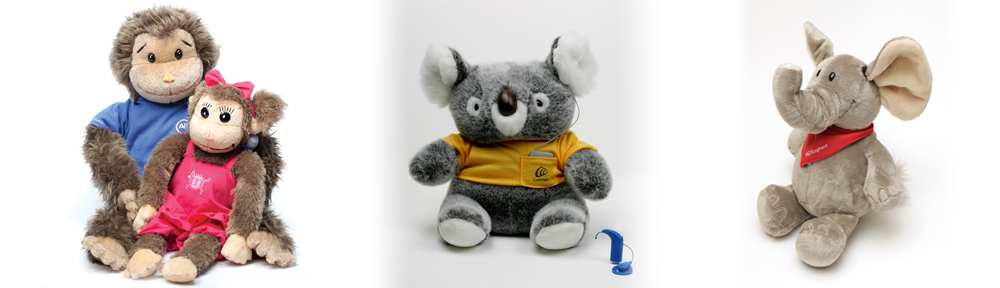
AB announces the worldwide arrival of the T-Mic Saver; a small, removable protective cover for AB’s patented T-Mic microphone! Designed to increase the durability of your T-Mic, the T-Mic Saver is now shipping with all new T-Mic orders and is also available separately in a convenient pack of 6. Place your order with customer service today!

Cochlear Offers 5-Year Warranty on New External Equipment

Following MED-EL’s lead on longer warranties for external equipment, Cochlear matches the 5-year warranty in the United States, Canada, and Puerto Rico as part of the 5 for Life program. Read the terms and conditions here.

Waterproof Neptune Cochlear Implant Sound Processor from Advanced Bionics Receives TGA Approval in Australia

Neptune circleVALENCIA, Calif., March 25, 2013 – Advanced Bionics (AB) announced today that it received approval by the Therapeutic Goods Administration (TGA) for Neptune™, the world’s first and only swimmable, waterproof cochlear implant sound processor in Australia.

Read more here.

Health Canada Approves new Advanced Bionics and Cochlear Processors

Eagle-eyed Bob MacPherson has struck gold again, uncovering Health Canada approvals for both Advanced Bionics‘ and Cochlear‘s new sound processors! Following is a list of specific components licensed:

Advanced Bionics

AB_New_BTE_2

  • Naida CI Q70 (processor)
  • Zinc-Air battery pack
  • T-mic 2
  • 3 rechargeable battery sizes
  • Power adapter (charger?)
  • CPI-3 (programming hardware?)

Cochlear

Cochlear_N6

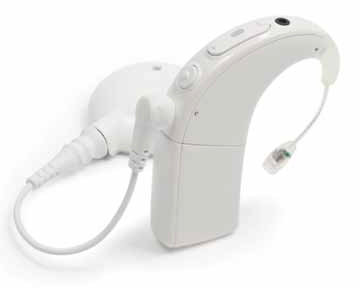
  • CP 910 Processor
  • CP 920 Processor
  • Accessory adapter
  • Bilateral personal audio cable
  • Coil & Cable
  • Integrated Coil
  • Lapel mike
  • Litewear (off-ear battery option)
  • Magnet
  • Mains isolation cable
  • Monitor earphones
  • Personal audio cable
  • Portable phone cable
  • Programming shoe with cable
  • Standard battery module (compact battery seems to missing)
  • CP920 coil cable (tighter bend, since there is no accessory port to block)
  • Charging kit
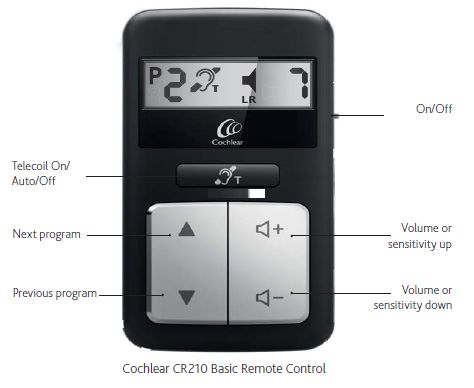
  • Remote controls (CR210 & CR230)
  • Intraoperative remote assitant (to check functionality in the OR)
  • Power Domes, speaker unit, and earhook for acoustic stimulation hybrid operation
  • Processing unit plug
  • Stetoclip (sounds surgical)

Bonus points go to Cochlear for providing lots of accessories, such as the bilateral personal audio cable!  The portable phone cable is interesting – is this in addition to a wireless means of connecting to cell phones, or instead of one?

Advanced Bionics Receives Worldwide Approval for HiRes Optima Strategy

Advanced Bionics announces regulatory approval from FDA, Health Canada, and TÜV for HiRes Optima.

HiRes Optima is a modification of the HiRes Fidelity 120 strategy, and is intended to optimize power efficiency. This new strategy improves battery life without compromising the listening benefits of the HiResolution bionic ear system. AB cochlear implant recipients using this new technology enjoy an average improvement of 55% in battery life, giving them considerably more time to hear their world before needing to change a battery.

Advanced Bionics Receives FDA Approval for HiRes Optima Strategy

Thanks to Bob MacPherson for breaking the news of FDA approval of the HiRes Optima sound processing strategy!

HiRes Optima is a modification of the HiRes Fidelity 120 strategy, and is intended to optimize power efficiency. This new strategy improves battery life without compromising the listening benefits of the HiResolution bionic ear system.

New Product Announcements?

With Advanced Bionics, Cochlear, and MED-EL all preparing to announce new processors, a room full of professionals is always a good place to watch.  There aren’t many cochlear implant conferences coming up, so the British Cochlear Implant Group conference on March 21st and 22nd bears close scrutiny.

The programme includes time for AB, Cochlear, MED-EL and Neurelec to provide manufacturer’s updates.  While CochlearimplantHELP.com has no specific product introduction information, we have been reporting on the upcoming devices.

Advanced Bionics:

AB_New_BTE_2

AB is readying a new processor with wireless capabilities and features from Phonak.  You can stream the phone audio from one ear to the other (another AB implant or a Phonak hearing aid).  Connect to phones, music players, etc. via BlueTooth through the ComPilot.  More information is available in this brochure.

Cochlear:

Cochlear_N6

The Nucleus 6 processor will be available in two sizes – with or without an accessory port.  The processor may offer wireless capabilities using the remote as a gateway device.  And it may be possible to program the processor remotely!  The Nucleus 6 will also be able to act as a hybrid hearing aid / cochlear implant, using the Acoustic Component.

Acoustic Component

MED-EL:

Rondo_2

MED-EL has been busy as well, preparing the RONDO one-piece processor.  This is the world’s first processor to be completely self-contained. The batteries, processor, and headpiece are all one unit.  Nothing sits on the ear at all!

Neurelec:

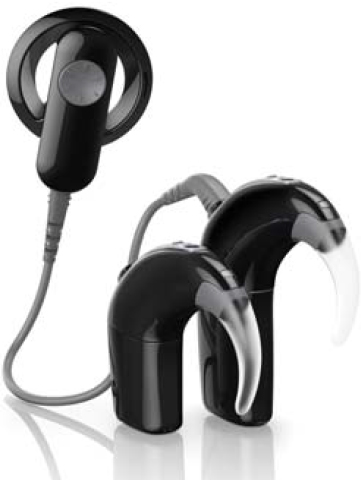
saphyrThis French cochlear implant manufacturer has a time slot to provide an update at the conference as well.  The current system from Neurelec is very creative – one implant has two arrays, one for each cochlea!  Externally, the Saphyr processor sits on one ear, and a wired microphone is on the other ear.  This system provides true stereo sound.