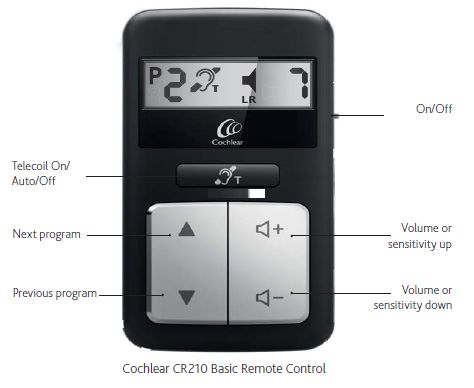
Spy Photo – CR210 Basic Remote Control for Cochlear CP900 Processors
Image
Eagle-eyed Bob MacPherson has struck gold again, uncovering Health Canada approvals for both Advanced Bionics‘ and Cochlear‘s new sound processors! Following is a list of specific components licensed:
Advanced Bionics
Cochlear
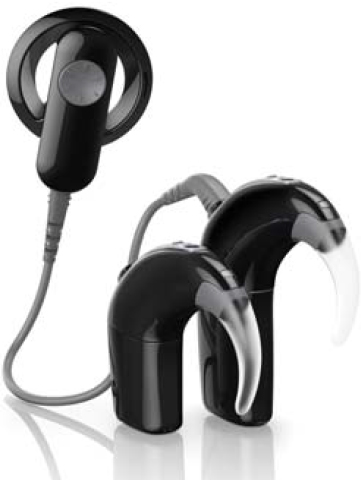
Bonus points go to Cochlear for providing lots of accessories, such as the bilateral personal audio cable! The portable phone cable is interesting – is this in addition to a wireless means of connecting to cell phones, or instead of one?
Advanced Bionics announces regulatory approval from FDA, Health Canada, and TÜV for HiRes Optima.
HiRes Optima is a modification of the HiRes Fidelity 120 strategy, and is intended to optimize power efficiency. This new strategy improves battery life without compromising the listening benefits of the HiResolution bionic ear system. AB cochlear implant recipients using this new technology enjoy an average improvement of 55% in battery life, giving them considerably more time to hear their world before needing to change a battery.
Thanks to Bob MacPherson for breaking the news of FDA approval of the HiRes Optima sound processing strategy!
HiRes Optima is a modification of the HiRes Fidelity 120 strategy, and is intended to optimize power efficiency. This new strategy improves battery life without compromising the listening benefits of the HiResolution bionic ear system.
With Advanced Bionics, Cochlear, and MED-EL all preparing to announce new processors, a room full of professionals is always a good place to watch. There aren’t many cochlear implant conferences coming up, so the British Cochlear Implant Group conference on March 21st and 22nd bears close scrutiny.
The programme includes time for AB, Cochlear, MED-EL and Neurelec to provide manufacturer’s updates. While CochlearimplantHELP.com has no specific product introduction information, we have been reporting on the upcoming devices.
Advanced Bionics:
AB is readying a new processor with wireless capabilities and features from Phonak. You can stream the phone audio from one ear to the other (another AB implant or a Phonak hearing aid). Connect to phones, music players, etc. via BlueTooth through the ComPilot. More information is available in this brochure.
Cochlear:
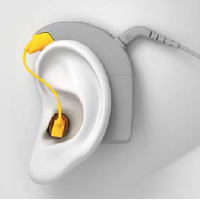
The Nucleus 6 processor will be available in two sizes – with or without an accessory port. The processor may offer wireless capabilities using the remote as a gateway device. And it may be possible to program the processor remotely! The Nucleus 6 will also be able to act as a hybrid hearing aid / cochlear implant, using the Acoustic Component.
MED-EL:

MED-EL has been busy as well, preparing the RONDO one-piece processor. This is the world’s first processor to be completely self-contained. The batteries, processor, and headpiece are all one unit. Nothing sits on the ear at all!
Neurelec:
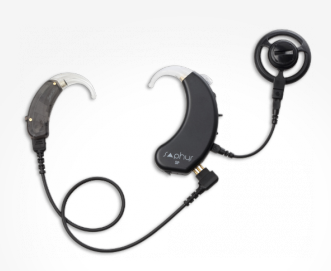 This French cochlear implant manufacturer has a time slot to provide an update at the conference as well. The current system from Neurelec is very creative – one implant has two arrays, one for each cochlea! Externally, the Saphyr processor sits on one ear, and a wired microphone is on the other ear. This system provides true stereo sound.
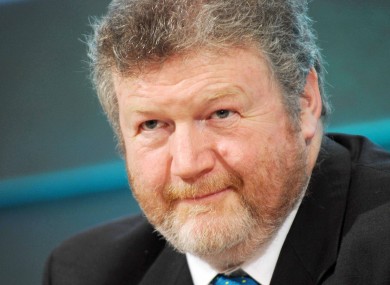 In the continuing saga of the Irish Happy New Ear campaign, Irish Health Minister James Reilly has said that providing children with bilateral cochlear implants in 2014 is “a high priority” for the government.
Read more here.

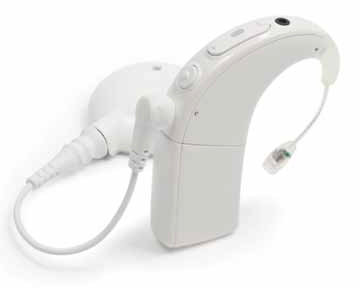
These photos confirm that Cochlear’s new processor will be available in two versions. The larger one has an accessory port, which can be used for direct audio input, a lapel microphone, or with earbuds or headphones to check that the processor and audio accessories are working properly.
Notice that two rechargeable battery sizes are shown. There is also a disposable battery option, and a battery holder that uses two disposable batteries.
Scroll down and click on the ‘Follow’ button to get the latest updates!
Sinn Féin has taken a firm stance requesting that the Irish government fund bilateral implants for children. Read the statement here.

Pamela Bhatti, Ph.D., leads a team of scientists and engineers who are working on a new device that could dramatically improve sound resolution for deaf individuals who opt for cochlear implants. The researchers believe the new array could help users overcome the limitations in language perception that plague contemporary implants.
Read more here.
What difference has your cochlear implant made to your life?
Well, in a nutshell, I am no longer dependent on others. Since I was implanted, I have traveled all over the world, frequently on my own. I became so confident that I even went to Australia for nine months. I tried my best at learning the Finnish language, completed my accounting and marketing studies and then went on to do a Master’s degree. None of these would have been possible without my cochlear implant. In truth, I am incredibly dependent on my implant.

