Cochlear Announces Availability of Nucleus 6 Wireless Features

Cochlear announces that the wireless accessories for the Nucleus 6 processors are finally available! These include the Mini Microphone, the Phone Clip, and the TV Streamer.

wireless-mini-mic

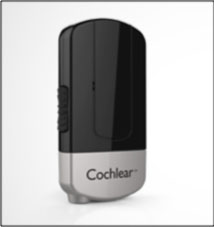
Mini Microphone

Hear no matter where you go.

The Mini Microphone gives you the freedom to hear more clearly no matter where you are. From lecture halls to one-on-one conversations, use the portable wireless clip-on microphone to transmit speech and sound directly to your sound processor.

  • Clearer speech delivered straight to your sound processor
  • Lightweight and portable so you can use it anywhere
  • Do more with plug-and-play audio streaming

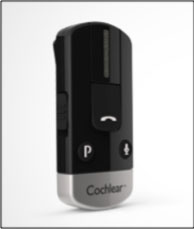
wireless-phone-clipPhone Clip

Disconnect. Then connect.

Bluetooth-enabled wireless gives you control over your smartphone device. The Phone Clip gives you a hands-free connection to friends and family using your smartphone. Make calls and carry conversations without having to take your phone out of your pocket. With Bluetooth technology, place and receive calls and adjust volume at the touch of a button.

  • Hands-free streaming directly from the phone to you
  • Block out surrounding noise so you can enjoy comfortable conversations even in noisy places
  • True Bluetooth control

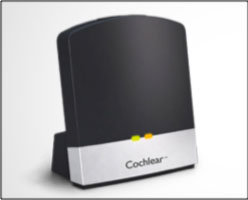
wireless-tv-streamerTV Streamer

Expand your TV experience.

Enjoy stereo sound directly from your TV. With the TV Streamer, you don’t have to choose between your favorite TV show and taking part in conversation. You get a balanced experience with sound from the TV streamed directly to your sound processor while you’re still switched on to what’s going on around you.

  • Don’t disturb others while watching your favorite show
  • Watch TV without overpowering or cutting sounds from the microphone on your sound processor
  • Easy connection and automatic reconnection

Advanced Bionics Receives CE Mark Approval of Expanded MRI Compatibility for Cochlear Implants

— HiRes 90K and HiRes 90K Advantage cochlear implants allow 1.5T MRI scans with the CI magnet in place —

Valencia, Calif., February 3, 2015— Advanced Bionics (AB), a global leader in cochlear implant technology and a company of the Sonova Group, announced today that the HiRes 90K™ and HiRes 90K™ Advantage cochlear implants have received CE Mark approval from the European Notified Body, TÜV, to undergo 1.5T MRI scans without removing the internal magnet. Previously, these devices had regulatory approval to undergo MRI scans only if the magnet was removed.

Magnetic Resonance Imaging (MRI) is an increasingly common tool for diagnosing conditions such as cancer and heart disease. This additional compatibility for MRI scans while the CI magnet remains in place helps simplify the diagnostic process by avoiding additional pre- and post-MRI procedures to remove and then to replace the magnet. “Advanced Bionics prioritizes the safety and well-being of patients with our cochlear implants. We are very pleased to offer patients this additional compatibility with MRI diagnostic equipment,” said Hansjuerg Emch, Group Vice President Medical of the Sonova Group.

Cochlear implants are implanted just beneath the skin, and use magnets to link the internal and external components of the CI system. The internal component of the AB cochlear implant system includes electronics and an electrode array that deliver AB’s proprietary current steering technology for hearing that more closely resembles normal hearing. The newest AB electrode array, the HiFocus™ Mid-Scalaelectrode, was designed for optimal placement in the cochlea with low insertion force to protect its delicate structures. The HiFocus Mid-Scala electrode accommodates the latest soft surgery approaches, including round window insertion, to suit surgeon preferences and individual recipient needs. The patented design allows for ideal placement so recipients have the opportunity to hear the most pitches possible for enjoying music and improved speech understanding.

The external component of the AB cochlear implant system includes a sound processor that sends signals via the headpiece to the internal component. Partnering with Phonak, the world leader in hearing instruments, AB brings its innovative, industry-leading technology to help people with significant hearing loss for whom hearing aids are no longer sufficient. The combination of AB and Phonak technologies makes the Naída CI the most advanced sound processor available, offering high-performance hearing in all environments, 100% wireless connectivity to consumer electronics, bimodal capabilities that allow streaming to the processor and a compatible Phonak hearing aid at the same time.

For more information about AB’s innovative hearing technology, visit AdvancedBionics.com, or follow AB on FacebookTwitterYouTube, and Pinterest.

About Advanced Bionics

Advanced Bionics is a global leader in developing the most advanced cochlear implant systems in the world. Founded in 1993 and a subsidiary of the Sonova Group since 2009, AB develops cutting-edge cochlear implant technology that allows recipients to hear their best.

AB offers the most sophisticated cochlear implant system on the market, the HiResolution™ Bionic Ear System, with five times more sound resolution than its competitors, designed to help recipients hear in noisy settings and enjoy the full dimensions of music and tonal languages.

With sales in over 50 countries and a proven track record for developing high-performing, state of-the-art products, AB’s talented group of technologists and professionals from all over the world are driven to succeed, work with integrity and stay firmly committed to quality.

To learn more about AB and its innovative cochlear implant technology, please visit
AdvancedBionics.com.

Media Contact:
Cheryl Garma
Advanced Bionics
661.362.1400
MediaInquiries@AdvancedBionics.com

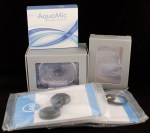
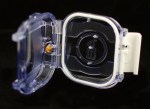
Advanced Bionics AquaCase Unboxing

Click on an image to see the full-size version!

FDA Approves MED-EL’s SYNCHRONY Cochlear Implant

SYNCHRONY is the first and only cochlear implant approved for 3.0T MRI without magnet removal

Synchrony

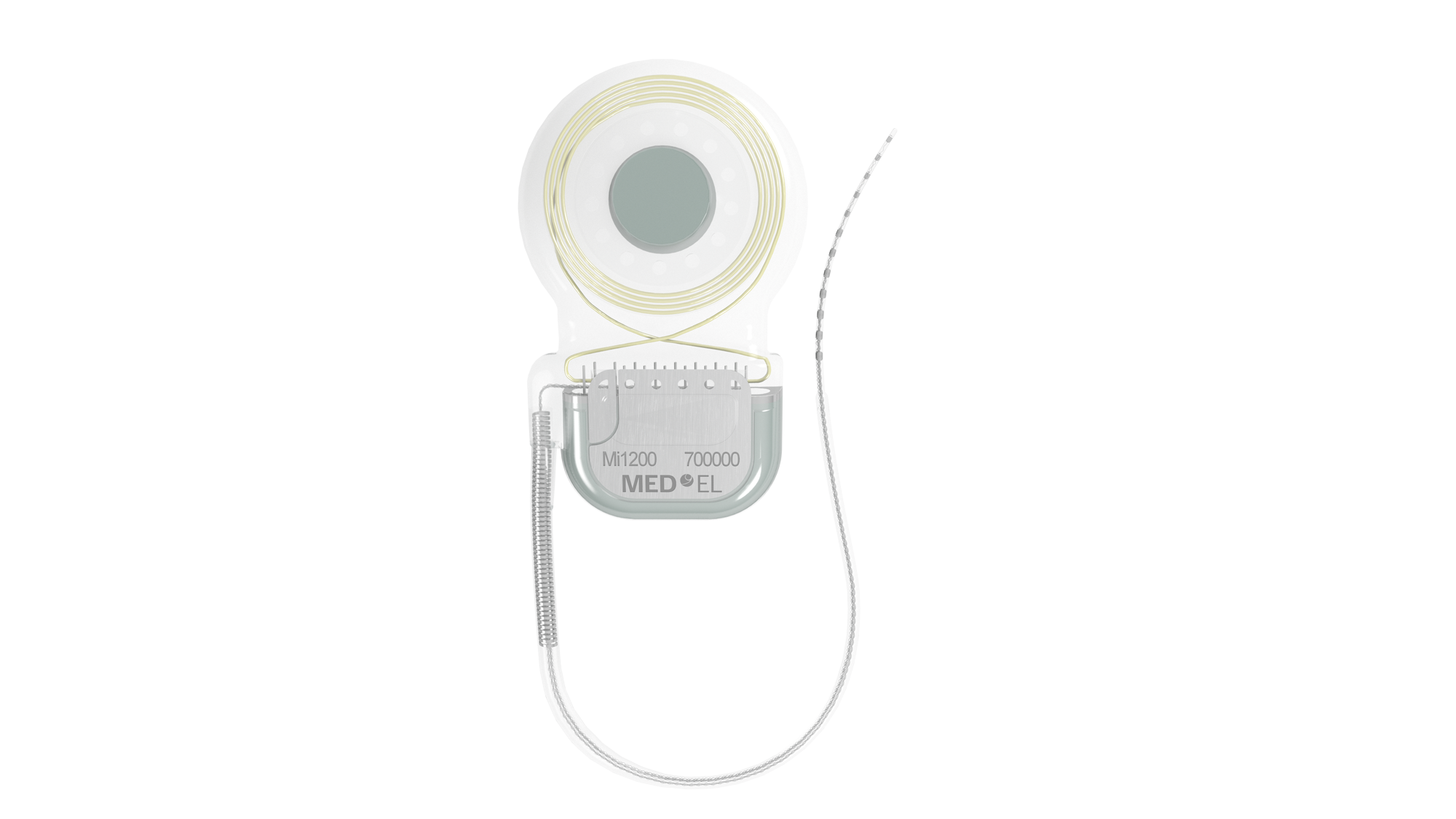
January 23, 2015 – (DURHAM, NC) – MED-EL USA announced today that the U.S. Food and Drug Administration has approved the new SYNCHRONY cochlear implant. For the first time, a cochlear implant has been approved for use with 3.0 Tesla (T) MRI without the surgical removal of the internal magnet; it is the only implant available with this indication in the USA. SYNCHRONY will be available in spring 2015.

“MED-EL has continued its unprecedented advancement in the area of cochlear implant and MRI safety,” said Raymond Gamble, President & CEO, MED-EL North America. “We are thrilled to be able to offer SYNCHRONY, which has revolutionized the cochlear implant landscape around the world, here in the United States.”

SYNCHRONY is compatible with all current MED-EL audio processors, including the recently approved SONNET. Like all MED-EL implants, it is designed to be future ready for the latest technology as it becomes available. It is the smallest and lightest titanium cochlear implant on the market, making it the ideal choice for even the youngest candidates.

Revolutionary Magnet Design

Magnetic resonance imaging (MRI) is a technique that uses a magnetic field and radio waves to create detailed images of the organs and tissues within the body. During an MRI, SYNCHRONY’s magnet freely rotates and self-aligns within its titanium housing, greatly reducing implant torque and the risk of demagnetization during MRI scans. This design enables high-resolution 3.0T MRI scans without the need for magnet removal.

The revolutionary conical design of the removable magnet housing greatly reduces the risk of magnet dislocation or migration. The implant features a polymer stiffening ring within the silicone implant body to further secure the magnet housing. Additionally, the magnet can only be removed from the bottom side of the implant, making dislocation of the magnet due to trauma almost impossible.

The implant is MR Conditional allowing MRI scans at 3.0T with the magnet in place. SYNCHRONY’s magnet housing can also be substituted with a non-magnetic spacer for MRI head scans with minimal image distortion in the implant area. The removable magnet housing features a protective coating to prevent unwanted cellular adhesion, simplifying the removal and replacement of the implant magnet. The incision for magnet exchange is made beside the implant, rather than directly over the implant, allowing uninterrupted hearing.

The SYNCHRONY PIN implant option also features titanium fixation pins proven to secure the placement of the implant for outstanding stability. SYNCHRONY incorporates MED-EL’s FLEX electrode arrays, which provide complete coverage of the cochlea for superior hearing performance and are engineered to preserve delicate cochlear structures for future advancements.

Cochlear Implant Engineers Receive 2015 Russ Prize

Fritz J. and Dolores H. Russ Prize

Areas of Interest: Honoring Engineers
Project Type: NAE Program, Contest/Award
Latest Update: January 7, 2015

description for russ medal revised 2010The Fritz J. and Dolores H. Russ Prize, established in October 1999, is named after Fritz Russ, an esteemed engineer and founder of Systems Research Laboratories, and his wife Dolores Russ, a long-time supporter and benefactor of the engineering industry.

The NAE established the prize at the request of Ohio University to honor the Russes for their dedication to education and the field of engineering. Fritz Russ graduated from Ohio University in 1942 with a B.S. in electrical engineering.

The Russ Prize recognizes an outstanding bioengineering achievement in widespread use that improves the human condition. This achievement should help the public better understand and appreciate the contributions of engineers to our health, well-being and quality of life.  An auxiliary purpose of the Russ Prize is to encourage collaboration between the engineering and medical/biological professions to work closely together.

Awarded biennially (odd number years), the recipient receives a $500,000 cash award and a commemorative medallion. NAE members and non-members worldwide are eligible to receive the Russ Prize.

Professor Graeme M. Clark AC

Professor Graeme M. Clarke
Laureate Professor Emeritus, University of Melbourne; Otolaryngologist Emeritus, Royal Victorian Eye & Ear Hospital; Founder & Director Emeritus, Bionic Ear Institute;
Honorary Professor Centre for Neural Engineering, University of Melbourne
University of Melbourne; Royal Victorian Eye & Ear Hospital
 ************************************************************************************************

Erwin Hochmair

Dr. Erwin Hochmair
Professor Emeritus and Co-Founder of MED-EL
MED-EL Medical Electronics GmbH
  ************************************************************************************************

Dr. Ingeborg J. Hochmair-Desoyer

Dr. Ingeborg J. Hochmair
CEO and CTO
MED-EL Medical Electronics GmbH
 ************************************************************************************************
Dr. Michael M. Merzenich
Francis Sooy Professor Emeritus
University of California, San Francisco
  ************************************************************************************************
Professor Blake S. WilsonProfessor Blake S. Wilson
Adjunct Professor of Surgery, Biomedical Engineering, and Electrical and Computer Engineering
Duke University

Advanced Bionics Naída Warranty Restart – Recipient Letter

Last week Cochlear Implant HELP reported that Naída users in the US and Canada will enjoy a restart of the warranty for the processor and accessories to January 1st, 2015.  Every eligible recipient will receive a copy of this letter with details on the program.

FDA Approves MED-EL SONNET Processor

SONNET_Dcoil_silo (2)
MED-EL has received FDA approval for the latest generation BTE cochlear implant processor – the SONNET. The processor will be available in the spring of 2015.

The processor has one battery option – two zinc-air cells, providing up to 60 hours of battery life.  The battery cover accepts 3-pin FM connectors, and also features a direct audio input port.

In addition to a built-in telecoil, a 2.4GHz radio is included for future connectivity options.

SONNET is water-resistant, with an IP54 rating.  With only a zinc-air battery option available at the moment, a fully waterproof system seems like it needs to wait for a rechargeable battery option.

Read the announcement here.

FDA Approves MED-EL WaterWear

WaterWearMED-EL has received FDA approval for the WaterWear waterproof cover for the RONDO processor.  Grab your swim trunks and dive in! WaterWear should be available in early 2015.

Read more here.

Advanced Bionics Implements Naída Improvements, Restarts Warranty Period

Advanced Bionics will restart the warranty period for Naída CI Q70 processors and accessories – including batteries – to January 1st, 2015.  This letter applies to users in the US and Canada. Read the letter to clinicians here.

If history is any guide, current Naída users will hear from Advanced Bionics directly with details.  Stay tuned to CochlearImplantHELP.com for updates.

Cochlear Receives FDA Approval for New Algorithms

Cochlear has received approval for some new algorithms for the Nucleus 6 processor.  The approval is for the Nucleus Hybrid L24 system, but it wouldn’t be surprising if users of Nucleus 6 processors without the Acoustic Component will also be able to take advantage of them.  The algorithms are:

Wind Noise Reduction

Signal to Noise ratio-based noise reduction (possibly similar to ClearVoice)

SCAN (scene classifier function, which can be used to automatically switch between different programs for different environments)