Cochlear Implant Recipient Malala Yousafzay Awarded Nobel Peace Prize

malala-yousafzai-wins-the-european-unions-annual-human-rights-award_101013083450Malala Yousafzay, the Pakistani schoolgirl who was shot in the head by the Taliban for expressing her views on promoting education for girls in the Swat Valley has been awarded the Nobel Peace Prize.

Starting at the age of 11 or 12, Malala began blogging about life under the Taliban. Despite the risks, she became more vocal and public, particularly about the right for girls to receive an education.

One of the many injuries suffered during her attack on October 9, 2012 was the loss of hearing in her left ear.  Malala received a cochlear implant, which was activated in October 2013.

And on October 10, 2014, almost exactly two years to the day after being shot, Malala became the youngest person ever to have received the Nobel Peace Prize.

Cochlear Wireless Accessories Delayed

Wireless-prod-group-shot
The wireless accessories for the Cochlear Nucleus 6 system have been delayed.  Shipments are now expected to start in February 2015, as opposed to the original shipment date of 1 December 2014.

New Rehabilitation Apps from Advanced Bionics and MED-EL

listening adventures

New from AB, AB Listening Adventures is an engaging rehAB app providing children with a fun way to practice listening for words in sentences. Download it now for $1.99 from the iTunes® app store. Learn about this and all AB’s apps here.
http://bit.ly/18qfEsS
MED-EL
Continents and Oceans
MED-EL USA announced today the launch of the game Continents & Oceans designed to test and improve listening skills for people with cochlear implants. The free app is the latest offering from MED-EL’s BRIDGE to Better Communication support program.

Continents & Oceans is a free app available through the App Store and Google play.  Links to download the game are also available through MED-EL’s website, www.medel.com.

MED-EL Adds New Processor Voucher to ‘2 Ways to Hear’ Program

SYNCHRONY-systemMED-EL’s ‘2 Ways to Hear’ program offers a free RONDO processor in addition to whatever you would normally receive.  The program has now been expanded to include an option for a voucher to receive a future audio processor when it becomes available. Read the press release here!

From MED-EL’s international web site, the SONNET processor seems to be a likely candidate.  This processor includes a 2.4GHz radio, which currently seems to be used only for remote control functions.  The radio is ‘future-ready‘ so it will be able to support developments that use wireless functions.

Patients who normally receive a MED-EL Cochlear Implant System with one audio processor will now be able to select an audio processor of their choice, plus either a free RONDO or a voucher for a free future audio processor. Patients who receive a two-processor MED-EL Cochlear Implant System will now be able to select two processors of their choice, plus either a free RONDO or a voucher for a free future audio processor.


FDA Approves Advanced Bionics AquaCase for Naída Processors

1103080971[1] The FDA has approved the AquaCase for the Naída CI Q70 processor.

Any Adventure, Any Environment

The robust AquaCase™ accessory has been developed to provide the same great hearing during even the most rugged activities.

  • All-day, every day, reusable accessory
  • Ideal for swimming, snorkeling, skiing, mountain biking, mud running, and other exciting adventures
  • Designed for dusty outdoor environments, including farms, workshops, playgrounds, and construction sites
  • Secure, off-ear, worry-free wearing for exceptional retention and peace of mind
  • Built Kid Tough™ providing protection and retention for an active lifestyle
  • IP 68 rating for the ultimate protection against water, sweat, sand, and grime

Let’s Talk about Hearing

Syndicated cable TV host Loleata Wigall interviews CochlearImplantHELP’s Howard Samuels about cochear implants on her show ‘Let’s Talk About Hearing.’

Advanced Bionics AquaCase Review

By Katie-Louise BaileysplashI had the opportunity to try it out the new AquaCase at the Advanced Bionics Family Fun day at Centre Parcs, Nottingham, UK. Before trying the AquaCase, I had already experienced hearing in water using my very own lime green Neptune.  Hearing in water makes swimming so much more fun. You’d be surprised at all the sounds you’ve been missing if you have not heard while swimming before. You won’t want to go swimming without it!

Holding  the AquaCase in my hand, I can see the best things about it.  The AquaCase is clear, slim and small.  It’s not too bulky.  And it looks very secure. Parents won’t have to worry about their child’s Naída CI Q70 breaking or getting wet.  They’ll have peace of mind since it is especially made to protect children from opening it. Even me… It took me a while to open it. It’s a bit like a child lock in the car. With a little practice it becomes much easier to open.

I wear a Naída CI Q70 every day. And only tend to wear my Neptune for swimming and for backup if my current processor breaks.  Do you ever worry about breaking your processor? I do all the time. It’s like your lifeline. As soon as it hits the floor – the first thing comes to mind is does it still work?

Naida in open AquaCaseThe AquaCase is shockproof, so it protects the processor if you drop it.  It still works. So if you fancy going down the waterslide or do any rough activity you’ll have a worry-free experience.  The AquaCase may even be stronger than the Neptune!

The AquaCase goes with anything. There are multiple wearing options, from clip, to lanyard and armband.  I prefer to wear it on my armband just like my Neptune. I wear it with a 15 inch cable.  You can easily clip it to your bathing suit. Men may prefer to clip it onto the armband.

Wherever you go you don’t have to change processors from Naída CI Q70 to a Neptune to go swimming. You can just wear your Naída CI Q70 anywhere. Just make sure you have the case with you. You don’t need to put it in a plastic bag, which could affect the sound quality. The AquaMic and the AquaCase are both 100% waterproof.

Placing your Naída CI Q70 In the AquaCase is pretty simple too. You don’t need to change the ear hook or anything. Just make sure you have the 110 battery and of course the right microphone. You can easily tell the difference between the AquaMic and the normal UHP headpiece.

The AquaCase and the Neptune have similar wearing options, and the same sound quality.   As for the AquaMic –  to have the best experience in any activity I would suggest that you make sure to have the right magnet strength so you don’t have to worry about it falling off. It took me about 2 swimming session before I determined the right strength. Now I dive into the water and it doesn’t come off at all! I use two magnets inside the AquaMic, which is enough for my long, thick hair.

FootballI’ve used both the AquaCase and Neptune in lots of watersports and other sporting activities. If I had to choose between a Naída CI Q70 with an AquaCase or a Neptune, I would choose the Aquacase.  You don’t have to keep changing devices.  And the AquaCase turns the Naída CI Q70 into a Neptune, so you can feel secure in wet or dirty environments, or even just for rough sports or amusement parks.

I’ve broken the Neptune cover one or two times – I’m very active! The AquaCase seems even stronger, and I don’t think it will break. I’ve worn it playing football, and on waterslides, and it held the processor very securely, even though it was bumped many times.

My advice is that you hand dry the AquaCase before opening it, so that all the water is off before the processor comes out.  When you use the Naída CI Q70 in the AquaCase, you should also put the processor and the AquaMic in the dry box over night.

About the Author
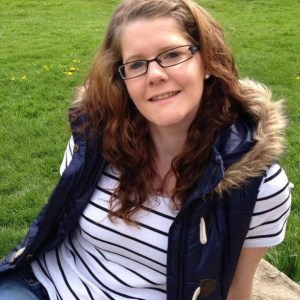
Katie_LouiseI’m 26 years old, profoundly deaf since birth due to genetic causes.  I was meant to get a cochlear implant when I was 7 but my parents decided against it because cochlear implants were still quite new then.

I had a life-changing operation when I received my cochlear implant at age 19. After being implanted It took a lot of practice to be able to understand all the new sounds. I now use my voice practically all the time. People call me a chatter box!  I love music, which never even interested me before.

I really would love to go bilateral. Here in the UK, the National Health Service only allows children under the age of 19 to go bilateral.

New Book for Dual-Language Children with Hearing Loss

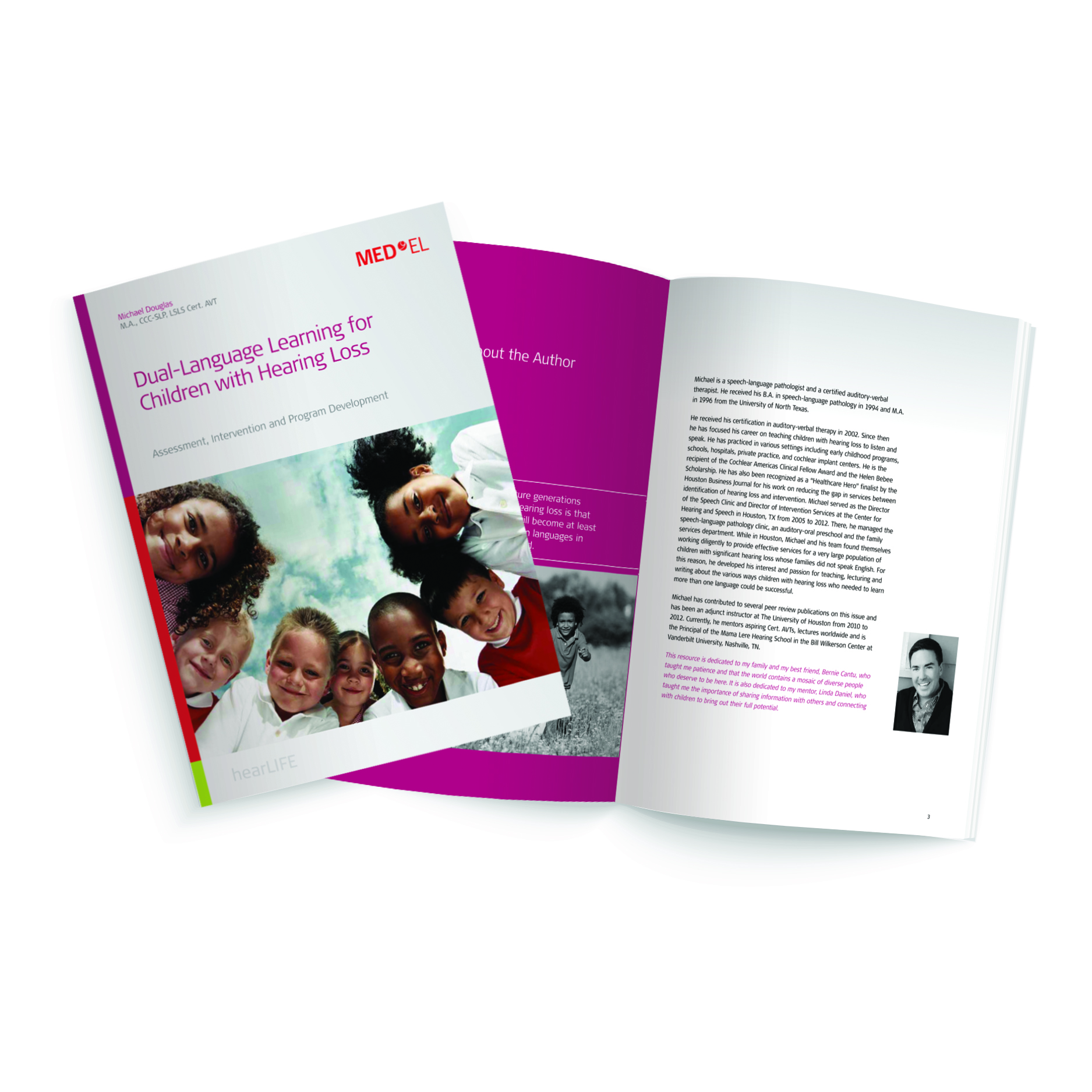
magazine_opened_staightMED-EL USA announces the launch of the first-ever book for speech and hearing professionals and families of children with hearing loss who speak more than one language, Dual-Language Learning for Children with Hearing Loss, by Michael Douglas, M.A., CCC-SLP, LSLS Cert. AVT.

“Increasing numbers of hearing and speech professionals are finding themselves working with children who have hearing loss and come from linguistically diverse backgrounds. Clinicians may be faced with the challenge of helping families who do not speak the majority language,” said Douglas, who is currently Principal of the Mama Lere Hearing School in the Bill Wilkerson Center at Vanderbilt University, Nashville, TN.

Research has shown that encouraging minority language development neither impairs a child with hearing loss nor prevents him or her from learning the majority language in the presence of adequate speech perception and an effective immersion process. As long as a child with hearing loss can demonstrate adequate speech perception within the first few years of life using the latest hearing technology, families can take advantage of their child’s critical learning period with the help of appropriate identification and special intervention procedures to develop bilingualism.

“We now have, more than ever, a unique opportunity to improve services for families who do not speak a majority language or speak more than one language and want a bilingual outcome for their children with hearing loss.  I hope this book helps professionals enhance their practice and even inspire others to contribute to a much needed body of resources on this topic,” Douglas continued.

“MED-EL is proud to have published this important resource for speech and hearing professionals who work in diverse and multicultural settings.  Dual-Language Learning provides both the knowledge and tools for practitioners to have a successful experience, even if they speak a different language than their clients,” said Darla Franz, M.A., CCC-A, Vice President of Education & Corporate Communication, MED-EL USA.  “Professionals who serve a culturally and linguistically diverse population now have a resource that helps integrate education for children with hearing loss with the needs of all of their families.”

Dual-Language Learning was developed to assist professionals with issues surrounding assessment and intervention for children with hearing loss who are culturally and linguistically diverse. It also provides a guideline for administrators in developing a program for bilingual children. The book is relevant for clinicians providing individual intervention or for group settings such as preschools or schools.

Each chapter provides useful tools for clinicians including reproducible charts, worksheets, and suggestions for further reading.

The book is $20.00 and available for order through MED-EL’s website, www.medel.com, by phone, (888) 633-3524 or by email, USAmarketing@medel.com.  Books will also be available for purchase on-site at the 2014 AG Bell Convention.

About the Author

Michael-Book-B&WMichael Douglas, M.A., CCC-SLP, LSLS Cert. AVT, is a speech-language pathologist and a certified auditory-verbal therapist. He received his B.A. in speech-language pathology in 1994 and M.A. in 1996 from the University of North Texas. He has contributed to several peer review publications on this issue and has been an adjunct instructor at The University of Houston from 2010 to 2012. Currently, he mentors aspiring Cert. AVTs, lectures worldwide and is the Principal of the Mama Lere Hearing School in the Bill Wilkerson Center at Vanderbilt University, Nashville, TN.

MED-EL SYNCHRONY Cochlear Implant System FAQ

SYNCHRONY-systemHere are some FAQs about the new MED-EL SONNET processor, SYNCHRONY implant, and WaterWear accessory for RONDO.

Some interesting new details are included:

  • The SYNCHRONY implant achieves its high 3.0T MRI rating (in currently approved countries) by the use of an internal magnet that can rotate due to the magnetic field of the MRI.
  • The WaterWear accessory is intended to be used with rechargeable 675 batteries.
  • In the ‘truth in advertising’ department, the FAQs says that the processor is the ‘smallest and lightest audio processor for cochlear implants.’ The thickness of the SONNET processor is listed at 5.9 mm.  While the narrow ends of the bevel around the edge of the processor are indeed 5.9 mm, the body is 9.3 mm thick.  Both the 9.3 mm thickness and the 56.7 mm height are greater than the corresponding dimensions of the  competition.  Dimensions are specified in this MED-EL document.

MED-EL Announces New SONNET Processor

SONNET Processor for Cochlear Implants

MED-EL announces the Sonnet BTE processor!  SONNET features two microphones, enabling directional hearing.  New software includes wind noise reduction and automatic volume control.

The processor has one battery option – two zinc-air cells, providing up to 60 hours of battery life.  The battery cover accepts 3-pin FM connectors, and also features a direct audio input port.

In addition to a built-in telecoil, a 2.4GHz radio is included for future connectivity options.

SONNET is water-resistant, with an IP54 rating.  With only a zinc-air battery option available at the moment, a fully waterproof system seems like it needs to wait for a rechargeable battery option.

Learn more about the SONNET processor!