Advanced Bionics Receives CE Mark Approval of Expanded MRI Compatibility for Cochlear Implants

— HiRes 90K and HiRes 90K Advantage cochlear implants allow 1.5T MRI scans with the CI magnet in place —

Valencia, Calif., February 3, 2015— Advanced Bionics (AB), a global leader in cochlear implant technology and a company of the Sonova Group, announced today that the HiRes 90K™ and HiRes 90K™ Advantage cochlear implants have received CE Mark approval from the European Notified Body, TÜV, to undergo 1.5T MRI scans without removing the internal magnet. Previously, these devices had regulatory approval to undergo MRI scans only if the magnet was removed.

Magnetic Resonance Imaging (MRI) is an increasingly common tool for diagnosing conditions such as cancer and heart disease. This additional compatibility for MRI scans while the CI magnet remains in place helps simplify the diagnostic process by avoiding additional pre- and post-MRI procedures to remove and then to replace the magnet. “Advanced Bionics prioritizes the safety and well-being of patients with our cochlear implants. We are very pleased to offer patients this additional compatibility with MRI diagnostic equipment,” said Hansjuerg Emch, Group Vice President Medical of the Sonova Group.

Cochlear implants are implanted just beneath the skin, and use magnets to link the internal and external components of the CI system. The internal component of the AB cochlear implant system includes electronics and an electrode array that deliver AB’s proprietary current steering technology for hearing that more closely resembles normal hearing. The newest AB electrode array, the HiFocus™ Mid-Scalaelectrode, was designed for optimal placement in the cochlea with low insertion force to protect its delicate structures. The HiFocus Mid-Scala electrode accommodates the latest soft surgery approaches, including round window insertion, to suit surgeon preferences and individual recipient needs. The patented design allows for ideal placement so recipients have the opportunity to hear the most pitches possible for enjoying music and improved speech understanding.

The external component of the AB cochlear implant system includes a sound processor that sends signals via the headpiece to the internal component. Partnering with Phonak, the world leader in hearing instruments, AB brings its innovative, industry-leading technology to help people with significant hearing loss for whom hearing aids are no longer sufficient. The combination of AB and Phonak technologies makes the Naída CI the most advanced sound processor available, offering high-performance hearing in all environments, 100% wireless connectivity to consumer electronics, bimodal capabilities that allow streaming to the processor and a compatible Phonak hearing aid at the same time.

For more information about AB’s innovative hearing technology, visit AdvancedBionics.com, or follow AB on FacebookTwitterYouTube, and Pinterest.

About Advanced Bionics

Advanced Bionics is a global leader in developing the most advanced cochlear implant systems in the world. Founded in 1993 and a subsidiary of the Sonova Group since 2009, AB develops cutting-edge cochlear implant technology that allows recipients to hear their best.

AB offers the most sophisticated cochlear implant system on the market, the HiResolution™ Bionic Ear System, with five times more sound resolution than its competitors, designed to help recipients hear in noisy settings and enjoy the full dimensions of music and tonal languages.

With sales in over 50 countries and a proven track record for developing high-performing, state of-the-art products, AB’s talented group of technologists and professionals from all over the world are driven to succeed, work with integrity and stay firmly committed to quality.

To learn more about AB and its innovative cochlear implant technology, please visit
AdvancedBionics.com.

Media Contact:
Cheryl Garma
Advanced Bionics
661.362.1400
MediaInquiries@AdvancedBionics.com

FDA Approves MED-EL SONNET Processor

SONNET_Dcoil_silo (2)
MED-EL has received FDA approval for the latest generation BTE cochlear implant processor – the SONNET. The processor will be available in the spring of 2015.

The processor has one battery option – two zinc-air cells, providing up to 60 hours of battery life.  The battery cover accepts 3-pin FM connectors, and also features a direct audio input port.

In addition to a built-in telecoil, a 2.4GHz radio is included for future connectivity options.

SONNET is water-resistant, with an IP54 rating.  With only a zinc-air battery option available at the moment, a fully waterproof system seems like it needs to wait for a rechargeable battery option.

Read the announcement here.

FDA Approves Advanced Bionics AquaCase for Naída Processors

1103080971[1] The FDA has approved the AquaCase for the Naída CI Q70 processor.

Any Adventure, Any Environment

The robust AquaCase™ accessory has been developed to provide the same great hearing during even the most rugged activities.

  • All-day, every day, reusable accessory
  • Ideal for swimming, snorkeling, skiing, mountain biking, mud running, and other exciting adventures
  • Designed for dusty outdoor environments, including farms, workshops, playgrounds, and construction sites
  • Secure, off-ear, worry-free wearing for exceptional retention and peace of mind
  • Built Kid Tough™ providing protection and retention for an active lifestyle
  • IP 68 rating for the ultimate protection against water, sweat, sand, and grime

FDA Approves Cochlear Nucleus 6 Wireless Accessories

Wireless-prod-group-shot

The FDA has approved the wireless accessories for the Cochlear Nucleus 6 processors.

Effective November 18, 2014 the Nucleus 6 System configuration will allow candidates to choose up to four wireless accessories as part of their System Kit at no additional charge.

Current Nucleus 6 users with a Plus One option can redeem it for a wireless accessory beginning December 1, 2014. For all other Cochlear users with a Nucleus 6 Sound Processor, wireless accessories can be ordered from the Cochlear web store on December 1, 2014, as well.

Let’s Talk about Hearing

Syndicated cable TV host Loleata Wigall interviews CochlearImplantHELP’s Howard Samuels about cochear implants on her show ‘Let’s Talk About Hearing.’

Advanced Bionics AquaCase Review

By Katie-Louise BaileysplashI had the opportunity to try it out the new AquaCase at the Advanced Bionics Family Fun day at Centre Parcs, Nottingham, UK. Before trying the AquaCase, I had already experienced hearing in water using my very own lime green Neptune.  Hearing in water makes swimming so much more fun. You’d be surprised at all the sounds you’ve been missing if you have not heard while swimming before. You won’t want to go swimming without it!

Holding  the AquaCase in my hand, I can see the best things about it.  The AquaCase is clear, slim and small.  It’s not too bulky.  And it looks very secure. Parents won’t have to worry about their child’s Naída CI Q70 breaking or getting wet.  They’ll have peace of mind since it is especially made to protect children from opening it. Even me… It took me a while to open it. It’s a bit like a child lock in the car. With a little practice it becomes much easier to open.

I wear a Naída CI Q70 every day. And only tend to wear my Neptune for swimming and for backup if my current processor breaks.  Do you ever worry about breaking your processor? I do all the time. It’s like your lifeline. As soon as it hits the floor – the first thing comes to mind is does it still work?

Naida in open AquaCaseThe AquaCase is shockproof, so it protects the processor if you drop it.  It still works. So if you fancy going down the waterslide or do any rough activity you’ll have a worry-free experience.  The AquaCase may even be stronger than the Neptune!

The AquaCase goes with anything. There are multiple wearing options, from clip, to lanyard and armband.  I prefer to wear it on my armband just like my Neptune. I wear it with a 15 inch cable.  You can easily clip it to your bathing suit. Men may prefer to clip it onto the armband.

Wherever you go you don’t have to change processors from Naída CI Q70 to a Neptune to go swimming. You can just wear your Naída CI Q70 anywhere. Just make sure you have the case with you. You don’t need to put it in a plastic bag, which could affect the sound quality. The AquaMic and the AquaCase are both 100% waterproof.

Placing your Naída CI Q70 In the AquaCase is pretty simple too. You don’t need to change the ear hook or anything. Just make sure you have the 110 battery and of course the right microphone. You can easily tell the difference between the AquaMic and the normal UHP headpiece.

The AquaCase and the Neptune have similar wearing options, and the same sound quality.   As for the AquaMic –  to have the best experience in any activity I would suggest that you make sure to have the right magnet strength so you don’t have to worry about it falling off. It took me about 2 swimming session before I determined the right strength. Now I dive into the water and it doesn’t come off at all! I use two magnets inside the AquaMic, which is enough for my long, thick hair.

FootballI’ve used both the AquaCase and Neptune in lots of watersports and other sporting activities. If I had to choose between a Naída CI Q70 with an AquaCase or a Neptune, I would choose the Aquacase.  You don’t have to keep changing devices.  And the AquaCase turns the Naída CI Q70 into a Neptune, so you can feel secure in wet or dirty environments, or even just for rough sports or amusement parks.

I’ve broken the Neptune cover one or two times – I’m very active! The AquaCase seems even stronger, and I don’t think it will break. I’ve worn it playing football, and on waterslides, and it held the processor very securely, even though it was bumped many times.

My advice is that you hand dry the AquaCase before opening it, so that all the water is off before the processor comes out.  When you use the Naída CI Q70 in the AquaCase, you should also put the processor and the AquaMic in the dry box over night.

About the Author

Katie_LouiseI’m 26 years old, profoundly deaf since birth due to genetic causes.  I was meant to get a cochlear implant when I was 7 but my parents decided against it because cochlear implants were still quite new then.

I had a life-changing operation when I received my cochlear implant at age 19. After being implanted It took a lot of practice to be able to understand all the new sounds. I now use my voice practically all the time. People call me a chatter box!  I love music, which never even interested me before.

I really would love to go bilateral. Here in the UK, the National Health Service only allows children under the age of 19 to go bilateral.

MED-EL RONDO and OPUS 2 User Manuals Now Available!

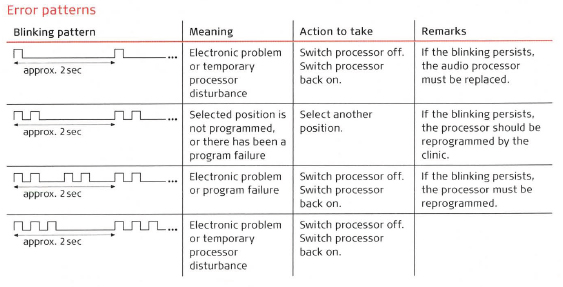
opus 2 indicator lightHave you ever forgotten how to pair a FineTuner with your RONDO or OPUS 2?  Or have you gotten a blinking pattern on the LED, and wondered what it meant?  You can carry around your user manual until it become dog-eared, or you can just bookmark the files on CochlearImplantHELP.com!

Your user manual for the RONDO and OPUS 2 will always be available here at CochlearImplantHELP.com.  Bookmark the links, or look for them on our Guides page.

Married Couple Live TV Activation

Tim and Natalie Nobes, both 44, have been deaf their whole lives.  They had cochlear implant surgery on the same day, and were activated live on Australian television.  Unfortunately this version of the videos isn’t captioned, but cochlearimplanthelp working on getting the studio to add subtitles.

Tim

The main segment includes the family story and Natalie’e activation.  And Tim’s activation follows in an emotional conclusion.

Cautious welcome for Cochlear Implant investment – Adams

The Irish Health Services Executive has approved 3.2M Euros for bilateral implants for children in 2014.  The Happy New Ear campaign has been fundamental in helping Ireland approach the standard of care for children who qualify for bilateral implants.

Sinn Féin President and Louth TD Gerry Adams has given a cautious welcome to the inclusion in the HSE Service Plan for 2014 of €3.22 million for a bilateral simultaneous and sequential cochlear implant programme.

Read more on the Sinn Féin web site!