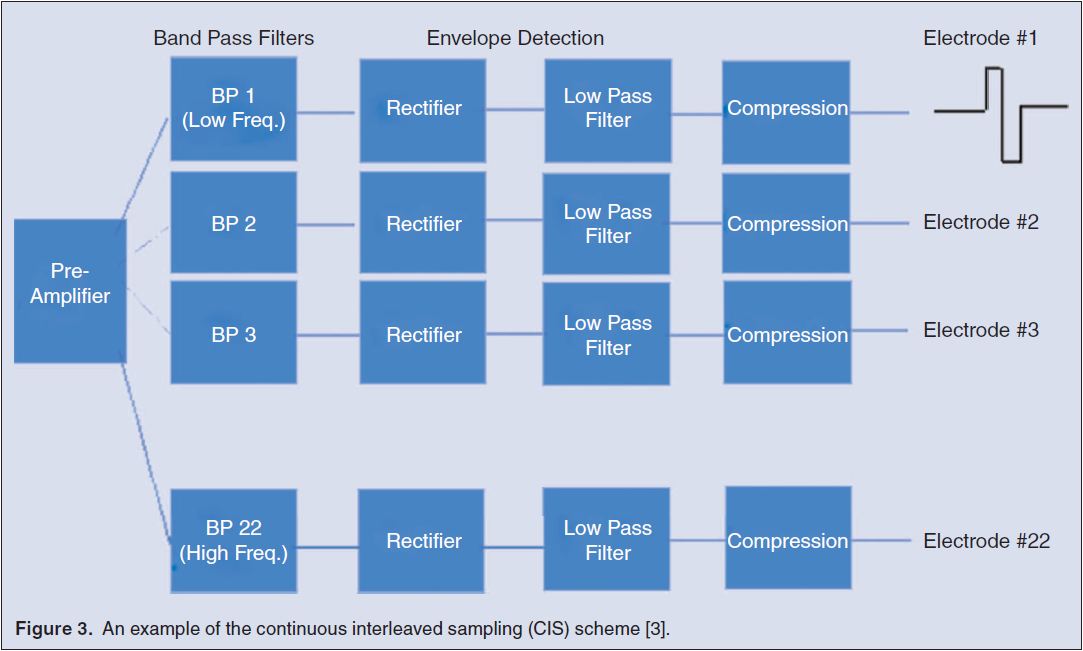
The Circuits and Systems society of the Institute of Electrical and Electronic Engineers has published an article about the engineering challenges in cochlear implant design. While you won’t learn how to build your own implant with paper clips and rubber bands, it is a nice explanation of how the cochlea works and how cochlear implants interface with the biological system.
Nammu has announced a color-of-the-week campaign. Each week a color is chosen for sale at half price! Wait for your favorite color to come around, and stock up! This week’s color is purple.
There have been many advances in robotic surgery in the past decade. These robots are controlled by surgeons, and have better fine motor control than an unassisted surgeon looking through a microscope. The promise of robotic cochlear implant surgery includes better electrode array placement, less invasive surgery, and reduced damage to residual hearing.
In a stunning move, the Dow University of Health Sciences (DUHS) in Pakistan, along with the London-based International Medical Relief Agency (IMRA), will be offering free cochlear implants to 50 lucky children this year.
Use the Nammu Swim Hat to go swimming with your cochlear implant processor!
The Aqua Accessory from Cochlear, and the aLOKSAK bag from, well, LOKSAK, are waterproof bags that can protect your BTE cochlear implant processor from water damage. Unfortunately, the bags can come off pretty easily if you jump in the pool or do just about anything at a water park.
The Nammu Swim Hat is a stylish way to secure your processor to your head. Our resourceful friend Ben demonstrates how to use the Nammu Swim Hat.
The Nammu Hat is comfortable! It’s easy to put on, and doesn’t tug at your hair when you take it off.
While the Aqua Accessory is designed to sit on your ear, it can be rotated up so that it is completely under the Nammu Hat. Just make sure to keep the headpiece magnet in the correct location. This prevents water from getting underneath it and pulling the whole assembly off.
The aLOKSAK bag doesn’t sit on your ear at all, so it has to go under the Nammu Swim Hat.
The hats used in the video were generously provided by Nammu.
Many thanks to the Leventhal-Sidman JCC for the use of the pool to create the video.
Deaf babies in Ireland enjoy a head start, frequently getting a cochlear implant at 7 months. However, the Health Services Executive does not provide funding for bilateral implants. Read about the struggle in the Irish Examiner.
Our own Howard Samuels has filed a patent application for an inertial sensor-based hearing instrument controller.
A sensor in the processor or hearing aid replaces some or all of the typical controls, such as power switch, volume, and program selection. By sensing motion, finger taps, or presses on the device, the power can turn on and off automatically, and the user can make adjustments without using any switches or knobs.
By eliminating the usual mechanical controls, the device can be made smaller, more reliable, and more waterproof.
1980 marked the first pediatric cochlear implant in the US. Dr. William House and his team performed the surgery with a single-channel device. He first implanted two patients for a short term clinical trial in 1961!
Read more of the early history of pediatric cochlear implants!






 cochlear implant HELP